“Who will take care of you?”

The other night my 4 year old son asked me where my books are. I told him they are in my studio. He asked who was there right now, and I said no one, because I am home with him. He said, “When you go, is it you and one other person?” I clarified, “No, it is just me.” Then he replied:

“Then who will take care of you?”

This was a reflection of the life he leads, where he constantly has a parent or teacher who is present with him to ensure he is okay. But it had me considering something I think about a lot when it comes to how writers and creators find growth and success: that we tend to thrive when we collaborate with others, and failure is more likely when we try to go it alone. What this means is that having colleagues and mentors is something I encourage in terms of how you create and share your writing and art.

For writers, I have seen this apply to every kind of publishing path, from traditional, to self-publishing, to hybrid. When we collaborate, we are not only more effective in reaching our goals, but it also helps us manage the difficult parts of what it means to create and put ourselves out there: the sense of confusion and overwhelm that people often feel, the mental health struggles we each go through when considering if we are doing enough, or doing the right thing, or on the wrong path entirely.

Too often, people have a resistance to collaborating with others because they have this sentimental sense of “I’m making it on my own.” They believe that great art comes from one person struggling alone. That if you share the process with anyone, you are watering down the singular vision of the individual creator. I will say, there is no one right way to create and share. Find the way that works best for you.

But even though so much of creative work can happen in isolation, the fact is, we succeed together. I regularly think back to this 2013 video from author John Green where he talks about how his writing and publishing is a group effort, and how he wouldn’t have any books (let alone bestselling books) without a wide range of collaborators.

This very essay is a great example. I am sitting here alone in a room by myself, with the door closed and locked at 6:19am as I write this. I could easily trick myself into thinking, “Here I am, creating alone!”

But that isn’t the truth.

I can only be here because my amazing wife is home with our kids. She is an artist, and through our conversations each day, and through me observing her creative process, she endlessly inspires me.

I can only be here because my landlord has rented me this studio and allowed me access during the early morning hours that I like to work.

I am writing on a computer designed and built by someone else. Listening to music that inspires me (the track I’m listening to at this very moment is appropriately called “Partner” by singer Ada Lea. I can thank Spotify for making me aware of her.)

What I’m writing about today was inspired by both my son’s comments, and also by author and artist Nikki Grimes. More on her in a moment.

I am writing this to an audience, to a reader. You. My subscribers have stuck with me on my email list every week for 15 years. I’m aware that after I publish this, I will share it to thousands of newsletter subscribers, 10,000 Twitter subscribers, and to many others. They are a part of this as I write too.

I am thinking of the writers I speak to every day as I write this, because they help me understand the reality of the many different experiences of what it means to create and share.

I am staring at a wall across from me that is filled with photos of creators who inspire me. I spend all day looking at their faces and considering their journeys.

Behind me is a bookshelf of books on creativity and biographies of creators whose stories help me.

Because of my wonderful clients, I am in the trenches every day working with them and learning so much from that collaborative process. Their engagement and support is critical to all of this.

The conversations I have each week with my creative collaborators Jennie Nash and Lori Richmond are a part of this. Each week, we dig into deep questions about what it means to create and grow a business.

Sure, in one sense I’m here alone. But I’m not alone at all. My name will be the one on this essay, but so many other people are a part of it. These people, whether they know it or not, are taking care of me. Are inspiring me. Are giving me the fuel, the permission, the accountability, the sustainability to create and share.

This week I released the first interview of the new season of my Creative Shift podcast. It is an incredible honor to share with you my conversation with author and artist Nikki Grimes. You can watch our conversation here:
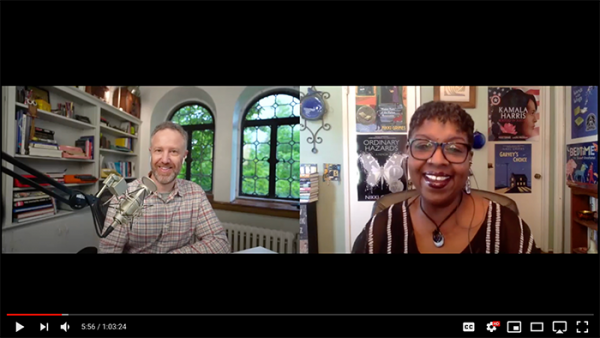
 

… or listen to it on my blog, Apple Podcasts, Spotify, and elsewhere through this link.

She shared so much inspiring advice, and one thing that jumped out at me is how she talked about the value of having creative colleagues and mentors:

“[Writing] was my private thing. I didn’t even think about sharing it until the end of middle school, early high school. I started publishing in school, literary journals and that kind of thing. That was the point at which I started thinking in terms of writing as career. People just laughed when I told them what I wanted to do.”

“I decided I needed to surround myself with other young people who had dreams that they wanted to pursue. They became like my posse. I started seeking those kids out and they became the people I surrounded myself with. I am sure that made all the difference. Once I decided this is what I wanted to do, I just kind of shut everything else out.”

“I started thinking about building portfolios, looking for opportunities to write with community newspapers, literary journals, and building up from there. And again, keeping myself surrounded increasingly with other artists, visual artists, dancers, whatever.

“I was doing poetry workshops and was in poetry workshops. I was in a poetry workshop with Quincy Troupe. I was in a writing workshop at Columbia, which is where I met [Nikki] Giovanni and a few other writers. I was like the kid in the group and I was hanging out with her and, Jayne Cortez and Sonia Sanchez, and Toni Cade Bambara, that whole group.”

“My first mentor was James Baldwin. And the one thing he taught me in talking to me about was the importance of not compromising on my gift. You want to compromise in any of the areas which you need to financially, I understand that, but don’t compromise in the area of your gift. You always want to be able to look in the mirror and be proud and happy with who you see… and that’s not going to happen if you compromise in the area of your giftedness. Just, don’t do that. And I, took that in.”

Nikki shared so much that is inspiring and instructive for writers and creators. She has published more than 80 books, and created so much else. You can listen to our interview here, or learn more about her on her website. (You can also find her on Twitter and Instagram!)

How can you develop a connection to other writers and creators? Some ideas:

  • Use Amazon and Goodreads to research and identify 10 books published in the last three years that are comparable to yours. Books that would be on the shelf next to yours at a bookstore. Then, read those books. Email each author a thank you note, telling them what you liked most about their books. Make a small mention at the end that you write as well and how their book has helped you.
  • Then get in the habit of emailing one person a week a similar letter. These could be comparable authors, but also anyone who supports the books you love. People who speak at events, who organize events, who run bookstores, who are sources for your work, who are readers of that work. There are more than 10 people who are working in your genre, topic or niche. Identify one of these people per week, then send them a thank you email.
  • Flip how you use social media. Don’t worry about gaining followers or likes. Instead, focus your efforts on how you can make someone’s day. Focus on one person at a time. As you research and identify the other writers in your field, celebrate them publicly. Do a series of posts about their books. See what they share and amplify it. Literally give their books away.
  • Find an excuse to collaborate. Why have I had a blog and newsletter for 15 years? Why do I do a weekly podcast? It’s all an excuse to meet the people I am most inspired by: writers and creators! Consider ways that you could collaborate with others. Could you do mini-interviews with these people on a blog or podcast? Or could you even do that on an Instagram feed? This is not about a content strategy, it’s about finding meaningful reasons to go deeper with these people. To have a conversation or interaction.

If you are wondering how others will care and support you, I would encourage you to consider that this begins with you caring and supporting others first. That isn’t a rule by any means, but I find it an encouraging way to consider actions I can take right now to develop a community around creativity.

Thanks!

-Dan
“Reading and writing were my survival tools.” 80 Books Later, This is the Story of Nikki Grimes

When I asked Nikki Grimes if she had a sense of permission to create as a child, she replied, “It wasn’t a question of permission, I was compelled. I was in and out of foster care, yet there were things I needed to say.” Writing, poetry, and visual arts were her way of doing that. Nikki is the New York Times bestselling author of more than 80 books. In our conversation, we discuss the importance of surrounding yourself with like-minded creators, of finding your own creative path, dealing with rejection and compromise, and filling your life with creativity. It is an honor to have spoken with her, her wisdom is just awe inspiring.

You can listen to the podcast by clicking ‘play’ below, or in the following places:

You can watch our conversation here:

You can find Nikki in the following places:

nikkigrimes.com
@nikkigrimes9
@poetrynikki
Her books on Amazon
Her memoir, Ordinary Hazards

Doubling down on what matters most

A phrase I use often is the idea of “doubling down” on one’s creative work and how to approach marketing. I resonate with this phrase for two reasons:

  1. Clarity and Focus: To clearly identify what matters most for someone’s creative vision. This differentiates between the “nice to haves,” from the “need to haves.” It will look different for every single writer and creator. From a marketing standpoint, the idea of doubling down could be to identify the one social media channel that resonates most with one’s ideal audience, and putting 100% of their marketing efforts there. To eschew the idea of spreading themselves too thin on 3 different social networks, blogging, podcasting, a newsletter, etc. and instead focus on one place.
  2. Craft: Then, with that focus, put more creative energy into truly showing up. Not just doing “best practices” in a barely passable manner. Not just marketing as an obligation that you never truly embrace. Not just doing the minimum. But instead, to consider what it means to share and connect with readers in a truly meaningful manner. To get inventive. To treat how you share and market you work as a craft.

So doubling down could result in putting twice the energy on one thing that really matters. But it could even be a greater multiplier than that. Most people I speak with feel that they are crushed under the weight of all they are juggling. When it comes to developing an author platform or a book launch, they are inundated with lists of “things you must do!” that they find online. This can create a sense that you are never doing enough, never measuring up, and always missing out.

The idea of doubling down is not to shove more onto someone’s already overflowing plate. It is to instead challenge every assumption, clean the plate, and then ensure everything put back onto it fills that person with a sense of purpose, and dare I say, joy.

I have never read Marie Kondo’s book “The Life-Changing Magic of Tidying Up,” but I am vaguely familiar with her phrase “spark joy.” I should really check out her work more. Years before her book was published, I was inspired by a different professional organizer named Peter Walsh. From 2003-2005, he was on a TLC show called “Clean Sweep.” Each week, the show went to the home of someone whose life was disrupted by an overwhelming amount of stuff. This was basically his process for helping them:

  1. Select a room or two. They put a limit on it, and didn’t attack the whole house at once.
  2. <liDefine the purpose of this one room as it applies to that person’s daily life. If multiple people live here, they included everyone’s input. </li
  3. Remove everything from this room. In the show, they moved everything out onto the lawn. A decorating crew would then go in to clean and paint the room.
  4. Sort all items into three piles: trash, sell, keep. The idea is that most of the stuff will get donated or sold, with just select items in the “keep” pile. This is by far the toughest part of the process, the one filled with the most difficult decisions, arguments, and emotional confrontation.
  5. Only put the “keep” stuff back in, and design the room in a way that feels refreshing and useful. This was a key step, to define the purpose of the room, and adhere to that strictly.
  6. Create systems to ensure the clutter does not pile up again. For instance, some people have a “one in, one out” rule. If someone gives their child a new toy, then one toy must be given away. Same with clothes and lots of other stuff.

The most amazing part of the “Clean Sweep” show was the emotional attachment people have to their stuff. That a collection of old toasters can represent someone trying to recapture the love of their mother; that a rusting lawn mower is someone’s way of honoring their grandfather; that keeping a closet full of clothes that don’t fit is someone’s way of coping with their health. It was common for someone on the show to be crying on their front lawn over an old box of something, and Peter there trying to understand the deeper narrative going on.

Some of these moments were incredible.

I remember one episode where someone had boxes of old dishes inherited from their grandmother. The boxes were dingy, and the owner admitted to Peter that these boxes have been moved again and again, put in storage with each move, and that they had never used the dishes. Peter wanted the person to let go of this baggage, to donate the dishes. But of course, the person resisted. They would justify how special the dishes were to their family history, and how their grandmother collected them one piece at a time.

But then Peter connected back to clarity and purpose. He would ask, “If you truly want to honor your grandmother, is storing these dishes in dirty boxes in the back of a closet the best way to do so?” Tears began to flow, and the person admitted it wasn’t.

Peter and the rest of the team on the show came up with a great solution: take one set of the dinnerware and frame it into a shadowbox, and include a large photo of the person’s grandmother. Then, hang it on the wall in a place so that every time the person enters the room, they see their grandmother, the dinnerware, and honor her memory in a beautiful manner. Then, donate the rest of the dishes so someone else can make use of them.

It was an elegant solution on many levels.

Here they were identifying what matters most, then making difficult decisions on what to keep and how to use the space. Our lives as writers and creators are no different. When it comes to sharing and marketing, we can’t do it all. And honestly, it’s no fun to constantly feel the pressure that what we are doing, isn’t been done well.

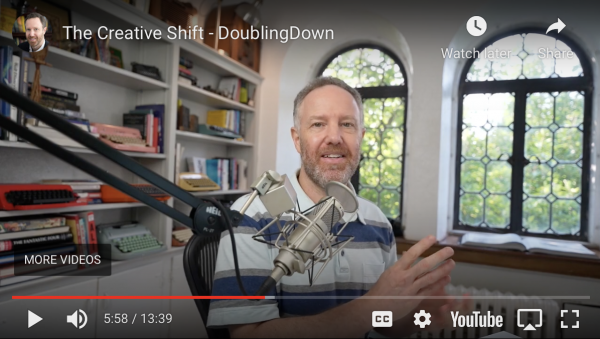
I have been thinking about this during my own creative reset this year. One thing I decided to double down on was my podcast, The Creative Shift. This week, I’m celebrating the launch of the new season. The first episode can be found on Spotify, Apple Podcasts, and elsewhere. Or, you can even watch the episode here:


For the podcast, doubling down means:

  1. Doubling the number of episodes. Each week you get one interview, and one episode where I talk through how to share your work, connect with your audience, and understand how marketing works.
  2. Videos with each episode. Every time I do an interview, I get to “meet” the creator through video, but in the past I have mostly just published the audio. I want you to meet these creators as I do. I invested in a new camera setup in my studio for this purpose.

You can subscribe to the podcast in the following places:

But of course, I’m not just doing more. I’m doing less of other things in order to stay sane, and to manage my creative energy. This podcast has its roots in a project I worked on in the early 1990s, where I interviewed bands for a zine I published. Here’s a much younger me:


At the time, I was able to interview Oasis, Blur, They Might Be Giants, and so many others. As I consider what it means to double down on the podcast, I am working to honor the intention I started out with decades ago. To envision how each episode builds to a larger body of work. In re-committing to the podcast, I’m focused on meeting inspiring creators, better serving my listeners, and digging deep into the creative process.

If you have suggestions for who I should interview or topics I should cover, let me know! And if you have enjoyed any episodes of the podcast, please consider rating it on Apple podcasts, sharing it with a friend, and letting others know about it.

Next week I will release the first interview of the new season with the amazing Nikki Grimes. Thank you for being here with me for it.

-Dan

Doubling Down: Welcome to the New Season of the Podcast

Welcome to a new season of The Creative Shift podcast. Today, I want to share what to expect this season, and how I’m doubling down on the podcast. This is a process of challenging myself to give more creative energy to the things that matter most, and consider how this podcast can be most useful to you, the listener. You can find a video of this podcast at WeGrowMedia.com/thepodcast and you can find me on social media at @DanBlank.

You can listen to the podcast by clicking ‘play’ below, or in the following places:

You can watch the episode here:

Creating is the best marketing

In the past year, I have written several times about a creative reset I am working through. What is that? It is to realign where I put my creative energy to ensure I am proactively working on the things that matter most to me. This is how I described the goals of a creative reset recently:

  • To feel a sense of creative clarity.
  • To make the difficult choices about where to put my time and creative energy.
  • To ensure everything I work on feels aligned.
  • To focus on creating the moments and experiences I want my life to be filled with.
  • To consider how I can help writers and creators even more.

As I considered this over the summer, I have been looking at those who are releasing big creative work: books, albums, movies, and so much else. And how their impact is more than a “like” on social media, but rather, something that creates a body of work that will last years… perhaps a generation.

Creating great work is the best kind of marketing. The way we share and engage is in service of the writing and art that we craft. As I think about all of this, I am looking at those who are coming out of the past year or two having clicked “publish” on significant work they have produced.

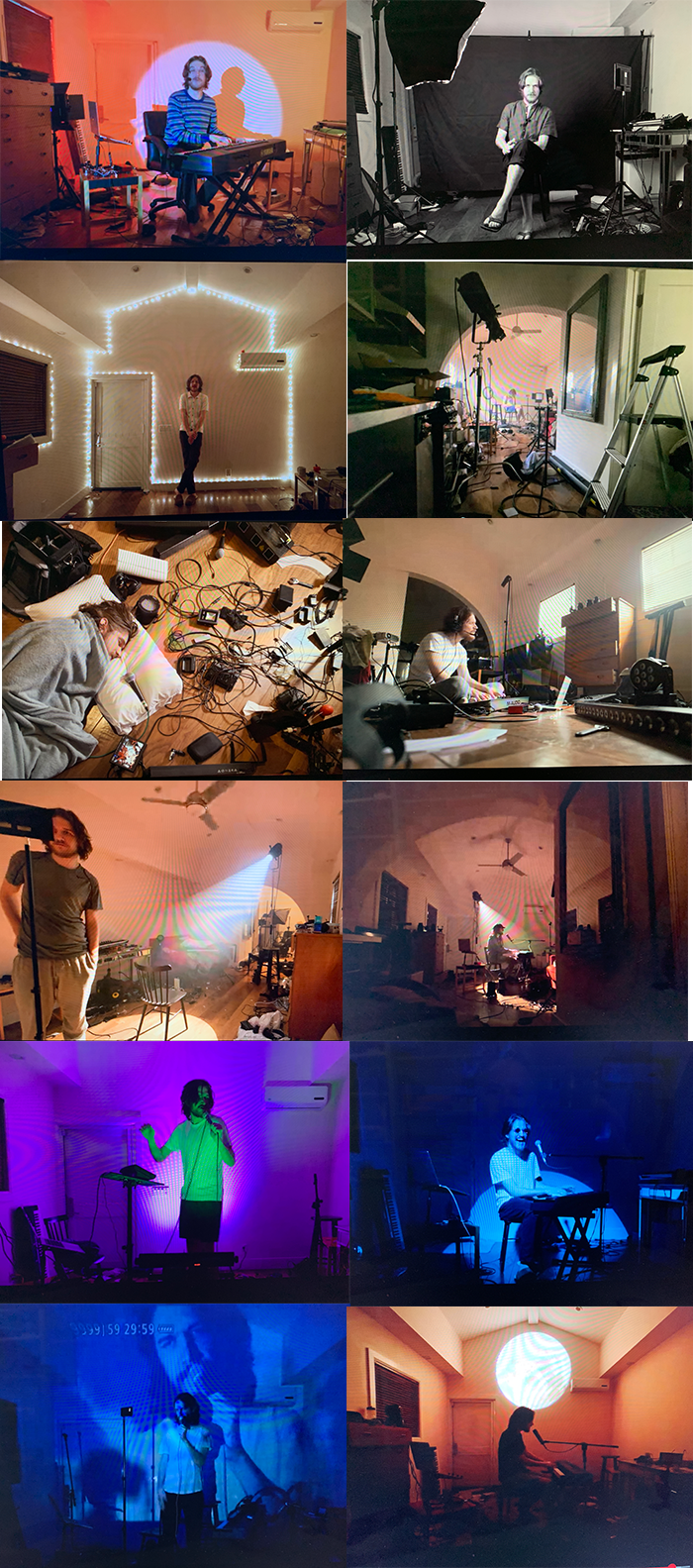
I recently heard of a comedy special* that, beyond the comedy itself, focused on the process of how we create. It was filmed in a single room during the pandemic, and the comedian himself not only wrote the material, but filmed the entire hour and a half special alone. Throughout the special, you see shots of him preparing cameras, lighting, playing with angles, and dealing with tech that will help guide the performance. The entire “set” is a mess that will look familiar to any creator:


Even though this room looks very common, we see it in many different ways throughout the hour and a half. It changes in tone largely through a variety of LED lights.

Even though the special focuses on comedy, it is filled with much deeper themes. One that follows through many of the performances is that of anxiety and depression. The comedian explains how he had suffered from panic attacks when doing live performances in theaters, and quit performing for five years. Then, as 2020 started, he felt he had done the internal work needed to perform again, and finally get back out in the world. Of course, this coincided with the beginning of lockdown. As the special progresses, you see his hair and beard go from short to very long, and much of the material talks about anxiety head on.

What resonated with me was seeing the process. You can feel the delicate balance of what it means to be trying to create when in total isolation and hope that the final product lives up to expectations. This is how most writers and artists work regardless of lockdown. So many writers I speak with spend years working on their books, and their computers are filled with notes, drafts, research, and various files from the creative process.

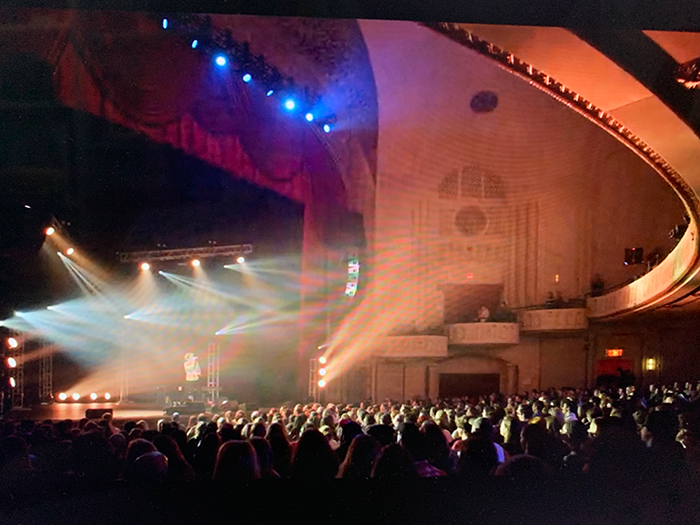
To me, the special highlights the advice that we hear often, which is to use what you have. This is what his previous special looked like from several years back, shot in a sold out theater with professional production value:


When I compare this to the special he recorded alone in one room, it reminds me that so much of how we create and share is not about the fancy tools we have, but our ability to express our creative vision, and connect that with others in deeply human way. I talk to a lot of people about what effective marketing looks like. It is easy to think that if you learn the “professional best practices,” if you get the right tools, if you copy the right people, that marketing becomes a science you can replicate without taking much social risk.

Yet, again and again what I see working effectively is people showing up with a sense of authenticity; experimenting with new ideas; connecting with others as a human being, not a brand — and that in the most surprising ways, this leads to the deepest connection, and the most viral moments.

As I have considered this for myself this year, I have been crafting a plan for the Fall:

  • Spend time every day writing my next book. Longtime readers may feel a sense of déjà vu in hearing this, I have been working on this book off and on for 5+ years. It has changed again and again, and there are tens of thousands of words that will not make it into the final book. But the current draft is feeling really good to me, and I’m excited to put my creative energy into completing and sharing it.
  • I will be releasing the new season of my podcast very soon. I spent months interviewing some incredible writers and creators. It kicks off with an interview with the amazing Nikki Grimes (author of 80+ books!) As I prepare these interviews for release, it has been incredible to see many of these writers celebrating new achievements. Janae Marks just announced that one of her books will be turned into a film from Disney, and Miranda Beverly-Whittemore just had her new novel featured in a rave review by The New York Times. I can’t wait to share these interviews with you.
  • I have been considering changing how I use social media, so you can look for changes happening on my Instagram and Twitter feeds as we move into the Fall. Ideally I will be able to share more of my own creative process.
  • Oh, and after a small break, I am picking up the guitar again every day to practice.

How we create and share often happens in small moments, at times when we aren’t sure if what we are doing will be effective. As I have considered my own creative reset in the past year, it is a process of getting more clarity on my creative vision, and how I can fill my days with the work and people who inspire me.

The more we create, the more we express, the more we connect. Creating is the best marketing, and the foundation for all the other ways your work will get shared.

To read more on this, here are some other posts I have shared:

-Dan

* The comedy special I reference above is called “Bo Burnham: Inside.” I know very little about Bo, and find that comedy can be polarizing, and even offensive to some. So my focus in featuring the special is not to advocate specifically for any comedian, but to simply use this as an example of the creative process.