How a Creative Community Fuels a Creative Life, with author Amanda Stern

Amanda SternGrowing up in New York City’s Greenwich Village, Amanda Stern met Shel Silverstein when she was 12, lived on the same block and Bob Dylan, and described it as: “the whole village was like a stage, and everyone was in a show.” We explore her success as a writer with 9 children’s books, 2 young adult books, a novel, and a memoir, and the value of being a part of a creative community. She says: “Making connections and building community is one of the best ways to generate ideas and come up with new projects.”

You can listen to the podcast by clicking ‘play’ below, or in the following places:

You can find Amanda in the following places:
amandastern.com
Her podcast: Bookable
Twitter: @amandastern
Instagram: @alittlestern
Facebook

Impostor’s syndrome, creating, and sharing

I am preparing to share some training events later in the winter, and I wanted to know: what questions do you have around author platform, marketing, book launches, and the creative process? Reply to this email and let me know. This will shape what I create in the trainings, which will be free.

Something that comes up frequently when I speak to writers is impostor’s syndrome. This feeling that their success isn’t deserved. Or that what they are working on isn’t good enough. Or they are overstepping a boundary in how they share their work. Over the years, I have found this is common. And what’s more: it doesn’t go away with success. In fact, it can become amplified.

On social media the other day I saw a very successful writer share this:

“January is a hard month for me… I’m fairly certain my book is terrible, my friends are only pretending to like me, and my career is circling the drain. So if you feel that way too, you’re not alone.”

When I went to find that status update, it had been deleted, so I don’t want to name the author since I assume they thought twice about having this out there. But it’s worth noting how successful they are: a New York Times bestselling author of dozens of books books, in a range of different genres and publishers. They have tens of thousands of followers, and often share inspiring advice that people love.

Yet, that status update… that feeling.

So much of the work I do with writers is within this context:

  • When someone is writing their author bio for the first time, it can feel impossible to characterize your entire life, your entire creative vision in a brief space.
  • When creating a content strategy for what they will share on social media, they can worry that the marketplace is already too crowded, why add their voice to the mix?
  • When preparing to launch a newsletter or podcast, they can feel that perhaps they aren’t quite ready. That they need a better microphone, or should pause and take a class on interviewing first.
  • When launching a website, they may feel that it is too soon. That by having a website, they are asking for too much attention.
  • They worry that if the commit to sharing online that they will run out of things to say.
  • When emailing other authors, they may fear that even a generous note is somehow too self-serving.
  • They may resist sharing or reaching out to anyone, for fear that they are bugging them.

These reasons (and others) are why we hesitate to share. For fear that if we are seen trying to succeed, that the universe will somehow make us fail for our hubris.

Creating and sharing is difficult work because it connects so much to who we are, how we define our creative vision, and how we connect with others. These feelings can be infused in every stage of the process of what it means to write, to develop your platform, and to share and market your books.

Knowing that is critical, because I think it can do the most damage when it surprises you. When you feel “wow, where did that come from? Must be serious if I’m feeling it. I’d better NOT share now. I’ll just wait. And wait. And wait. Maybe someone else can share for me…”

Because that is the real danger. Waiting and waiting and waiting to feel you have permission to create. Permission to share. Permission to connect with other like-minded creators and readers. The waiting can silence not only your own creative vision, but your own ability to truly inspire someone with your work at a moment they need it most.

What is the solution to impostor’s syndrome, or a natural feelings of anxiety about creating and sharing? Well, let me share an example from author-illustrator Lori Richmond.

She and I were talking the other day, and she had just sent out her email newsletter. I congratulated her on this, and she said, “I woke up yesterday and said to myself, ‘today I’m making a newsletter, and it will be mailed tomorrow no matter what.”

It’s worth noting that Lori has a couple very stressful things going on in her life right now. Thankfully, they are positive things, but they are eating up a ton of her time and energy. Yet, amidst that, and amidst her otherwise busy daily life, she created and sent the newsletter.

Let’s analyze it. Why? Because it embodies how consistent creative actions lead to powerful results. Her newsletter had 5 sections. Here is a miniaturized version of it just so you get a sense of it visually:


This is how Lori breaks out the five sections:

  1. Book Celebration: She has a new book out, so she celebrated that first. It’s worth noting that (of course), most of her newsletters are sent out when she doesn’t have a big milestone like this to celebrate.
  2. A Video Tutorial: She has weekly series on Instagram called “Doodle Class” where she teaches kids how to draw. She shared the video from the previous week.
  3. Featuring Her Corporate Workshops: Here she talks about the workshops she does for corporations, and encourages her readers to hire her if their company’s needs align.
  4. Sharing Recent Illustrations: At the start of the year, she decided to draw a self-portrait every day of the year and share them on Instagram. Here she shares all of her self-portraits from January.
  5. Seeking New Work: She pitches her services in illustration, marketing, branding, small business websites, and more. She also asks her subscribers to share her work.

What I see here is someone who is creating all the time, continually putting her work out there, being clear about the work she would like to do more of, and how that may align to the interests of her readers.

You can see the entire newsletter here. Oh, and be sure to subscribe to Lori’s newsletter so you received future issues!

If you ever suffer from impostor’s syndrome or have anxiety about how you develop your platform as an author, here is some advice:

  • Realize this is normal. We all feel this at some point. Or even frequently. Success doesn’t make it magically go away.
  • Creating and sharing is a wonderful way to battle anxiety over creating and sharing. I know, that sounds strange. But find a way to do it in a small and simple way that feels authentic. When Lori shares a self-portrait, it is a small illustration she does. But when you zoom out and look at a month’s worth, you can see the amazing body of work more clearly. Every creative act builds upon the next.
  • Talk to other creators. Reach out to other writers and people who take the risk to create something new. Talk about the creative process and how they manage their own anxiety about creating and sharing. Don’t go it alone.

I work with writers everyday on book launches, platform building, and integrating creativity and sharing into their daily lives. If this work seems difficult to you, that is because it is. Because it asks you to stand up for who you are. For the vision of what you want to create. And to connect it with the lives of others.

That isn’t easy, but it is worthwhile.

I started this note by asking you to send me your questions about author platform, marketing, book launches, and the creative process. Please hit “reply” and let me know.

Thanks.
-Dan

Knowing your readers

Two writers I am working with recently told me how our work in establishing their author platforms and marketing strategies is helping them with their writing. One expressed how our work has helped them clearly see the connections between all of her books in terms of the themes. The other said the work is helping to figure out some aspects of how she is ending her next novel.

This is not uncommon feedback for me to hear. Over the years, many writers have told me that they wished they worked with me earlier, while they were still writing their books, because it would have helped them better frame their messaging and how it would connect with ideal readers.

Today I want to talk about how these two things can often work together: the creative process with the platform/marketing process. And how each strengthens the other to create what so many desire: a career as an author that feels authentic and fulfilling. Let’s dig in…

Too often, writers think of marketing as something tacked onto the end of the publishing process. A necessary evil of “promotion” that they worry will tarnish their otherwise pure intentions with their writing. They may have the same apprehension when they consider the concept of an author platform. They assume the experience will be them begging for social media followers, and they dream of the day when their writing succeeds big enough so they don’t have to worry about platform or marketing anymore.

But that isn’t how I see platform and marketing. I’ve always defined an author platform not as followers, but as consisting of two things:

  • Communication
  • Trust

It’s knowing the messages that best communicate what you write and why, and framing them in a manner that engages ideal readers. Not just “what’s trendy” from a publicity perspective, but how to share your work — the questions you ask, the themes you explore, your deeper reasons for creating — in a way that people can understand. Some of this is about giving people a way in to your writing.

My book is called Be the Gateway for a reason — the gateway is a metaphor about how we are better able to lead people through it. But the book also challenges you to step outside of your gateway to better understand where your readers are and what resonates with them. Which brings us to trust.

I mentioned above that many writers like to wait to talk about their work. They want the book to be finished and ready to be published before they share it with others. There is, of course, a logic here. These writers may reason, “Why would I talk about my book before it’s finished? I don’t want to annoy people. I’ll let people know about it once they can buy it.” That makes sense.

But it also means that the first message that many people hear about this person’s writing is, “Hello! It’s been awhile. Can you buy this thing from me?”

Trust takes time. It’s why most media is built upon the ideas of frequency and, increasingly, direct engagement. In old fashioned terms, we would simply call it “talking to people.”

It would be easy for a young band to imagine that the first show they play, the moment they unveil their songs, it should be magical. It should be a big audience, a big venue, and they can imagine the music washing over the audience, creating a legion of fans that evening.

But that isn’t usually how it works. Musicians build fans one at a time. Two at a time. Eight at a time. They play shows, they get to know other bands, build relationships with venue owners, promoters, recording studio engineers, and of course, anyone who loves music.

This is not just a one-sided connection where musicians are collecting followers. The musicians are learning about their ideal fans too. Whenever I hear a musician talk about a live performance, they often mention the critical role that the fans have in the creative process. How their energy, who they are, the faces the musician sees, helps give them cues about the performance. And how the energy that is created in that interplay is what makes a great event.

Somehow, these fans are a part of the creative process. No, they are not writing the songs. No, the musician is not running a survey or focus group while they are recording. But having the ability to effectively communicate with their ideal audience and have a sense of trust with them, can improve the creative process.

These creators understand the people they hope to reach beyond vague demographics. Beyond the number of sales, likes, followers, reviewers, or subscribers.

What many writers find when they embrace their author platform and marketing is that it can be a wonderful part of the creative process, not a hindrance to it. You may hear this and ask, “But shouldn’t the creative process be pure, unhindered by expectations of audience?”

The answer? Sure. If that is what you want.

But one thing I have observed in working with so many writers is that often their creative process moves through phases. And when someone has more clarity on how to communicate their work, when they have more trusting relationships with people who appreciate the kind of writing they do, well, they have more resources to work through that creative process. More awareness, more conversations, less guessing, and more opportunities to find a path forward that feels right.

There is no one right way to do this. You can absolutely write in any manner you want, including in total isolation. Do what feels right to you.

Having the ability to communicate with readers doesn’t mean that you are writing to an audience. But it could mean that you are writing for an audience. In other words, engaging with readers doesn’t co-opt the creative voice that is in your heart. It doesn’t mean you only write to fit the expectation of a reader.

Rather, I have found that the work of author platform and marketing helps writers better understanding themselves as a writer. This happens when you consider how to communicate what you write and why. When you consider the experiences you want your writing to create for yourself and others. When you bridge the gap between “I have this idea…” to “I had this wonderful conversation with a reader about my book.”

Back in 2012 I wrote about this on my blog, with a headline: “There is a Difference Between Knowing Your Audience and Writing to One.” It included these tips:

  • If you can’t build a small audience, how can you build a large audience?
  • Regardless of when your book comes out, start building your audience now
  • Finding your audience is about listening, not talking
  • Research is often missing from most writers’ author platform process
  • Be polarizing – make choices

A reader — Vicki Orians — had commented: “I think a lot of people get confused when it comes to knowing your audience and writing to one.”

At the time, I wrote: “Knowing who your audience is shouldn’t change your work away from your core vision, but it can help you ensure that your stories reach an audience that cares.”

That is absolutely true. But over the years something else I have found is that our art is often part of the larger ecosystem of our lives. It lives within the interplay of what we experience, who we talk to, and how art and writing grows and changes beyond the words on a page.

Your writing isn’t just a product on the shelf, a book. It is how the words within it stay with someone for years. How they find inspiration from it in what may seem like odd times in their life. It exists in their minds, where it is integrated with who they are and what they experience each day.

Where is the exact line between “creativity” and the other topics I discuss here — communication and trust that can happen in platform and marketing? I don’t know. I think it is different for everyone, and even be different from moment to moment. And that is the beauty of what it means to create. To take the risk to develop your ideas, refine them, turn them into art, and share them with the world.

Thanks.
-Dan

“I Started Building Creative Muscle.”

Today I would like to share the story of how one writer found his path to create, publish, and share his novels. Everything about this journey is so inspiring to me.

The author is Julian Winters, and he and I recently chatted for my podcast. In the discussion, we touch upon:

  • How he took a huge risk to leave his job in order to pursue his writing goals, even before he had a publisher
  • The power an online community can have to support your writing
  • The responsibility an author has to get people interested in their writing
  • How one person can radically change your career for the better
  • Managing mental health and impostor’s syndrome
  • The value of social media, and it’s downsides

Julian Winters is the award winning author of contemporary young adult fiction. His books include The Summer of Everything, How To Be Remy Cameron, Running With Lions, and the upcoming Right Where I Left You.
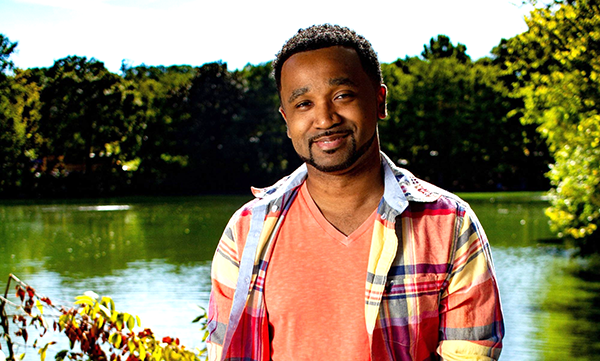
 

Let’s dig in…

Finding Permission to Create

For Julian, his writing came from an extension of play in childhood. When he didn’t have action figures of characters he wanted, he made them out of paper. He says, “I had to create my own world in my bedroom, in order for me to fit in.” Years later when he entered high school, he went online and made a discover, “I was looking up my old favorite things, like Thundercats.” What he found was fanfiction, people who were writing their own stories in the Thundercats universe, and others. So Julian starting writing and sharing his own.

“It was my opportunity to live out scenarios for my own life that I wasn’t getting. A lot of happy ending stories, and a lot of I’m the hero. It gives you this confidence to be who you are. I loved that. In my earlier stuff, there were a lot of romance stories, because I didn’t see one for myself. It felt really good to get to write about these things, feel these things, and express them through words.”

Beyond being a creative outlet, he also described how welcoming this community of writers was: “They just see you as a person who takes them to another world, they look at you as this magical person. It feels like this is who I truly am, and they accept you.” He said that writing and sharing allowed him to become a part of something.

Finding His Writing Career

After finishing high school, he went to college, describing the experience this way: “I struggled. I went to class. I did the assignments. But I felt like my focus was gone. I hated every second of it, and I ended up leaving. I came back home and lived with my shame for a long time. I didn’t live my Zach Morris dreams from TV where I’m supposed to go through my four years of college and come out making it big.”

He got a job: “I would work super hard, and get to a manager or supervisor level position, and say ‘Oh, this is success, this is where I’m supposed to be, everyone wants to be the manager of whatever it is you are working at.’ But it requires so much focus and work, and so little personal time. I didn’t have time for writing. Even when I wasn’t on the job, in my brain I was. This started leading to some bad mental health.”

“I was an adult meandering through the world doing what I was supposed to do, instead of what I wanted to do.”

It had been years since he was active in the online fanfiction world, and had since stopped writing himself.

“Then I was on vacation, and I looked up fanfiction, and I thought, I remember this world. It unlocked something that I tucked away so deeply, that I didn’t even know it was still there in my brain, which is that creative feeling of ‘Oh I can do this. I can take all of these ideas in my head, and these visions of how I want my life to look, and apply it here to characters and story and worldbuilding.”

“I was working at FedEx in a management position, and I realized this is what I’m going to do on my weekends, and this is what I’m going to do before I go into work. I’m going to get back into things I want to write just for fun, not for any other reasons such as the likes or the clicks, but just to get that creative feeling that has been stopped up for so long, out. I had a carefree attitude about it, which was the best thing for me. It started building creative muscle. It helped me so much to realize that there are other things besides just trying to be the adult that impresses other adults.”

After awhile, he describes what happened next: “I went through another really dark mental health stage, where I had to take a [30 day] sabbatical from work. I hit a brick wall. I sat in bed for those first five days, crying. I can’t go to work, which is where I put all my focus and energy; I’m struggling with writing because I have this time, but I don’t know who I am anymore. It was a breakdown that first week, where I couldn’t do anything.”

His lifeline was the tight community he developed online. He had a friend who he met in the online fanfiction community who was a professional author, and Julian says, “She kept encouraging me to take my ideas and write something original. It took a year and a half of her constantly badgering me, which I’m so thankful she did. During that 30 days, she said, ‘I think it’s time we start this. I will help you through this.’ I had already felt I lost so much, I thought, what do I have left to lose. I sat down and started doing it, building my own worlds and characters from scratch. It reignited this creative bone inside of me. For most of the 30 days, I wrote and wrote and wrote. So then nights and weekends I was working on my own original stuff, not just fanfiction.”

“I totally believe in the power and impact that one person can have on your life. Everyone acts like you have to have an army behind you before you make that jump shot for your dreams, but it really just takes one person. Sometimes it’s within yourself, but you need to have permission to stop all of these other things that you are doing, and breathe and work through this. I got that, and it changed so much.”

Publishing and Sharing His Writing

As Julian worked on his novel, he says, “There was a lot of self doubt, which is why it took so long for me to finish my first book. There was the constant reminder of once you finish, then you have to do the work work of going out and finding someone to publish this. So I stalled myself to 90,000 words. Then I was like, enough now, there is no more story to tell.”

He talked about the moment he left a safe stable job in order to focus entirely on writing books. How stressful that was. “I was making this decision before I even submitted a book to a publisher. You are jumping out of a comfortable situation into shark infested waters, and you don’t even know how to swim yet! It took a few people who said, you can do this, who said, ‘Guess what? You can always go back to the job, or just go do something else.’ Leading up to it was a lot of anxiety.”

“It was very freeing to put myself in a situation where I have to pursue this dream. There is no more ignoring it. Now I have to do it, you are fully committed. Sometimes you have to put yourself in a situation where if this is what you really want, you have to go after it.”

Julian got an agent and then submitted his work to publishers. One day, he received an email from a publisher who offered him a contract to publish his book. This is what he did next:

“I drove 30 minutes to see my mom, and I stood in her job and cried in the middle of the floor, because it was finally happening. I had quit my job to finish writing the novel, I was broke, I was clueless as to what I was going to do if this didn’t work out, and it finally happened. These emotions flooded out of me.”

When the book was released, he said that a well-known author he had connected with online shared about his book, as did many others he met through online writing communities. The result: “It did beyond my expectations. It came out in 2018, and people are still picking it up for the first time and tagging me on social media.”

When I asked him about social media, he said, “I put in a conscious effort to always be present on social media, and to be accessible, and talk about the book. I made all these graphics to get people hyped up about it. I put in work to garner attention, but you never think those ideas will pay off. Or that they will pay of in a huge way, and they did. I’ve learned that people love visuals to go along with their literature. It was me putting in the effort, and not just saying that I’m going to let it happen. Being an author is not just putting the words into Word or Scrivener, it is about putting in the work to get people interested. It’s also being genuine, and being yourself online.”

“There is a constant up and down of social media. Am I doing this because I want people to know the real me? Or am I doing this because I want them to know the real me and like the real me. We quantify the likes and comments into whether we are worthy of these people’s attention. That can mess with our own acceptance of who we are.”

He talked about how releasing his second book was even more complicated, because he worried if it would do as well as the first: “I think that is the pressure of publishing. Once you have something that works out really well, then you want to maintain that. It is so much harder with every book, and every thing that you write. It feels like you constantly have to improve upon what you did, and you feel like you can’t ever really do it.”

Can you can listen to my entire conversation with Julian in the following places:

And you can find Julian here:

Thanks!
-Dan

“I Started Building Creative Muscle.” The Creative Shift of Author Julian Winters

Julian WintersToday I would like to share the story of how one writer found his path to create, publish, and share his novels. Everything about this journey is so inspiring to me. In this conversation with Julian Winters, we discuss finding permission to create, taking a huge risk to pursue your creative goals, managing mental health, how one person can radically change your career for the better, impostor’s syndrome, and the responsibility an author has to get people interested in their writing.

Julian Winters is the award winning author of contemporary young adult fiction. His books include The Summer of Everything, How To Be Remy Cameron, Running With Lions, and the upcoming Right Where I Left You.

You can listen to the podcast by clicking ‘play’ below, or in the following places:

You can find Julian in the following places:
julianwinters.com
Instagram: @wintersjulian
Twitter: @julianw_writes