It’s not too late

I’ve been thinking about an interview I did with author Kalynn Bayron last year, where she said this:

“It’s not selfish to pursue your dreams, and it’s never too late.”

When she decided to query agents with her first novel, people told her that her book didn’t have a place in the market. That only a very limited group of people would ever want to read her book.

But then, after more than 70 queries, she met her agent who said to her: “This story has to be out there. People need to read this.”

It made Kalynn feel that someone else shared her vision. This is how she described feeling in that moment: “This story can be told. People will want to read this. There are people out there waiting for this. That was like somebody flipped a switch. That’s how I feel, now somebody else feels that way, now we are on a team, let’s go!”

When I asked Kalynn about her 70 queries, and 70 people passing, she noted that this was a low number compared to many writers she speaks with.

Think about that. When you are reaching out to the 70th agent pitching your book, that means that you are far beyond your initial A-list of agents. It means that you are in a process of discovering that there are many other agents you never knew about. And that you must constantly research to not only find them, but to try to establish a connection to them.

Then it took months and months longer, and many submissions, before they found her editor and publisher.

The way Kalynn described her collaboration with her agent and editor is inspiring. These people didn’t just magically appear at the slightest effort. Kalynn had to put herself out there again and again and again (repeat this 70 more times…) before she found her agent who became such an important part of her writing life.

When her most recent book launched last summer, it found a huge readership, with more than 1,000 reviews on Amazon, and lots of press and attention.

This is why I focus so much on the human-centered aspects of sharing and marketing. Because it is about that magical moment when you and your work connects with another human being.

Too often, writers feel that they missed the boat for their dreams, and that it is too late to pursue them now. Their concerns are myriad. Sometimes it is that they feel out of sync with current trends, that they already tried and failed, or they worry that they don’t have the time or energy required to find success.

The perception that one has that it is “too late” can create a very real internal boundary. Recently I was listening to an interview with a famous rock singer. When asked about how he joined the band, he said that at the time he was in his 30s, living with his parents, and just opened an automotive business.

He received a call inviting him to audition as the singer for a band that he knew of, and already had a big following. At first, he didn’t want to go to go. He said to himself, “Look, I’m 32. I’m past my sell-buy date for a rock band.” It would be a 5 hour drive, and he didn’t want to bother.

But then he said, “Just after that call, like 30 minutes later, I got a call from another guy who said, ‘I’m doing jingles now, would you sing on a Hoover advertisement.’ I said ‘How much?’ and he said $350 quid.” So he decided that since the Hoover ad was in London, and that is where the band audition would be, he would do them both in the same day.

That’s the only reason he went to the audition is because of the Hoover jingle.

He recorded the jingle, then showed up for the audition with the band. When it ended, he went to leave, saying ”I gotta get home and open the shop up in the morning.” But the band said, “You can’t leave.”

(The singer was Brian Johnson and the band was AC/DC.)

It takes one person to help fuel your creative dreams. This is why I encourage writers to not only create and share, but to focus on the value of one-on-one connections. Because nowadays, there is so much talk about “going viral” and “getting followers,” and while those things can be valuable, I think that too often we overlook how fulfilling it can be to connect with one person. And you never know when that connection can lead you to what you always dreamed of with your writing.

Thanks!
-Dan
Perfection vs Progress

Last week I sent out my newsletter to thousands of people, and in the very first line was a typo. Today I want to talk about how this typo represents what so many writers and creators tell me they fear: making a simple mistake that will sink their career. This can cause them to resist creating, resist publishing, and resist sharing. I discuss how this relates to impostor’s syndrome, and how perfection limits our potential, and our progress.

You can listen to the podcast by clicking ‘play’ below, or in the following places:

Marketing is not what you expect

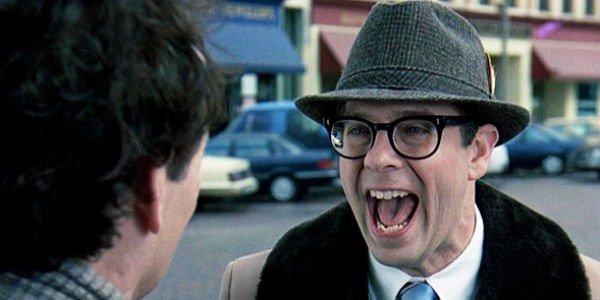
Too often, when writers think of marketing, they cringe. They expect that it turns you into “someone who sells and promotes,” instead of a thoughtful writer. Remember the movie Groundhog Day, when Bill Murray keeps bumping into the pushy insurance salesman named Ned Ryerson? That is what a lot of people think marketing is:

He’s in your face. Obvious. He wants the sale at any cost. We’ll come back to Ned Ryerson in a moment…

Back in the first internet bubble, around the year 2000, I worked at a series of internet startups in New York City. One day, the Chief Financial officer didn’t show up for work, and he never came back. That wasn’t a good sign, the rumor was, the company ran out of money. Soon after, the head of sales told us all to go into the streets around Washington Square Park, and do anything we could to get people to give us their email address to sign up for our service. It was impromptu, at first we thought they were kidding.

On the sidewalk in front of the NYU student center, our programmers, designers, and other staff were stopping strangers in the street to tell them about our internet startup. It was absurd.

That was desperation. That isn’t marketing.

(And yes, the company folded soon after. )

Marketing is not what you expect. For most writers, it is not a brazen sales pitch. Instead, it is when you delight someone. When a meaningful connection is made. When a reader chooses to engage with an author because it brings joy into their life.

I remember when I worked with author Lauri Taylor in the months leading up to the launch of her book, The Accidental Truth. She would meet with someone, and always come back to me and say something like, “We had a great conversation. We cried. They would love get the word out about the book.”

Why were they crying? Because the book was a deeply personal story to Lauri, and it always triggered something meaningful from the life of the person she was meeting with. I was amazed at how Laurie could make such a powerful connection with those she met.

Is that marketing? I hesitate to define that moment with a single word. But I know that Lauri connected people to the book and found a way for them to rally around it. Plus, these people’s lives were richer for it, and Lauri created meaningful connections in the process.

When an author signs with a big publisher, they receive a a lengthy document called an Author Questionnaire from the marketing folks. This document asks you to list every connection you have had in your entire life to an organization, a company, or an individual who could in some way, create a marketing opportunity.

Did you belong to a sorority 38 years ago? They want to know. Did you speak at a conference 18 years ago? They want to know. Do you know someone who knows someone who works at a certain company? They want to know.

Then what happens is not what many authors expect.

The author hopes that the publisher’s primary marketing focus is to connect the book to strangers — people the author alone could never reach. And of course, this is something can publishers help you do. But they start with the author questionnaire. With holding up a mirror to your life, to identify the people you already know that who they can market the book to. Why? Because the publisher knows that people who are connected with you are more likely to buy the book, and say yes to helping to spread the word. These people want you to succeed. Likewise, this is one thing that can fuel word of mouth marketing.

Many authors approached this situation at first thinking that marketing was going to be some big campaign where the publisher magically finds strangers. But it turns out to be what they didn’t expect, a game of This is Your Life, and focusing instead on the relationships and connections they spent a lifetime building.

This is why some of the work I do with writers is so focused on establishing one-to-one connections with readers and those who support books. You can read more about my approach, which I call Human-Centered Marketing, here.

Marketing is the unexpected that delights us, just as the creative process itself. When I was searching for a photo of Ned Ryerson for this essay, I also found a 10 year old podcast where the actor Stephen Tobolowsky told stories of the making of the Groundhog Day.

It was not what you would expect for a film which has now become a classic. Here are four stories Stephen shared that illustrate how unexpected the creative process is:

  • They threw out a very expensive scene that took three days to shoot, because the tone felt slightly off. They replaced it instead with a scene that featured a pencil, a 10 cent item.
  • Midway through filming, they ditched the script and wrote the rest as they were shooting. Actors got new pages each day.
  • After Stephen was done filming and flew home, he was called back to the set for one additional scene as Ned. But no one had written the scene yet, and Bill Murray didn’t even want to shoot it. As Stephen sat in his trailer and time was running out, he wrote the scene himself. He describes it as, “I had all the dialogue and Bill had the joke.” He showed it to the director on the final day on that location, they shot it in one take, and the scene made it into the movie.
  • When they went to film a critical scene, Bill refused to shoot. He first wanted to know a key fact : what he would be wearing. This was a scene where he wakes up next to someone, and what he wore (or didn’t wear) would signal to the audience what could have happened the night before. The director asked Bill what he thought. Bill said, “I’m asking you.” The director then suggested they take a poll from the entire cast and crew to decide. Oddly, the vote was a tie, and it came down to a woman who as an assistant set director, and this was her first film shoot. She said, “He is dressed in the clothes he wore the night before, all of them, absolutely, and if you do it any other way, you will ruin the movie.” The director smiled and then said to Bill Murray, “He is dressed in the clothes he wore the night before, all of them, absolutely, and if you do it any other way, you will ruin the movie.” Bill said, “Okay,” then they shot the scene.

Why do I share these stories about this movie? Because this is not how one would expect the creative process to work when you are on a big budget project, with a famous director, famous star, and a crew of professionals.

In the same way, marketing is not what you expect. It is what you make of it. It is your choice to fill it with meaningful connection and joy. To make it something that is not a dreaded “requirement” of the publishing process, but an opportunity for you to fulfill the reason you started writing in the first place: to connect with a reader.

Thanks!
-Dan

“If there is a moment where you feel lost, find a new path that energizes and inspires you.” My interview with Amber Coleman-Mortley

Amber Coleman-MortleyToday I speak with Amber Coleman-Mortley who shares her wisdom on making a creative shift in your life. It includes “delusions of grandeur,” a “social contribution of making the world a better place,” and “needing to have a plan.” She talks about the difficult parts of transitions: “[When] I took a pivot, I had a huge confidence drop. [I asked myself], what’s my identity?” Her advice: “If there is a moment where you feel lost, find a new path that energizes and inspires you.”
You can listen to the podcast by clicking ‘play’ below, or in the following places:

You can find Amber in the following places:

momofallcapes.com
Twitter: @MomOfAllCapes
Instagram: @MomOfAllCapes
Facebook

Why I create and share

A little more than 25 years ago, I was on the phone with a record label, and the publicist on the other end said words that would change my life:

“Would you like to interview the band?”

At the time, I was in college, and on the side I was creating a zine. Basically, it’s a photocopied magazine that I created on my computer, printed out at Kinkos, and then distributed at record stores.

In that phone call, the world opened up to me.

I was studying at Rutgers, in what is was then called The School of Information and Library Science, and split my time between classes in media and interpersonal communication and my English minor — Chaucer and such.

In my spare time, I worked on the zine.

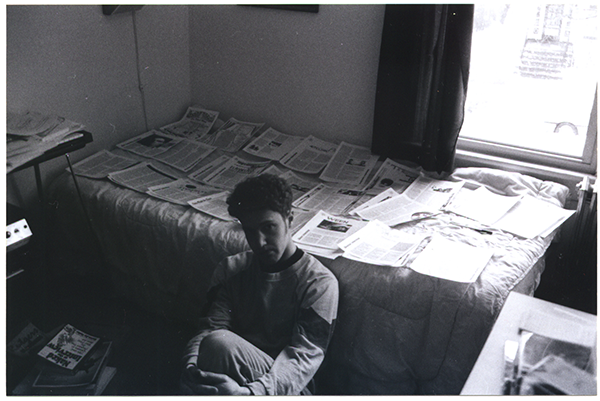
This was the age of desktop publishing, when it felt like a revolution to be able to write, layout, and print something on your computer. I was working on a ridiculously cumbersome laptop computer that was a hand-me-down from my father. Here I am preparing an issue on my bed:


It was the early 1990s and I loved music, especially the wave of Britpop coming out of England, and the indie music coming out of Seattle. I worked at the college radio station right as grunge was hitting.

At first, I just bought records and reviewed them in the zine, but soon got brave enough to call up the publicity departments of all the major record labels to ask for review copies of new albums from bands I liked. Surprisingly, they said yes! My PO Box starting filling with free music.

Then I asked if I could get free tickets to shows so I could review them. They said yes to that too! This felt incredible, to show up to a Blur show and say “I’m on the list” and actually be on the list!!!

It was on one of these phone calls where I was asking for an advanced copy of a new album that the publicist asked if I wanted to interview the band. This was for a group called Chapterhouse, which was a favorite of mine at the time. I never before considered that talking to the band would be possible. This unlocked something for me, I felt emboldened.

I started calling all the record labels seeking interviews with bands who had new albums coming out. Soon after, I had secured interviews with Oasis, Weezer, Blur, They Might Be Giants, and so many others. I chatted with Noel Gallagher at the height of Oasis’ explosion. With Rivers Cuomo of Weezer just as they were breaking. It was weird and incredible at the same time.

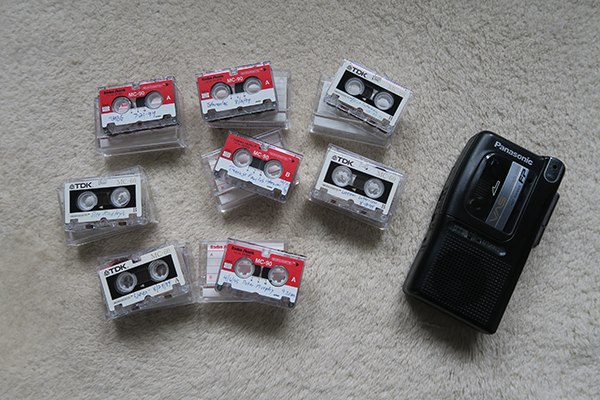
I shutter at how basic my questions must have been in these interviews, I was so so inexperienced. This was my technology for recording the interviews, and the actual tapes:


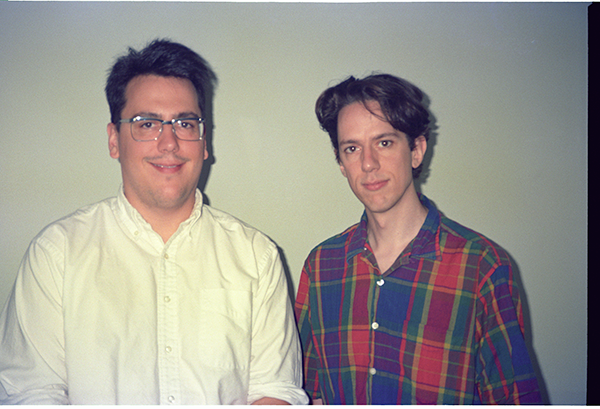
Yet, there I was in those rooms with these artists that I idolized at the time. This is the photo I snapped of John and John from They Might Be Giants when I interviewed them — this was years before I would have thought to take a selfie with them:


Most of the work for the zine was done alone in my bedroom, and like so much creative work, it was not driven by a motive to profit. Instead, my goal was to grow as a creator and fill my life with experiences and connections that were meaningful. But what came with the zine was also credit card debt. Each issue cost me anywhere from several hundred to several thousand dollars to print. I didn’t charge anything for them, I was just happy if someone read it. At the time, I earned minimum wage, which was about $4.25 per hour.

This is where interviewing and writing to deadline started for me.

About 15 years ago I started this newsletter and have sent out an issue every single week since then.

In 2010 when I launched my company, I started doing interviews again. This time it was with authors and friends in the publishing world. Oh goodness, I just found the first interview I shared:


I did these for awhile, talking to people such as Jane Friedman, Betsy Bird, Justine Musk, Kevin Smokler, Joanna Penn, Nathan Bransford, Joel Friedlander, and Bethanne Patrick, and many others. I still stay connected with these people today!

But then I stopped. Why? Honestly, I stopped because it was working. People liked the interviews and shared them. The problem was that I was worried that the interviews weren’t working towards my larger goals. You see, my company was just starting out, and instead of people getting to know me as someone to hire to help them with book marketing, I started being introduced as “Dan Blank, who does these amazing interviews…” I worried people would only see me as an interviewer, not as a collaborator with writers.

But a couple years later, I started a proper podcast sharing interviews I was doing as research for a book I was writing. The book has evolved many times since then, and is still not finished. But I kept doing the podcast.

In my recent creative reset, I asked myself, “should I stop doing the podcast?” Not because I wanted to, but because I think there is value in giving myself the freedom to choose to continue or put my energy elsewhere. After giving it some thought, I chose to keep doing it, not because it earns me money, not because it is central to my business, and not because it has a huge audience or I ever expect it to. I am keeping the podcast for the following reasons:

  • The podcast allows me to meet inspiring people. Every single person I interview is someone who inspires me, and who I would like to learn more about.
  • The podcast is about deep conversations around creativity and connecting. That is basically my favorite thing to do, and ensures that what I share to my readers can extend far beyond a sentence-long Tweet.
  • The podcasts allows me to present the work of these writers and creators to my audience. Over the years, I have heard of so many wonderful connections because of the podcast, people who were inspired by it, or actually collaborated in some way.

The podcast provides the thing I love most: to connect with and learn from writers and creators. This is something I do for the pure joy of it.

This is why I create. This is why I share. I’m filling my life with meeting new people who inspire me, focusing on deep conversations, and trying to share their voices to others. You can hear me talk through all of this in the first episode of this year, and you can subscribe to The Creative Shift podcast here.

I’d love to know: why do you create and share?

Thanks!
-Dan