
Creating that magical moment of connection

Today I want to talk about one simple action you can take to better connect you and your writing to readers, as well as those they respect and listen to. What’s more, this one is all about being generous, connecting to someone in a meaningful way, and feeling a deep sense of fulfillment in the process.

Let’s boil this all down to what writing and publishing is all about, which is connection. This idea that you have an idea, a story, an insight that you want to share. This is something that a big part of what you feel called to do. You can’t not do it.

The culmination of that process? It’s not really finishing a manuscript, although that is an amazing milestone. It’s not publication, although that is as well. Art is complete when it connects with someone. When there is that magical blend of your intention as the writer, and what the reader brings when they read it. Their own worldview, life experience, and context in which they read your words.

In that moment something entirely new is created.

As many writers will tell you, smaller versions of that moment happens when they meet someone who shares their love of a certain kind of story, or writing, or themes. This is why we have readings, literary events, conferences, retreats, meetups, and even social media.

Is it the exact same thing as what happens when someone reads your book? Nope.

But is it a wonderful connection around the same underlying things? Yes. And what’s more, it is one that you, the author, gets to experience. Most people read in isolation. It happens privately, in small moments, and the magical connection of art described above happens in their mind.

Okay, let’s get back to the single feel-good action I mentioned. One that creates a tiny version of that magical moment of connection. One where you reach out to someone who “gets” you and your writing. But also one where you allow that person to feel seen. Where you grow your own literary circle in the best way possible: not by counting numbers of followers or subscribers, but connecting with one human being.

Okay, here is the strategy:

  1. Email someone. Or, if you can’t find their email, Direct Message them on their social media of choice.
  2. Thank them for something.
  3. Wish them a good day.

That’s it. These are all tools you have. You don’t have to risk anything by asking them to do you a favor. Instead, it is you creating a special moment for that person. One where they are supported and seen, and where you connect with them in relation to the types of things you love writing about.

Who could you email and what could you thank them for? Here is a list to get you started:

  • An author whose work inspired you in some way. Tell them that. Be specific if you can. Don’t be precious here, it doesn’t have to be the one book you would take to a desert island. Thank people for characters, or specific ideas, or scenes that you loved.
  • Someone who supports books like those you write (or want to write.) This could be a conference organizer, the leader of a community such as a Facebook group, a bookseller, a librarian, a teacher, a podcaster. Thank them for their work. Again, if you can be specific about one way they helped you, be sure to mention that.
  • A reader! So many readers leave reviews online and recommend books on social media. Why not thank them? If they recommended a book months ago and you ended up reading it, then let them know. Thank them for the recommendation and tell them a specific way the book helped you. Why? Because you are telling them how they helped you. That they had a positive impact on your life.

Whenever I encourage people to do this, there is often a sense of resistance. People tell me that they don’t want to bother that person. That this person is likely busy. That they themselves don’t have enough of a platform to justifying emailing this person.

None of that is true.

I’m writing this sentence on Friday at 6:25am. Who on earth wouldn’t want to check their email at 6:35am and not like to see someone thanking them for having a powerful impact on their life through their work?

Everyone wants that.

Why withhold that? Why feel great about a writer or supporter of the arts or reader, and not let them know it?

Maybe you are thinking, “But Dan, I’m an introvert. I have a really difficult time reaching out to people.” Me too. Which is why I think that emailing someone is so perfect for introverts. It doesn’t ask you to take the stage, to beg for attention, to sell yourself.

Instead, it asks you do to what introverts do best. To listen. Have empathy. Care. To connect with someone one-on-one, in a generous and simple manner.

Beyond just feeling good, why is this a powerful powerful marketing tactic?

With these emails, you are building a literacy of your own author platform and marketing strategy. You are learning who else cares about work similar to yours. You are making the effort to establish meaningful connections with people who support this work. You are learning to make talking about this work something you find possible, and dare I say, even enjoyable.

This week, two authors I’m working with told me about how they did exactly this, and the results.

One reached out to the author of a book she loved, and was certain this author wouldn’t reply back. This concern was confirmed when she immediately received an out-of-office reply from the author saying that she was on hiatus writing her next book. She would be back in the Fall.

Yet, the very next day she received an email from this author who thanked her for the kind note, and expressed a kinship with my client since they both write about similar topics. I can tell you, that was a powerful thing to hear from someone you deeply respect.

Another writer I’ve been working with told me of a similar experience she just had:

“I wrote to an author who had had an article published in an online magazine on a theme similar to mine. I emailed just to thank her for the article and its insight and mentioned that the article had caught my eye because I had written a book on the same topic. To my surprise, she wrote a really kind email back and said [my book was] something like she’d check it out. Her checking out my book was less important to me than how grateful she was for my email. It really was a meaningful moment in the middle of an otherwise very busy week.”

I want to encourage you to create this moment for someone, and for yourself. A moment of gratitude and connection, all centered around the themes of what you write and why.

If you do this, please send me an email and let me know how it goes!

Thanks.

-Dan

“I Look at Obstacles as Opportunities.” My Interview with Filmmaker Angela Tucker

Angela TuckerToday I’m excited to share my interview with filmmaker Angela Tucker. We discussed the creative and business challenges of filmmaking, and consider the many lessons that has for writers and artists as well. She is the producer on a new film that is being released into a changed world — one where theaters and festivals are largely closed. We talk about how she is navigating that process.
You can listen to the podcast by clicking ‘play’ below, or in the following places:

You can find Angela in the following places:
tuckergurl.com
@tuckergurl
https://www.bellyofthebeastfilm.com

And you can find my first interview with Angela here.

An Author Platform Case Study

Today I want to share a case study of exactly how I helped one writer develop her author platform. We just finished working together for three months, and in our last call, were reflecting on the transformation that happened for her. She said:

“Our work has helped me think about what I want to say, and to whom. I feel positioned to write very differently than I did before. The fact that it happened during the pandemic is miraculous! This is one of the smartest things I ever did, it has changed the way I think about a lot of things, and it’s been fun.”

The experience has indeed been a joyful one for many reasons. Today I want to discuss exactly what we did to develop her platform as a writer, and the impact it has had already.

What did we do in three months? We setup various aspects of her author platform, got radically clear on her messaging, identified who she hoped to reach, who her colleagues in the writing space are, and established some rock solid habits to get her writing, sharing, and connecting. Oh, and she now has nearly 200 brand new subscribers to her newsletter and got three essays published in that time.

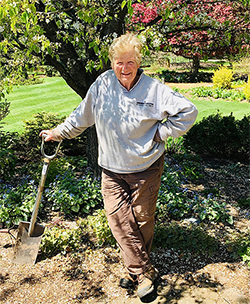
Let me first introduce you to Judith Fetterley. She spent more than 30 years as a professor, teaching American literature, feminist theory, and expository writing at the University at Albany/State University of New York. There, she also developed a doctoral program focused on writing studies.

She published her first book in 1978, The Resisting Reader: A Feminist Approach to American Fiction, followed by an anthology in the 1980s, and another book in 2003: Writing out of Place: Regionalism, Women and American Literary Culture. She has also published essays in various literary journals.

15 years ago she began a second career to become a Master Gardener, and created her own garden design business. Her writing today is at the intersection of all of these things: she writes about gardening to tell stories about being human.

So what were our goals at the start? Well, it all started with a cancellation. She had a long-planned overseas trip that was cancelled due to the pandemic. She made the decision to invest in her writing goals by working with me instead, spending the spring focused on how she can better share what she creates. She described it as, “I decided to take a different kind of journey.”

At the time, she was submitting a lot of essays to literary journals, and facing a lot of rejections. That is common for most anyone who tries to get published in journals that have very limited space, and a staff that can only review and edit so many essays a year.

The rejection didn’t necessarily bug her, but knowing that she wasn’t connecting her creative vision to other real people did.

Below are details on some of how we worked to solve that:

Getting Radical Clarity on her Messaging Plus a Website Redesign

One challenge Judith came to me with was how to effectively communicate what she writes, which is at the intersection of practical gardening advice with deeper reflections on what gardening teaches us about living.

So we rebuilt her website from scratch. A brand new template, design, images, and we rewrote nearly every page.

We crafted a new bio, connecting her past to her present in a way that highlights what she writes and why. We defined the messaging that always seemed to elude her, a clear narrative that frames her creative vision, while also honoring her past achievements.

Her previous website was outdated in terms of how it looked and the content. We landed on a website that accurately expresses who she is and where she is going.

Finding Readers

In a few short weeks, she has nearly 200 subscribers to her newsletter list (more on that below). This is way more than the nine people I started my newsletter with 15 years ago! What’s more, she said:

“I have some ideas for how to increase that number. Even more important, I have absorbed the concept of human-centered marketing and the idea of actually thinking hard about who my readers might be and what their lives might involve.  I think specifically about readers now, and in ways that I did not before our time together. And I have a clear sense of the central questions: who are my readers and where do I find them? ”

She and I went deep here, doing a full marketplace research to identify who her ideal readers may be, where to find them, and what resonates. This work happened across channels, from online retailers, to social media, to events, industry organizations, comparable author websites, and more.

The result addressed a key issue she had at the start, of feeling like she didn’t exactly know where her people were online and off. Now she has a clear sense of who they are, and where to find them. Plus, she has actual readers of her weekly newsletter to experience her writing and connect with!

Three Essays Were Published in Online Publications

Judith was very generous here, but said this of placing her essays in online publications this past quarter:

“During our time together I have gotten three pieces accepted for publication. One of them would have happened anyway, I think.  But the other two owe a definite debt to our project.  You have helped me to think differently about what I send out and where I send it.  You have helped me rearrange my thinking about the whole publishing situation.”

“I am prepared to be a lot more out there in my writing.  Your steady emphasis on identifying who I am as a writer, what I have to offer, what I want to share, my beliefs and my mission have inspired me to be more dynamic and more clear.  But I think I am also prepared to take a lot more risks.”

I can’t tell you how much that inspires me. How much this opens up her writing and its connection to others. So many of my clients tell me that they wished they worked with me while they were writing their books, because our work helped them hone their message and understanding of the reader — they feel they would have benefited if their books reflected this more.

I talk a lot about the value of having Radical Clarity in one’s creative work, and this is what I mean by it. It’s that place that allows you to create with greater conviction and ensure it reaches more people. Okay, I also love that she said she wants to take more risks!

Weekly Email Newsletter to Connect with Her Biggest Supporters

Like many writers, Judith had always dabbled in how she used email to share her writing, but never had a formal way of doing this. Together we created a weekly email newsletter. This included the technical aspects of learning Mailchimp and integrating it into her website.

We also developed an editorial calendar, a newsletter template, and she invited her colleagues to subscribe. She crafted the first few issues and sent them, honing her own process to do so. She now has a system in place to keep this going.

Finding the Fun and Usefulness of Social Media

Judith was not really a stranger to social media when we began working together, but it felt distant to her. Through our work she say she now has a familiarity and comfort on social media, is a fan of Instagram, and uses Facebook regularly.

In some ways, there is nothing unusual about that, people join social media every day. But when I see a transformation like this, someone feeling comfortable in a place they weren’t before, it feels like it opens up new channels to connect with readers. It’s like gaining an entirely new kind of literacy, how to show up and engage in social settings that once felt unwelcoming.

A 20-Page Newsletter Opt-In Incentive to Introduce New Readers to Her and Her Work

As a bonus to new subscribers, we created a 20-page PDF that shares an essay on her gardening life, as well as her best tips for gardeners. It’s honestly like a mini-book.

It is meant to take you deeper into who she is, and what she offers in terms of her perspectives on the intersection of gardening and life. So much of platform is strengthening that connection between writer and reader, and this 20-page PDF is just one step in that process.

Why is this PDF so long? I encouraged her to be “ridiculously helpful” to readers, and this is what came out. Not just some flippant single page, but a resources that was 100% unique to who she is and how she helps people.

Conclusion

Before we began, Judith had reservations. Not only was the pandemic starting to take hold, introducing incredible uncertainty to the world and her life, but we were also moving into her busiest season for gardening, the spring.

But she said, “I’m proud of myself for throwing aside my usual cautions. I’m so glad I did — it has helped me think about what I want to write and who I want to reach.”

For me, it has been a total joy and honor to work with Judith.

If you want to explore how you and I could work together on your goals, you can learn more about my consulting process here.

Thank you!
– Dan

PS: You can find Judith at perennialwisdom.net​ and on Instagram at @judithfetterley​.

“You Can Hide Behind Amazon All You Want, But People Want to Know Who You Are As a Person,” My interview with Evan J. Roberts

Evan J RobertsWhen I asked Evan J. Roberts how he has been able to promote the 18 books he has written in the last few years, he told me: “As an author, you can hide behind Amazon all you want, but people want to know who you are as a person. It also challenges you to start talking about the book and the relationship of what it means to the reader. That is a totally different conversation to have.” This is an inspiring conversation of how a trip to the library catapulted him to become an author.

You can listen to the podcast by clicking ‘play’ below, or in the following places:

You can find Evan in the following places:
ejrbooks.com
Instagram: @evan_j_roberts

What Is Human-Centered Marketing?

I asked on Twitter earlier this week: “Do you find writing or sharing your writing to be more challenging?” Nearly every reply said that sharing was the greater challenge.

If you have read my work for awhile, you may know that I focus on the idea of human-centered marketing to help writers connect with readers. A writer recently asked me what that is, half-joking if there was an alternative: non-human-centered marketing.

I replied back to her via Twitter (hence the brevity):

“That’s a great question. I’ve seen a lot of marketing strategy that treats people as cogs in a machine. As if they are an inanimate object within a larger marketing funnel. So human-centered, to me, is about seeing people holistically, including within marketing.”

So today I simply want to explain the concept of human-centered marketing. Not just what it means in theory, but how it becomes a practical way for you to consider how to reach more people, and truly have an impact with your writing.

The first way to consider this is to view other people — readers — holistically. They are each a complex and unique person. If you are a thriller writer, your readers are not just “thriller book buyers” — a special kind of zombie that walks around all day seeking out thriller books and nothing else.

To find and engage them with your writing, you need to seem them as more than just a buyer of your book. Because as a writer, we ask so much more of them. Not just to buy the book, but ideally they read the book. Which, let’s not forget, takes maybe 5 or 8 or 10 hours of their time amidst their otherwise busy lives. That isn’t all in one day either, it is often spread out over weeks or months.

We also hope they are moved by the book, perhaps even changed by it. That their affection for it leads them to post a review for it online, and to recommend it to others. That is a key aspect of word of mouth marketing, when readers and book advocates talk about books.

Too many writers only focus on the sale of the book. And this is what they get wrong about the concept of the marketing funnel. If you are unfamiliar, this is a concept of an inverted pyramid, where a wide range of potential readers may learn about your writing at the top of the funnel, and then as they go down it, there is a process to identify readers who will love your writing, and then take meaningful actions to engage with it.

Too many writers assume that the goal of the marketing funnel — the very bottom of it — is the point of sale; someone forking over $15 to buy the book.

But that is actually in the middle of the funnel. Buying a book is a wonderfully important milestone to find success as a writer, but isn’t the goal. The goal is that they read it. That this person then goes on to become a loyal advocate of your work. Someone who supports and recommends your work. The ultimate goal is a deep connection, not a brief moment where a few dollars changes hands and shows up in your royalty check as pennies.
To think of your readers in a human-centered manner, you are considering them in the context of their actual lives: busy, distracted, perhaps filled with worry about all they are responsible for. Why see them this way? Because it allows you to reframe how you share your work with them, and how you develop your author platform and the strategy for your book marketing.

Seeing readers as busy and complex individuals reminds you to consider how they will even hear about your book. Where does that person show up online and off? What themes and messages resonate with them? What else are they reading?

The answers to these questions helps you reconsider whether you should indeed have an email newsletter, or join a certain community, or become more active on social media.

It can also have you reframe what “success” looks like on those platforms because it allows you to take into account their experience. That if you send an email newsletter, a subscriber is seeing it amidst dozens of others they are scrolling through. Emails from colleagues, friends, family, other newsletters, promotions, and spam.

This begs the question: how can you truly engage this person in a manner that feels meaningful to them in this moment? That gets them to stop scrolling, to pause, to read. Perhaps even to engage with you and your work.

This connection is an incredible opportunity for you to learn. Why? Because the basis of human-centered marketing is empathy. It helps you understand readers, where to find them and what engages them. And the more you do this, the more you understand the marketplace that your writing will be trying to succeed within.

These interactions give you more opportunities to discuss the themes of your writing, without it sounding promotional. Why? Because why you write and why they read share something in common: an appreciation and love for certain types of stories.

You can also look at human-centered marketing from the perspective of psychology. What are the triggers that get people to notice things and to take action? You know, like becoming aware of and buying your book. Or posting a review for it online. Or telling a friend about it. As you learn more about what motivates readers to take action, you can infuse them in your strategies for a book launch or platform building.

If all of this sounds like work, that’s because it is. I talk to writers all the time who say that they are finally done with waiting for their book to somehow magically land in the hands of readers. They are ready to do the work to understand who their readers may be, where to find them, and take steps to reach them.

They are ready to engage.

This doesn’t have to mean that they are putting on their “self promotion hat.” Instead, it can mean that they are engaging with like-minded people around a shared love of stories and themes and books.

If you want readers to actively engage with you, then that may just require you to take the first step. As I said earlier, this doesn’t begin with you promoting to them, but with empathy. With you caring to consider who these people are as individual human beings, and what is their drive to read stories like those you write.

My days are spent talking to writers, where we discuss the many ways that this happens in real life. This is why I have my weekly podcast, because I find that the example of how others navigate this helps me to understand it in context of our otherwise busy lives.

Kalynn BayronIn my podcast this week, I interviewed author Kalynn Bayron. One thing we discussed was the role of collaborators and a support system in her career. When she was young, her parents supported her pursuit of music, dance, and opera. But when she worked with others, she found some people were not so supportive. They gave her bad advice that limited her potential in each field.

Years later, when she decided to query agents with her first novel, she received some similar feedback. People telling her that her book didn’t have a place in the market. That only a very limited group of people would ever want to read her book.

But then, after more than 70 queries, she met her agent who said to her: “This story has to be out there. People need to read this.”

It made Kalynn feel that someone else shared her vision. This is how she described feeling in that moment: “This story can be told. People will want to read this. There are people out there waiting for this. That was like somebody flipped a switch. That’s how I feel, now somebody else feels that way, now we are on a team, let’s go!”

Finding momentum in her writing career is about connecting with people who are like-minded, who share her enthusiasm and worldview. It is about actively engaging with them, not just waiting for vague likes on social media.

This requires risk, because it is inherently about outreach, putting yourself out there. When I asked Kalynn about her 70 queries, and 70 people passing, she noted that this was a low number compared to many writers she speaks with.

Think about that. When you are reaching out to the 70th agent pitching your book, that means that you are far beyond your initial A-list of agents. It means that you are in a process of discovering that there are many other agents you never knew about. And that you must constantly research to not only find them, but to try to establish a connection to them.

The way Kalynn described her collaboration with her agent and editor is inspiring. These people didn’t just magically appear at the slightest effort. Kalynn had to put herself out there again and again and again (repeat this 70 more times…) before she found her agent who became such an important part of her writing life.

Then it took months and months longer, and many submissions, before they found her editor and publisher.

This is why I focus so much on the human-centered aspects of sharing and marketing. Because it is about that magical moment when you and your work connects with another human being.

It is looking beyond the idea people as cogs in a machine.

The magic of writing and art is not just in its creation, but in that moment when it connects to another person. When the intention of the creator mixes with the life experience of the reader or viewer. In that moment, something new is created. Something magical.

That is not just a key part of the creative process, but the marketing process as well.
That is why I resonate so much with the phrase human-centered marketing.

What are the most challenging aspects of marketing for you?
Thanks.
-Dan