
All I do is talk to writers and creators. The work we do is about creating and sharing. But sometimes I hear writers justify why they can’t do that. They make conclusions such as:
- “The world is in crisis, it would be selfish of me to talk about my writing now.”
- “Who can write when there is so much to worry about? Now is not the time.”
- “It’s not even worth it to query agents now, I heard it’s best to wait 6 months at the earliest.”
- “Self-publishing? Do people even read self-published books? I don’t know anyone that does, I’m not wasting my time with it.”
- “Social media doesn’t sell books, so I’m not bothering.”
These conclusions are sometimes closely tied to personal experience too:
- “I had a big break 15 years ago with my first book, but then my editor left the publisher just before it was published. The new editor didn’t love my book, so I don’t feel it got much support. The book didn’t do well. I mean, you only get one chance to make a first impression, and mine got messed up. Honestly, why bother at this point?”
- “I worked for years on a book, and then like 5 other authors published books with the same themes. The market was flooded, and they got all the recognition. It would be embarrassing to publish it now and look like a copycat.”
Each narrative above is meant to be a conclusion that says a version of: “And this is why I can’t….”
The question I always ask as I consider these things is: does this limit your potential? Must it?
Earlier this week I spoke with Shannon Connery, PhD about this topic. About how our narratives can limit our potential to create and share. Shannon is a psychologist, and spent a portion of her career working with first responders after traumatic incidents. What was her take on the topic of how writers can use narratives to stop creating and sharing? She put it this way:
“They are giving away their power.”
That phrase blew my mind. Why? Because it recognizes this amazing power that all writers have. That you are not a cog in a machine of publishing or the marketplace. You have the power to create. To write. To connect. To teach. To inspire. To grow as a person through your craft. To help others grow through what you share.
This means that any narrative that limits that potential is a choice to give away that power. Remember that scene at the end of Raiders of the Lost Ark where they hide the crate amongst thousands of other boxes?
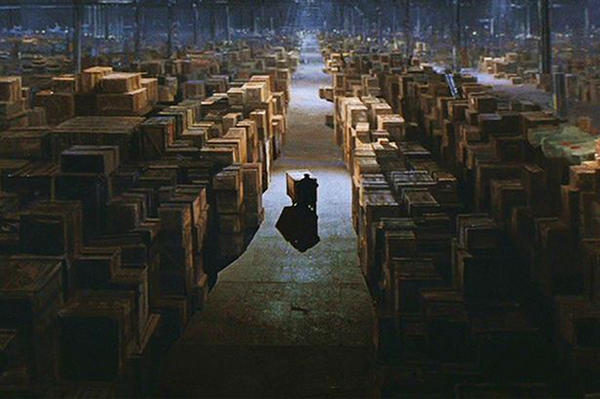
I would encourage you to not do that with your own creative power. Don’t hide it away.
In my conversation with Shannon, we dug into the narratives that tend to limit our potential, leaving us with excuses instead of creative actions. Shannon shared several stories to illustrate the point, digs into the psychology of what is going on, and most importantly, shares how to fix it!
Her advice: lead with your goals and values.
You can listen to our entire conversation on my podcast, The Creative Shift.
This power extends to our ability to reach out to others as well. I recently interviewed author Jenny Blake for an upcoming episode of my podcast. As we ended the interview, she paused and thanked me — not just for reaching out, but for reaching out now, amidst the pandemic. She appreciated that I emailed her in the middle of this crisis, when her business is changing dramatically and when so much is uncertain. It meant even more to her that I wanted to reconnect at this time and feature her on my podcast.
When you connect with someone, you change the potential of what is possible. For them. And for you together.
In my consulting and programs, I often encourage writers to reach out and say “thank you” to other writers they admire. A simple email will suffice.
Usually, the writer strongly resists this idea. They explain to me how “big” this writer is, how busy they must be, how emailing them would be bothering them.
Yet, 9 out of 10 times that I have someone do it, the other person gets back to them quickly, replying, “Thank you, you made my day!” I mean, what else are these authors doing on a random Tuesday afternoon where they don’t want to be told that their writing matters?
I would encourage you to connect with people you admire, regularly.
These can be simple emails sent to different people a few times a week. You can reconnect with old colleagues and acquaintances, or to establish new connections with those you admire or would like to meet.
You don’t need to pitch anything or promote yourself. Just say hello, thank them, and explain why their work matters to you.
That is an incredible creative power you have. And one that establishes the most critical parts of an author platform: communication and trust.
Who can you email today to do exactly this?
Thanks.
-Dan
 In today’s episode, I speak with Shannon Connery, PhD about how many writers and artists give away their power to create and share. We dig into the narratives that tend to limit our potential, leaving us with excuses instead of creative actions. Shannon shares several stories to illustrate the point, digs into the psychology of what is going on, and most importantly, shares how to fix it! Her advice: lead with your goals and values.
 Among many other achievements, Brooke is the author of a whole bunch of books, and the publisher of She Writes Press and SparkPress. Grant Faulkner is the Executive Director of National Novel Writing Month (NaNoWriMo).
 I was reading
  This week I sat down with bestselling author Jennifer Louden to talk about her brand new book,
  So many writers and artists I speak with regularly reassess the path they are on with creating, publishing, and sharing their work. They ask a version of “Why bother?” Today, author Jennifer Louden shares two incredibly useful resources with us. The first is to take us through her new book, Why Bother?: Discover the Desire for What’s Next, and the six-step process she guides you through to find your own path. The second is she takes us behind the scenes of her book launch, and shares how she got more than 170 five-star reviews on Amazon in less than a week. She digs into what else she is doing to promote the book, discusses the biggest mistakes authors make in their book launch, and the things that surprise her most about marketing her book.
  I’ve known author Kevin Smokler for years. Recently, he did something astounding: he helped create an amazing documentary film called Vinyl Nation. In today’s episode, I chat with Kevin about how he took that left turn creatively, and his advice for collaboration with people you admire. We also dig into the topic of the film: why did vinyl records come back into fashion, and how does that inform how we come together around music, art, and writing.