Seth Godin on His Career and Creative Shift

I’m excited to share my interview with author, entrepreneur, and teacher Seth Godin. He just released a new book, This is Marketing, and has spent his career sharing advice in his 17 other books, 7,000 blog posts, and many other resources. In this podcast, we dig deep into Seth’s career, and the many decisions he made in order to create a staggering body of work. 

You can listen to the podcast by clicking ‘play’ below, or in the following places:

You can find Seth in the following places:

“I don’t want my art to be good or bad, I want it to be me.” My interview with Rebecca Green

In this remarkably honest interview for The Creative Shift Podcast, author and illustrator Rebecca Green gives us a behind-the-scenes look at how she continues to find her creative direction, and navigate growth in her career as a full-time author/illustrator.

Some topics we dig into:

  • How she finds the clarity to grow with her creative work, instead of feeling controlled by the market.
  • How she is preparing for a growth spurt in her career
  • Her love/hate relationship with social media.
  • How she uses collaboration to help her strategically reach her creative and business goals.

You can listen to the podcast by clicking ‘play’ below, or in the following places:

Some highlights of our conversation:

  • How even someone as successful as her feels frustrated, and that she is still searching for her style: “I’m constantly frustrated. I was telling my husband, ‘I feel like I’m on the cusp of something great, I’m about to arrive and make the work I want to make.’ And he said, ‘Yeah, but haven’t you been saying that for 10 years?’
  • The process she is using to shift from one style to the next: “It’s very difficult to change and grow within the confines of having client work. I feel like this past year was a huge transition for me, a transformative year. I came out of it on the other side feeling that something new is coming. It’s been a struggle to work [for my clients] in my old style. They hired me for something I had done before. They wanted, not this new work, but something they have been expecting. That has been a struggle for me. I’m finishing these projects, and clearing the next couple of months so I can completely transform my portfolio and present something new to get jobs in the future based on that new work.”
  • How she is trying to infuse her creative process with joy: “Making art is fun, but it’s not. One thing I’m trying to do is to not make struggle feel like a necessity in art, so that when I do have fun, I’m okay with that too. I think for a long time, I held onto the idea that it has to be hard, otherwise I’m not doing it right. I’m trying to let that go.”
  • How she is judging if her creative direction feels right: “I don’t want my art to be good or bad, I want it to be me. I want it to say something, I want it to have emotion.”
  • She is using collaboration with a close friend to help her create a strategy for her work moving forward. She has weekly calls with Meera Lee Patel (whom I’ve interviewed twice on this podcast here and here). This is how Rebecca is approaching it: “I have a plan. I’ve been working with a friend, Meera, Skyping on a weekly basis. We have spreadsheets with our three main goals for the year. I have been putting down what is my vision, resources, incentives to follow through on a goal, and what is my timeline. As a freelancer, as an entrepreneur, as an artist, often we can wait for the opportunities to come our way. But they will never be quite what we want. I’ve been very strategic: a portfolio reset, and a website reset is one part of that. I’m trying to be better at business.”
  • Why she feels collaboration is important: “You have a sense of accountability, you are not just floating on your own.”
  • How she stays focused on her own growth as an artist: “Every project or growth spurt or time I saw a positive shift, it is because I came back and asked, ‘what do I have to offer?”
  • How social media can stir up some complex emotions: “On Instagram I see other people’s successes, what is trending, and what is booming for other people. Sometimes that is really inspiring, but at other times, it feels really defeating to see all these other people really being successful while I’m not sure what I want to do. So there are times I feel I should be more business minded, and do things that I see other people succeeding at. But I never actually go for it. I have such a love/hate relationship with Instagram. I want it to feel true to me.”
  • I asked her if she knew how she went from 225,000 Instagram followers a year ago, to 258,000 now. Her reply was so honest with regards to how metrics like these can be confusing: “It’s funny, it seems like a jump from 225,000 – 258,000, but every day I look at it and think, ‘Well, I’m not at 300,000. I’m not at 550,000. I’m not at a million.’ That never stops. I remember when I was like, ‘I got 100 likes, OMG! I rule the world!’ Now, I’m like, OMG, I only got this many people… I try not to let it effect me emotionally. But I would not have a career without Instagram. The way that I grew it was meeting people face to face, moving to new places, and being in a lot of diff industries [such as magazines, books, retail, all sorts of collaborations.]”
  • How success on Instagram can leads to it’s own uncertainty and fear: ““I get nervous sometimes that IG is just going to disappear and I will be in this cave and not have the access to the outside world.”
  • How she manages the expectations that other people have on her art: “I remember the first time, it was probably 10 years ago, working for a client. I gave them what I thought they wanted, and they came back and said, “This isn’t your style. It’s not actually your work.” It was the first time I remember saying, “Wait, I define what my work is.” I have always been conscious about fitting myself into client projects. Sometimes it is amazing. Sometimes it is difficult. So far, following what it is I truly want to be making, that has always led me in the right direction.”
  • How she managed her time and expectations when she was first starting out: “When I first started, I would send out emails, I applied for agents, and I heard nothing for months. I would send out three emails, and I was like, ‘Nobody wants to work with me.’ So I was always went back to the studio and said, ‘I will focus on what I can control, which is the artwork.’”
  • How she kept creating and doing client work, even as she moved from Nashville to Japan. She described it this way, “Japan is so different from my life in the US, that it feels like a break from reality.”
  • How, amidst one of the biggest periods of growth in her career, she has adapted her creative process to her lack of space in her apartment in Japan. “I’m keeping it simple, but I dream of having a big studio, more than I’d like to admit.”
  • How living abroad is effecting her art: “Living in Japan has changed the way I think about art.”
  • Her advice about the value of the creative process: “There should be more of an emphasis on process and not the end goal. I don’t think you ever arrive. I don’t think you ever get to the place where you think, ‘Well, now I’m done.’ I will think to myself, ‘Why am I not where I want to be 10 years in, why do I still feel like a novice? How do I still feel like an amateur, like I don’t know how to draw?’ I think there needs to be more of an appreciation for the shift the change the process and figuring it out.”

Last year I shared my first interview with Rebecca, where we discussed navigating creative burnout.

You can find Rebecca in the following places:
http://myblankpaper.com
https://www.instagram.com/rebeccagreenillustration/

I was stuck. This is how I got unstuck.

Today I want to talk about the practical steps you can take to actually take your writing to the next level. By this I mean:

  • Establish rock-solid creative habits.
  • Define your creative identity.
  • Get radically clear on your priorities of what you want to create.

If you are like many writers I speak to, you feel stuck for some of these reasons:

  • You are busy amidst a day-job, managing your family, attending to your health, and a heap of other responsibilities.
  • You have been trying to trying various tactics to focus on your writing, but for whatever reason, the habits never stick.
  • You feel alone in your creative work. You have no colleagues, no feedback, no accountability, and no one who shares your creative vision.
  • You have too many ideas for what you want to write. So you get stuck in analysis paralysis, unable to move ahead, or you hop from one thing to the next, but never really finishing anything to your satisfaction.

You have a deep passion for what you write. Yet, you feel distant from your goals of writing, publishing, reaching readers, and feeling fulfilled as a writer.

I want to share an example of how I have been using the following things to solve this for myself, and radically shift one of my own creative habits. I want to talk about:

  • Coaching
  • Mentorship
  • Accountability

And how these things helped me develop powerful creative habits, and a sense of radical clarity in my goals.

Then I want to tell you about a program I’m running that can help you get these things for your writing life. Let’s dig in…

I was stuck

A few months ago, I wrote about my goal of finally learning how to play the guitar, after a quarter century of dabbling with it. The post was called “What Practicing Guitar Every Day for a Year Taught Me About the Creative Success.

In truth, as I was finishing up that year of playing guitar every day, I was losing steam. Here I was, practicing for months on end, but I found that I:

  • Got stuck in the same bad habits.
  • Had so much advice from the internet (videos, lessons, articles) on what to practice, I didn’t know how to choose. I would bounce from one idea to the next.
  • I felt like crap about my playing because all I could see was how much I didn’t know, and because I only practiced alone, I wasn’t sure how to break out of the rut.
  • I worried if I was committed enough to really achieve my goal. I had no idea how other guitarists were doing this, and how one moved from one milestone to the next.

It reminded me of that line in the theme song from Friends:

“It’s like you’re always stuck in second gear…”

I actually just Googled this, and read this wonderful explanation of that line from a mechanical engineer:

“Second gear typically covers the range from about 5 MPH up to about 25 MPH… If your transmission malfunctions and can’t shift out of second gear, you can get around town, awkwardly, but can’t get up to highway-cruising speeds. This situation is used as a metaphor for the feeling of [being] unable to make progress on the bigger and better things that they dream of.”

I decided to invest in a guitar coach. Now, this was not an easy decision because, truth be told, a big part of me preferred to use that money to buy a shiny new guitar.

One that would look amazing. Play amazing. Hold it’s value. Something I could look in the mirror and say, “I’m a guitar player!” And then do this massive air guitar motion.

But I didn’t do that.

Instead, I invested in a coach, and this simple chart will illustrate why. It tracks the number of minutes I practiced guitar each month before hiring the coach, and after:
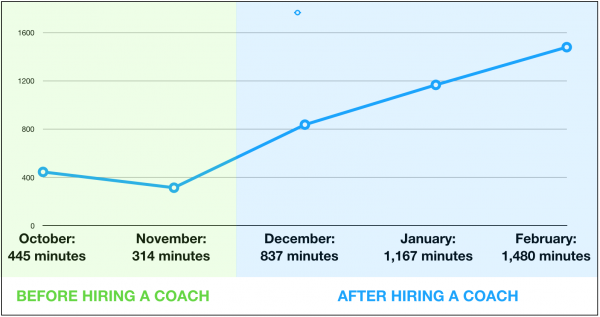
October was an average month for me before I hired a coach. I was playing about 15 minutes a day. But it was all over the map. Some days I played 4 minutes, other days 30 minutes.

In November, I was hitting a slump, and feeling less and less motivated. I played maybe 10 minutes a day on average.

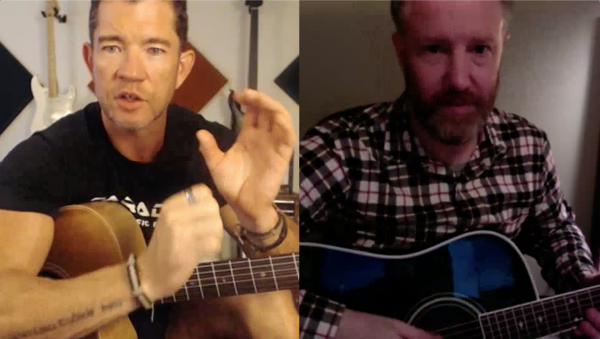
Then I hired a coach. He’s a guy who shares loads of instructional videos on YouTube. His name is Mark McKenzie, and he is known online as “Mark the Guitar Guy.” I checked out his website, and found out that he offered lessons via Skype. Now, I live in New Jersey. Mark? He lives in New Zealand. This is what our first lesson looked like:
This is what it felt like:
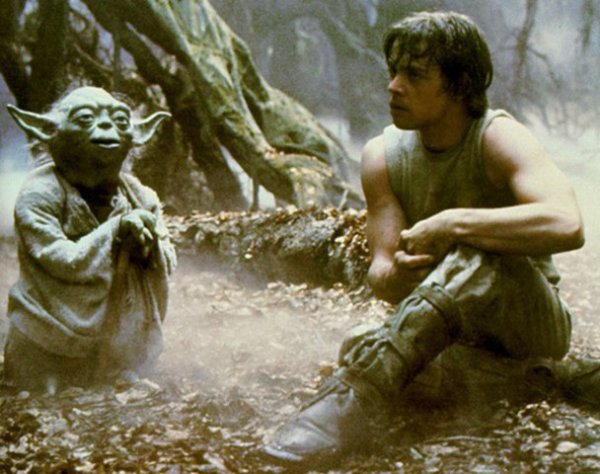
Having a mentor and accountability changed everything. In December I doubled how much time I spent practicing. From there, it just grew.

Each week I met with Mark. Each week, I found myself:

  1. Doubling down on my guitar-playing habits
  2. Having more clarity on what I should focus on.
  3. Having accountability to push ahead and reach new milestones.
  4. With an outlet to discuss any confusion or doubt I had.
  5. Celebrating my progress, instead of worrying about feeling stuck.

This past month I spent a full 24 hours practicing guitar. An entire day! What’s more, I feel a sense of momentum. My current guitar practice routine is to play for a minimum of 45 minutes per day. Just the other day, Mark and I were discussing how to get to an hour a day. It sounds small, but think about that: what if you practiced your craft 25% more often, but that only required an extra 15 minutes of time. What would the cumulative creative growth be over the course of a year?

Thanks!
-Dan

The Hopelessness and Hopefulness of the Writing Life. My conversation with Author Miranda Beverly-Whittemore

On Instagram this morning I saw a series of videos from author Miranda Beverly-Whittemore where she talked about how she keeps writing, even when she has some bad days with it. I asked if she would hop on the phone to talk about this topic, and she was up for it! In this conversation, we dig into: life after becoming a New York Times bestselling author; the importance of creative collaboration; how she works through feelings of despair, exhaustion, and doubt; and  how becoming a parent made her MORE productive.

You can listen to the podcast by clicking ‘play’ below, or in the following places:

You can find Miranda in the following places:

What comes after your book is published

Two years ago, I clicked the “publish” button on my first book, Be the Gateway. It can be scary to click that button. To not just put your voice in the world, but to be heard.

For me, publishing the book was an important milestone, but not the end goal.

For the past two years, I have heard directly from hundreds and hundreds of readers who have been effected by the book. Emails from people sharing how it helped them create a path forward with their writing career, moved them through a challenge, or inspired them when they needed it most.

That is the greatest hope that I had for the book. That it would truly connect with another human being and change their lives in a tiny positive way. That it could lead them someplace new, and perhaps even add a bit of joy to their day.

Working day in and day out with authors, I am reminded of what a gift it is to be a writer, and how harrowing that process can be.

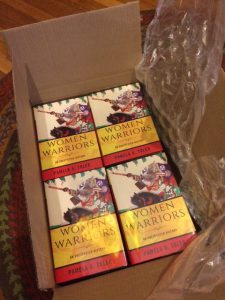
A few months back I shared a blog post about my work with author Pamela Toler (“What To Do 8 Months Before Book Launch“), and this week, her book Women Warriors: An Unexpected History was published. I woke up one morning this week to this lovely email from her:

Yesterday all my on-line channels went crazy. Lots of people from my past and present weighed in about the book. I feel lucky, and I know I worked hard to make that luck.”

I think a lot of what happened came because over the years I’ve been listening to some things you’ve said and integrated them into the way I work (which in all fairness dovetail nicely with my dad’s management philosophies). It was all summed up for me in this comment on Facebook from a woman who has become a true fan over the last two years:

“My copy should be waiting for me when I get home tonight! I can’t wait. What a delight it’s been to watch this amazing project come to life. I so appreciate Pam letting us tag along on her journey and her transparency on the challenge of taking an idea and give it life through the written word. Thank you, Pam.”

And here is a photo that Pamela shared when she received her own copies of the book:

That moment — not just of being published — but of being read is where the magic happens. When the intention of the author meets the worldview of the reader. When those two things meet, art happens.

This past week, I was able to cheer the news from author KJ Dell’Antonia that she sold her novel to a publisher. She and I worked together when she was a part of my Creative Shift Mastermind, and it has been inspiring to see all that she is accomplishing. She is a well-known nonfiction author who had always dreamed of also being a novelist. And now that dream is a reality.

You are likely on your own journey with the publication of your writing. I simply want to encourage you to enjoy that journey. Even the parts that feel overwhelming and confusing, or when you feel like you may have hit a dead end. That is all a part of the creative process.

In Be the Gateway, I shared the story of Seale Ballenger, and how he has this wonderful way to connect with those around him. Well, today I’m excited to share a truly inspiring interview I did with him. It turned into a masterclass on human-centered book publicity.

You see, Seale is the Publicity Director at Disney Publishing Worldwide. He has worked with legendary writers (Maya Angelou, Neil Gaiman, and many others) and shares his experience of what publicity looks like within the publishing industry. He has worked within Random House, Simon and Schuster, HarperCollins and many other publishers. What Seale shares isn’t just useful, but truly inspiring. You can listen to our interview here.

Thank you for supporting me, the book, and my work. My mission is to help writers connect with readers. How else can I help you do that? Click reply and let me know.

Thanks!
-Dan