
You have to ask

Some writers I speak to have this dream: that they will release their books, and something magical will happen. People will find it. People will read it. People will review it and tell their friend about it. A wave of interest takes hold, and before they know it, they have a dedicated readership.

That dream is not often the reality.

Does it happen? Yep. It actually does happen. But not nearly as often as we would like to think.

When it does happen, what is often hidden is all of the behind-the-scenes hard work that the author did to connect the book with readers. Today I want to share three inspiring examples of authors and artists who did just that. Who moved their careers forward by not waiting for the world to discover them, but to instead take actions to forge meaningful connections with those who would love their work.

Are you worried there is some complicated system? Well, there isn’t. I can actually boil their advice down to one word:

ASK.

That’s it. If you want the world to discover your work, your talent, your vision, don’t wait for people to magically discover you. Reach out to them. Ask.

But asking is super difficult, right? It means we have to engage with other human beings. It means they could say ‘no.’ It means we could be rejected. Judged. Laughed at.

Well, today I can’t wait to share the inspiring stories of Meera, Samantha, and Cathey. Three women who didn’t wait for the world to discover their writing and art, but who ensured that their voice was heard.

Meera Lee Patel on Asking

Meera Lee Patel is an author and illustrator whose creative work is her full-time job. I had interviewed her back in April, and we did a second interview a few weeks back. What jumped out at me in our conversation was this statement:

“I did a talk a couple months ago in New York, and we were talking about rejection. They asked the panel, “When is the last time you got rejected.” I said, “I get rejected every day.” Somebody kind of laughed and was like, “Are you cold calling people, why are you getting rejected so often?” I said, “Oh yeah, I’m cold calling people. I’m seeking people out and saying, ‘I like the work you make and I want to make it with you.’ I don’t see that as a bad thing.”

This scenario really jumped out at me. How Meera confronted the notion that you don’t just silently wait for people to discover your work. I loved how she reframed cold-calling: not as a ruthless pitch, but as a mutual collaboration. She goes on to explain that the perception of her success and the reality of her process differ:

“I do know that people look at me and they are like, ‘I would like to be where you are,’ and people do not come to me, even now. Any work I’ve gotten has been from me reaching and saying, ‘Hey, can I do this with you.”

“I don’t have anybody emailing me asking me to do things for them. I reach out constantly. I used to reach out to just anybody, because I was like, ‘I just need work, and I need to pay the bills.”

“I’m lucky enough that I get to be a little choosier now. I’m like, ‘What are my dream companies? Where does my work fit in? Do I believe in them and their products? Is my work ready.”

“Then I reach out to them. But nobody emails me back, ever.”

“I pitch myself so often, where I forget to where I reach out to, so it’s nice because I get to forgo that feeling of rejection. When I get rejected from somebody, and I feel really bummed about it, I have a rule, that for every rejection that I feel down about, I have to reach out to three more companies or people. That action of forging ahead anyway makes me feel like I am doing something to change the current state that I’m in. So that action changes my attitude, and I always feel better knowing that I already tried again.”

“For every 10 people I reach out to, I probably get three responses, and usually all three are rejections. But sometimes one is positive and two are rejections. Or two are rejections and one is ‘not right now, but try again in a year.’ So the acceptance rate is very very low. And I think that is across the board for most people, unless they are highly coveted, just because there are so many artists out there, and there is so much amazing work, that I don’t think companies and brands could possibly hire everybody. I don’t take it personally anymore, but it took awhile to get there.” What’s amazing to me is even with all of this rejection, this is the work it takes to create a full-time career as an artist. This process actually works!”

Meera’s experience is a cold dose of reality that cuts both ways. YES this is difficult work. But also: YES this work actually pays off.

I think too many writers and artists spend too much time scouring the web for shortcuts. For hacks that make it easy to find the secret button in Amazon that will magically sell more books.

But the real tools are the ones we are all born with: our ability to forge meaningful connections with like-minded people.

You can listen to my full interview with Meera here.

Samantha Hahn on Asking
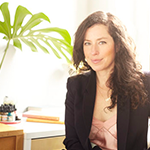
I first interviewed author, illustrator and art director Samantha Hahn back in 2015, and a few weeks ago we sat down for another interview.

I knew that she was in the middle of a big creative shift. After years of being a full-time illustrator and author, she wanted to expand her career to include art direction. She and I had coffee back in 2017 and she told me how she was breaking into the field. I was just astounded by her bravery and gumption. How she was making contacts, getting work, and learning the skills.

How did she get her first clients as an art director? She didn’t respond to job listings — instead, she did this:

“I reached out to brands who were starting out, or brands who had a really amazing product that I loved, but I could see how to elevate their presentation. That was my initial point of entry: reaching out to brands whose products I thought was good, and whose products I would be excited to showcase in my own portfolio, or elevate in their own marketing materials, and reach out to them and make a pitch about how to do a photo shoot to them.”

When she first asked a friend for advice on where to begin as an art director, her friend replied, “There is no money in it, but everyone starts with photo shoots for editorial, meaning magazines or websites.”

Even knowing there was no money, Samantha jumped in head first:

“It’s a chance to collaborate with a group of creative people whose work you like.” “That was my first light bulb moment. I can figure out how to do a photo shoot. That’s how I started, by assembling people I wanted to work with, and producing images that were compelling. I learned how to create mood boards through that. There was a lot I had to learn, and I was willing to make a lot of mistakes and fall on my face and just do the best I could and figure out things on the fly and problem solve on the fly.”

Today, Samantha continues her illustration work, but now has an impressive portfolio of art direction work as well. Why? Because she asked.

You can listen to my full interview with Samantha here.

Cathey Nickell on Asking
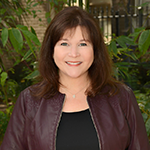
Not long ago, I worked with author Cathey Nickell in my Creative Shift Mastermind. About two years ago she published her book Arthur Zarr’s Amazing Art Car. But the other day, she posted an incredible update on Facebook:

“I recently celebrated my FIFTIETH school author visit! I’ve delivered my presentation so many times, I can practically do it in my sleep. Nevertheless, every visit feels fun and special.”

That number is stunning. Fifty times that she was able to bring her book into the lives of kids, teachers, librarians, and parents.

I reached out to Cathey about the details, and what she told me was astounding. So, I recorded an interview!

In the process of booking these 50 school visits, I learned:

  • She sold more than 2,500 copies of her self-published book.
  • She was a paid speaker for most of these visits.
  • She brought in creative collaborators — the illustrator for the book, and usually had an actual “art car” show up at the reading.

Cathey’s gumption and ability to connect her books to kids is just amazing.

You can listen to my full interview with Cathey here.

Conclusion

These three stories are not unusual. Every day, I speak to writers and artists who share their own versions of this. They didn’t find some secret hack that allowed them to get 1,000 new book sales or 10,000 new followers.

Instead, they consistently reached out to like-minded people. They asked. They collaborated. They created meaningful connections that developed into trusting relationships.

That can be scary, right? But it is also freeing. To know that today, you can can connect your writing and creative work to the world by simply reaching out and asking.

Thanks.
-Dan

P.S.There is a wonderful book on this topic that I highly recommend: The Art of Asking by Amanda Palmer.
Keeping a Book Alive (and Selling Thousands of Copies) Two Years After Launch, with Author Cathey Nickell

Today, author Cathey Nickell shares details of how — two years after release date — she has ensured her book gets in front of readers, and has sold thousands of copies. Cathey is the author of Arthur Zarr’s Amazing Art Car, and she recently finished her 50th school visit, presenting the book to kids. Everything that Cathey shares illustrates the practical aspects of how how to ensure your book finds new readers. 

You can listen to the podcast by clicking ‘play’ below, or in the following places:

You can find Cathey in the following places:

What To Do 8 Months Before Book Launch

Earlier this year, author Pamela Toler hired me to help her prepare for her upcoming book launch. We began working together 8 months before launch day, and when I said to her, “Many writers may ask why you began working with me so far ahead of book launch,” her reply was:

“I felt I was starting at the last possible minute to ensure I was taking the steps I wanted to, without being in a rush. To be thoughtful about it, and cast a wide net.”

Why did she feel that way? Because she has been down this road before. She had published other books with big publishers, and knew how much work there is to be done, and that she didn’t want to do it alone.

Today I want to take you behind-the-scenes into the work that she and I did. This is the stuff I do day in and day out with authors. Over the past eight years, I have done this hundreds of times with writers. If you are preparing for a book launch of your own, I hope this insiders look will be helpful.

Pamela Toler is an author, speaker, and historian whose next book will be released on February 26, 2019, titled: Women Warriors: An Unexpected History, published by Beacon Press. This is the book launch we worked on.

You Need Collaborators. Even If You are An Introvert. Even If You Have No Money To Invest.

Pamela’s previous books include Mankind: The Story of All Of Us (published by Running Press), Heroines of Mercy Street: The Real Nurses of the Civil War (published by Little, Brown and Company, and The Everything Guide to Understanding Socialism: The political, social, and economic concepts behind this complex theory (published by Adams Media.)

While I work with a lot of self-published authors, I also spend 50% or more of my time with traditionally published authors such as Pamela. I point this out because I think that would surprise new authors or self-published authors. There is this perception that “Once you make it — once you are traditionally published — everything will be handled for you. You can just focus on writing.”

But that isn’t true. Publishers are amazing partners in the process of sharing your book with the world, as I will share below. I think it is important to note that Pamela hired me even though she has an amazing publisher, and even though she has an established career as a published writer.

Professionals need collaborators. Whether you are starting out, or are mid-career, I want to encourage you to develop professional relationships. There are a million ways you can collaborate with people.

Too many writers are mired in hundreds of articles, blog posts, podcasts, webinars, and courses telling them all of these tips about how to develop a platform and launch their book. I mean, this very blog post is one of them. The problem with that is that writers can feel “I am doing the work of being a professional,” while they are totally and completely isolated.

You should have colleagues. This may include:

  • Other writers who write in the same genre or topic as you.
  • Any other writer, even if they write different things from you.
  • Booksellers
  • Librarians
  • Those who organize literary events, festivals, conferences, readings, etc.
  • Readers! People who like to read!
  • Editors
  • People who support books in any form. Yes, this can include agents, publishers, publicists, marketers, etc.

I speak to professional writers and artists nearly every day. What do they have that others don’t? A creative community. A network of professional colleagues and personal friends who create and support creative work.

How did they get this? They reached out. They showed up. They were curious. They were generous. They were supportive.

None of those things require you to spend even a dime. They just require you to be human.

Prepare For the Work of Being A Published Author

Can an author just write, and never give a thought to platform, marketing, or social media? Yes! I love when people write for the sake of writing.

But… when you publish, you are also participating in the business of publishing. This idea that publishing costs money, and that books don’t magically find their way into readers hands. Asking someone to spend 6-10 hours reading your book is not a small ask.

This is why Pamela said she hired me:

“I wanted a collaborator because I was too close to it. I wanted someone who would ask hard questions. The deadlines you set were useful, otherwise, a lot of important actions would get pushed to the bottom of the list. Collaborators bring different eyes to it.”

She then listed out some more specific reasons. The quotes are from her, and then I add some commentary after each:

  • “To maximize opportunity and give the book best possible chance.” The thing that no one wants to tell you is that no one really knows what will ensure your book will be a breakout success. So the real work is to do careful analysis of your ideal audience, how you can reach them, and then put in place a few specific marketing pieces. I dig into that below.
  • “Help in managing the stuff that I will have to do.” When I work with an author, I typically create a spreadsheet of all of the possible actions we can take, and from that, we carefully select key items. Even in doing that, there is so much to be done. This is where authors drown. Having someone to help prioritize and manage this is the difference between freaking out and feeling professional.
  • “Free up the publisher to do what they do best.” I loooooove the work that publishers do. But the truth is often that they have a finite amount of resources to give to any one book. The more that Pamela can do on her own to support the book, the more that this will clarify and amplify the work that the publisher will do to market it.
  • “To feel sane and relaxed.” It’s worth noting that Pamela is incredibly busy preparing for the book launch and attending to the rest of her life. She is swamped. I don’t want to make it seem as though she is in this luxurious position of feel super calm. But… because of the work she and I did, she doesn’t feel pushed over the edge, and isn’t freaking out about missing chances.

The Work We Did

8-months prior to book launch this is the work that Pamela and I focused on:

  • Clearly identify the ideal reader for the book. We analyzed what she knew about her audience already, and then dug deeper into where they hang out, and who already reaches them. We created personas for her three core audiences, and then identified what podcasts those people listen to, books they read, blogs they follow, events they go to, etc. Some of this was a brain dump of what Pamela already knew, and some of it was a big expansion. This spreadsheet gives us hundreds of ways to consider how she can connect with ideal readers, yet the entire time, envisions them as an actual person, not some vague set of demographics.
  • Get radically clear on her messaging. We analyzed everything about how she talked about the book, herself, and her writing. We rewrote her bio, her social media profiles, and considered how to frame the current book with her previous books, and even her future books.
  • Assess her online presence. We identified what needed to be updated, what was missing, and how to ensure each piece was accurate and ready for the new book. Her online presence is now much more clear than it was. During this process we worked through a complete redesign of her website (she also hired a web design firm to create that), and a revamp of her social media channels.
  • Create a book launch timeline. We started looking at what to do and when. We went through an exhaustive list of categories and tasks that she could focus on, and then selected what would matter the most to her book. We then broke those tasks down into specific actions, and aligned them to a calendar. This timeline goes from the Fall of 2018 to past the book launch.
  • Clearly define key marketing campaigns. There are a few key ideas that were developed as marketing campaigns. I can’t say what they are yet, because they are in development, but something to take from this is to clearly identify one or two ideas that you can totally hit out of the park. That will be generous to others, filled with joy, and that people will want to share.
  • Create an editorial calendar. We created a day-by-day, week-by-week editorial calendar that covers her email newsletter, blog, speaking events, and social media channels. What we wanted to consider was how her message develops as she moves towards launch, and how she can share authentic and engaging content without resorting to Tweets that screamed “Buy my book!” We also left a lot of white space in the calendar for her to share thoughts and ideas that can’t be pre-planned.
  • Demystify the technical questions. I was on call to help troubleshoot and guide her through any technical questions that came up along the way. This could include website, social media, podcasting, and so much else. There were a number of places where I smoothed over something that would have taken her a long time to find and do.
  • Consider post-launch as much as she considered pre-launch. Pamela will be speaking and promoting this book well after launch date. That allowed us to consider how she can set herself up for success in April, May and June, months after the release date for the book. Plenty of authors come away from a book launch exhausted and confused. For Pamela, we want this work to be sustainable and filled with moments of meaningful connection with her readers for months, and years, to come.

Throughout all of this, Pamela was coordinating with her publisher, who are just amazing, by the way.

Update after the launch of the book in March 2019: I woke up one morning this week to this lovely email from her:

Yesterday all my on-line channels went crazy. Lots of people from my past and present weighed in about the book. I feel lucky, and I know I worked hard to make that luck.”

I think a lot of what happened came because over the years I’ve been listening to some things you’ve said and integrated them into the way I work (which in all fairness dovetail nicely with my dad’s management philosophies). It was all summed up for me in this comment on Facebook from a woman who has become a true fan over the last two years:

“My copy should be waiting for me when I get home tonight! I can’t wait. What a delight it’s been to watch this amazing project come to life. I so appreciate Pam letting us tag along on her journey and her transparency on the challenge of taking an idea and give it life through the written word. Thank you, Pam.”

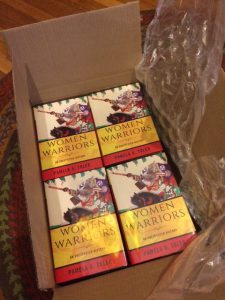
And here is a photo that Pamela shared when she received her own copies of the book:

That moment — not just of being published — but of being read is where the magic happens. When the intention of the author meets the worldview of the reader. When those two things meet, art happens.

If you need help in this process for your own writing, you can learn more about my services here.

Thanks!
-Dan

P.S.: You can find Pamela in the following places:
Her new book: Women Warriors: An Unexpected History
pameladtoler.com
Her blog: History in the Margins
Instagram: @pamelatolerauthor
Twitter: @pdtoler
Facebook

“I learned to not be afraid of risk.” Illustrator, Author, and Art Director Samantha Hahn on Making her Creative Shift

In this podcast interview, I speak to illustrator, author, and art director Samantha Hahn about why — and how — she made a huge creative shift in her career. How, even though she had a thriving career as a full-time illustrator and author, she wanted to expand her work and her creative process.

She shares details about exactly how she redefined her professional identity, got early clients, found collaborators, and infused her daily creative process with energy and inspiration.

You can listen to the podcast by clicking ‘play’ below, or in the following places:

Some of what we cover:

  • Why her creative shift was driven by her desire to collaborate more as an artist. How working by yourself can be isolating. After years of this, her work began to feel rote, and she wanted to feel inspired more.
  • She began to realize how many skills she had and services she offered that were unspoken. She wasn’t just an illustrator for her clients, she was helping to manage projects and make a range of other creative decisions. This happened under the radar and she realized she wanted to stretch those muscles more. She would pigeonhole herself, “Well, all I know how to do is illustration,” but now she understands that having done illustration for magazines, ad agencies, and publishing companies, she realizes the incredible breadth of experience she has gained.
  • How she found inspiration from her parents, both of whom worked in creative fields (illustration and music production), but who “shifted everything” when their industries shifted. They started a clothing company together as entrepreneurs and Samantha got to witness that process. “When they made that switch, it was probably at about the same time that I’m doing it [now]. I learned to not be afraid of risk. If there is something you want to do, figure it out and do it. They both had a very can-do attitude. There was nothing that they didn’t think they couldn’t figure out. They didn’t have a background in entrepreneurship or starting a business, they just figured it out as they went. I learned that hubris from them.”
  • How she figured out the very first place to start in a new career as an art director. She asked a friend for advice who told her “there is no money in it,” but everyone starts with photo shoots for editorial, meaning magazines or websites. Even knowing there was no money, Samantha jumped in head first. “It’s a chance to collaborate with a group of creative people whose work you like.” “That was my first light bulb moment. I can figure out how to do a photo shoot. That’s how I started, by assembling people I wanted to work with, and producing images that were compelling. I learned how to create mood boards through that. There was a lot I had to learn, and I was willing to make a lot of mistakes and fall on my face and just do the best I could and figure out things on the fly and problem solve on the fly.”
  • On seeking a creative field with revenue in mind: “Maybe there are some people who can enter a creative field from a place of security and just dabbling. But for me, it was a do or die thing. If I was going to pursue this, I was going to be something that I do to make money.”
  • “When young illustrators reach out to me, there is this phase where you have to make work to show what you are capable of doing. Because no one is going to hire you without seeing what you are capable of. There is that rough moment where you are like ‘how am I going to get work if I don’t have work,’ and you have to just create as much as you can. I knew there was going to be a building phase of this. I knew that there was going to be a phase where I was in hustling mode, which was intimidating, but also exciting. My goal was to do as much work as I could, do good work, work with good people, and learn as much as I could. And that’s exactly what I did.”
  • She digs into how she got her first clients. She didn’t respond to their job listings for seeking work. Instead, she did this: “I reached out to brands who were starting out, or brands who had a really amazing product that I loved, but I could see how to elevate their presentation. That was my initial point of entry: reaching out to brands whose products I thought was good, and whose products I would be excited to showcase in my own portfolio, or elevate in their own marketing materials, and reach out to them and make a pitch about how to do a photo shoot to them.”
  • She pitched people who she was doing illustration for “It looks like you could use a creative director, I could do that for you.” She reached out to old clients, and then people she had never met before. She describes exactly how she did a cold call to get a client, and how she got them.
  • How she reached out to collaborators early on, and how those relationships have grown: “I have this huge roster now of people’s work who I love, and they are now in my community. When I get hired to do a big project, I can bring them in.”
  • How sometimes, working less than market rate, is the everyday reality for people working in creative fields, and when that is appropriate.
  • When I asked if she has gotten pushback from friends or family on the creative shift, she replied, “I think it’s more me. I have this concern that I’m all over the place, like on Instagram, that its really inconsistent.”
  • How sometimes being authentic on social media means not being consistent in what you share, because our lives are multifaceted.
  • The importance of outreach, and why she prioritizes in-person meetings, and then if that isn’t possible, phone. While social media is a part of her life, creative and professional growth are often focused not via digital means. She relies on meetings, phone, email, and relationships. “When you meet with someone, you are a real person to them.”
  • How she sums up what she has been learning in this process: “If you want to make any career move, whether it is starting out from scratch or making a shift, you are going to have to know that’s it’s not going to happen right away. A mix of humility and hubris is important to have, because you are going to have some failures, you are going to have some rejections, and that is really humbling, because you might think you have the talent, the know-how, you know that you are worth it, you are a hard worker, but nobody else knows that about you. You are going to have to put your time in. That is where the hubris comes in to just do whatever it takes to create work that is going to showcase all of those things that you know about yourself.”
  • And that even after all she has done, she says this: “Even now, I think, there is so much further I need to go.”

You can find Samantha in the following places:

You can listen to my first interview with Samantha from a couple years back here: “Nurture the artist inside you – an interview with Samantha Hahn.”

And here are some of her books:

Thanks!
-Dan

The Reader Connection Project

I want to invite you to a free 10-day project to connect in meaningful ways to readers. If you are an introvert who wants to develop an audience for your writing, this project is for you.

Imagine if 10 days from now you:

  1. Had a clear sense of who your ideal readers are.
  2. Created at least 1 meaningful connection to a reader.
  3. Developed a system where you could easily connect to more readers as quickly or slowly as you like.
  4. Could use everything you learn to develop an author platform and book marketing strategy that felt authentic and 100% unique to who you are are.

Too many writers waste their time chasing marketing trends that don’t work, and feel pressured into using social media in a way that makes them feel icky.

Let’s do it differently.

I have been developed a new guide called “5 Ways to Immediately Connect With Readers” that provides clear steps to do exactly that. To launch it, I want you to join me in this project so that we can go through it step-by-step, together.

Do you need to have a book or be a published author? No! As long as you write fiction, memoir, or nonfiction of any sort, at any level, this is 100% for you.

How the project works:

  • To be a part of it, simply join this private Facebook Group.
  • Starting on Oct 30, I will share the first of five steps to connect with readers. You will receive a PDF, access to a video, and assignment.
  • Every other day, you will receive a new step in the program.
  • Along the way, join in the chat on Facebook to connect to other writers and get feedback and advice from me.

Do you have to do every single step? Nope. But I would love to have you participate in some manner. I love working with writers, and I simply want this resource to be fun and effective.

To participate, join this Facebook Group before October 30th.

Thanks!
-Dan