
Finding the time, energy, and confidence to create

This is a photo of my mom from the early 1950s on the street she grew up, in the Lower East Side of New York City:
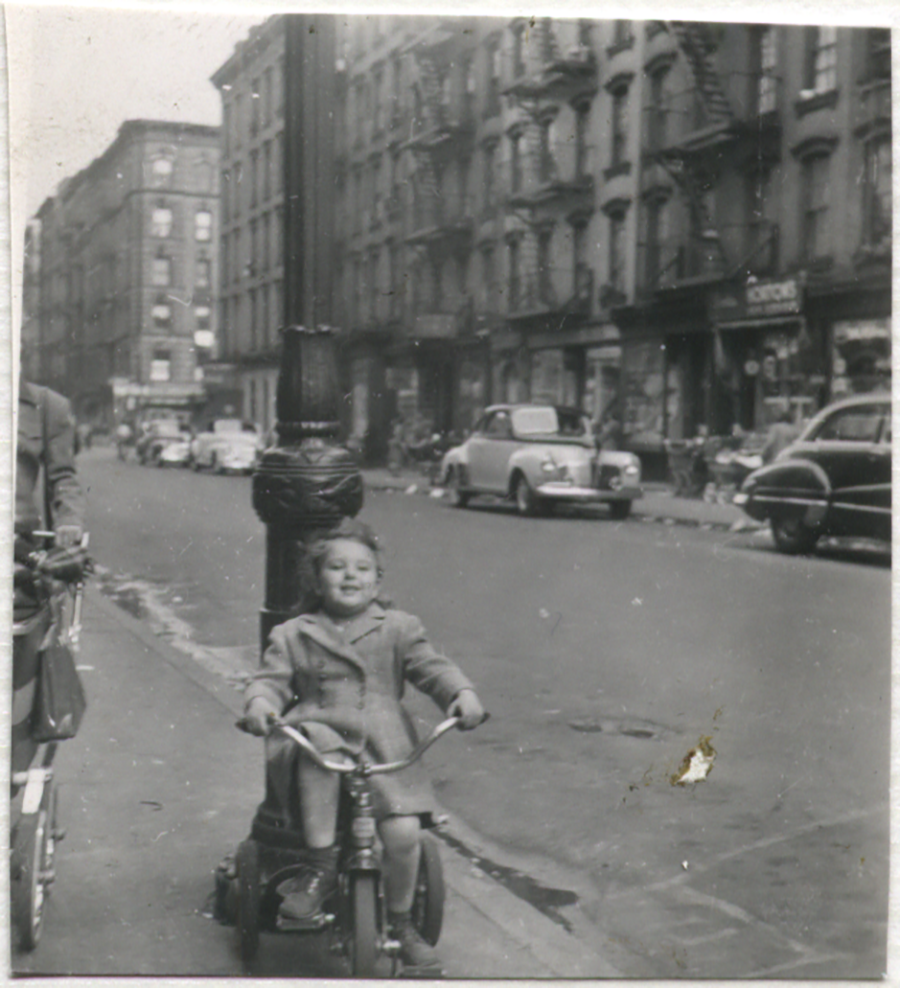
 

I have dozens of images from this period of her life, most of them out on the streets, which was filled with families, kids, strollers, stores, and a thriving neighborhood. That was the 1940s and 1950s.

But I know the neighborhood went through dramatic change in the decades that followed. I’m the family historian, and have been endlessly researching where she grew up. Recently, I came across this photo of the same exact block from the opposite angle, but from the 1980s:
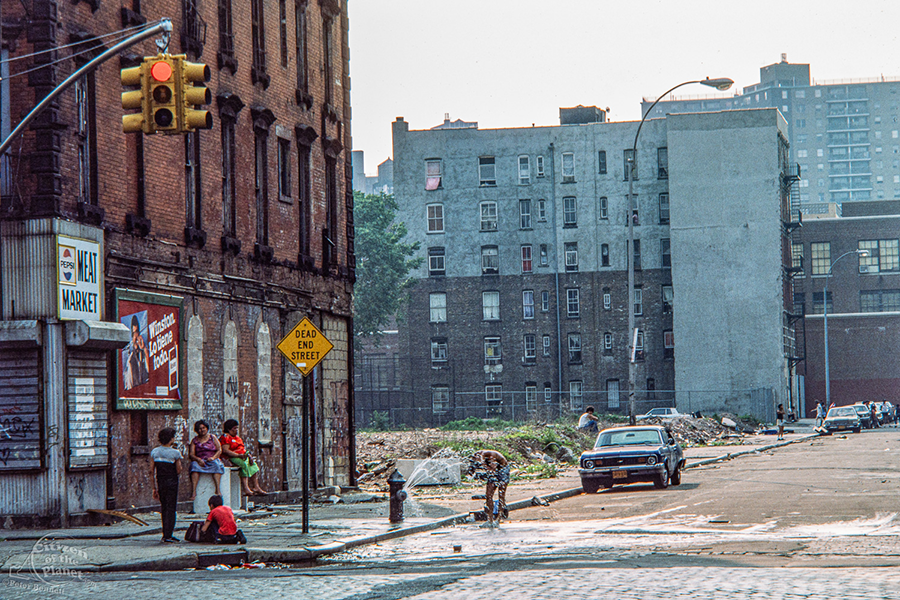
 

(photo by Peter Bennett) He took another shot just a moment later:
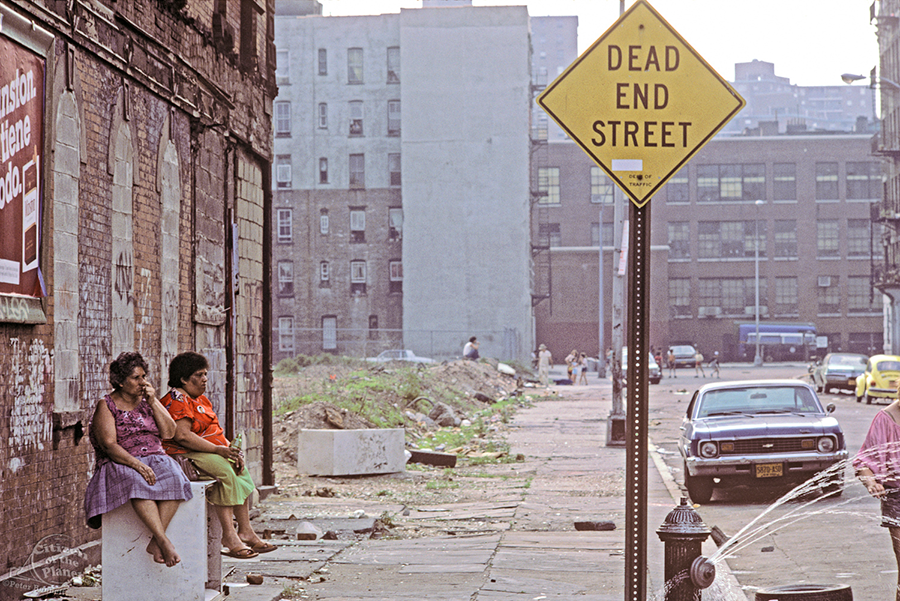
 

The change to that block is surreal. All the buildings across the street from my mom in that photo are gone, replaced by piles of dirt and garbage. Much of that area of the city looked bombed out by the 1980s. Many abandoned buildings, all in disrepair, and stories of landlords burning down their own buildings for the insurance money.

I belong to some Facebook groups that talk about this era, and people share story after story of what it was like living in or visiting this area in the 1980s. In short: it was very dangerous. Most of the buildings on my mom’s block were destroyed by the 1980s, including the one she grew up in. In the 90s, the city replaced them with some low-rise housing units which are still there.

As I look through the photos from my mom’s childhood, I try to imagine what it must have been like. Her parents, her and her sister lived in a three room apartment, all four of them sharing a single bedroom. The bathtub was in the kitchen, and the bathroom was in the hallway.

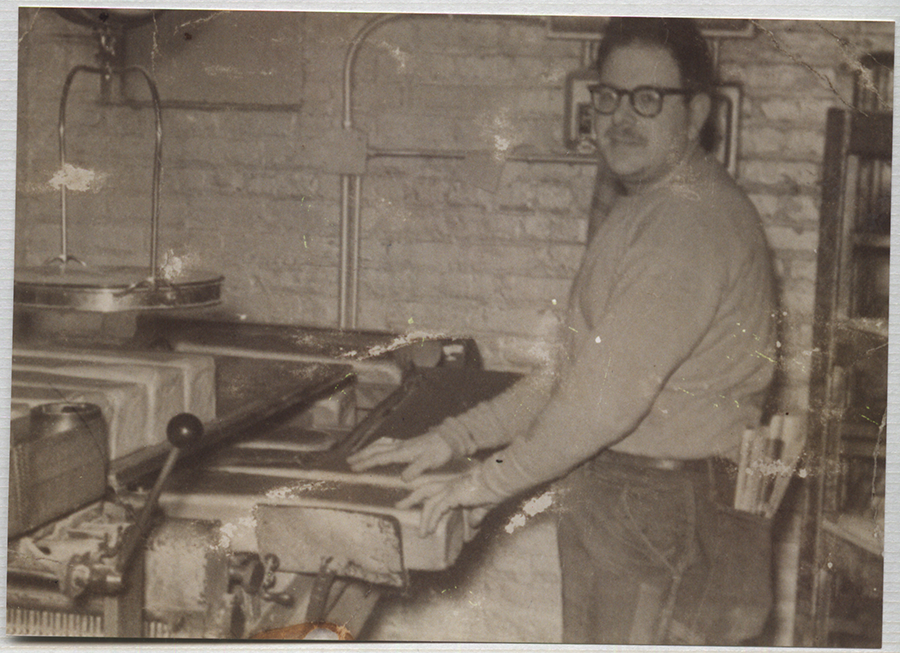
My grandfather worked one job his entire life, at a local bakery. He started as a slicer in the back, and eventually got his own delivery route. One day in 1965, while delivering bread, another driver ran a stop sign hitting my grandfather’s delivery truck. The large side door to his truck was open, and he was thrown from the vehicle, killing him. Here he is slicing bread at work in the early 1950s, just a few blocks from the street in the photos above:
 

This time of year, I consider what I seek to create, the milestones that matter to me, and the experiences I hope to fill my days. I won’t lie, I tend to think about my mortality, the years behind me, and the years ahead. I think about my grandfather, who I never had a chance to meet, and the dreams he had as he sliced bread for long hours. I think about how that street my mom grew up on changed, and how time marches on. This encourages me to be proactive in attending to my creative work and to filling my life with the experiences that matter most.

Working with writers, I am fortunate to be immersed in the dreams of those who create, and who want to ensure that their voice is heard. That may be a story, a poem, a way to help or educate others, or so many other things. These writers are often confronted with the challenges of identifying what to create, how they will find the time, how they can muster the energy amidst so many responsibilities, and whether others will take them seriously.

To answer these questions, one of the systems I use is Clarity Cards, which is what I’m teaching a workshop on today. You can download the entire process here if you want to work through the system yourself. I have taken hundreds of people through this process, and the results are powerful.

Thanks!
-Dan
Start the year with creative clarity

In helping writers and creators reach their audience, I have found that the first essential ingredient is creative clarity. When you have creative clarity, you:

  • Know exactly what to create.
  • Understand how to use your limited resources for the greatest impact to reach your audience.
  • Feel confident in your creative identity.
  • Focus people’s attention and better communicate your writing and creative vision to others.
  • Have the foundation to build a solid plan to launch and share your writing or creative work with others.

I want to invite you join me in working through my Clarity Cards method. This is a simple exercise that has radically changed people’s lives for the better. Please join me for a workshop on January 6th at 12:30pm ET:

Creative Clarity: Find More Time, Get More Done, and Live with More Confidence.

Register here. In this session I will present the entire system and show you how to use it to make meaningful change in your life. I will also answer your questions, provide feedback, show you how I work through Clarity Cards, and how to use them to lay the foundation for your creative goals in 2023. (If you can’t make the live event, please sign up anyway and I’ll send you a recording of the session.)

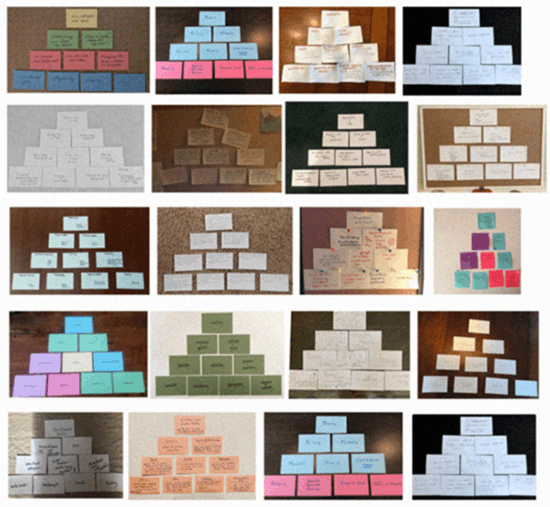
This is free, easy, and potentially life-changing. What you end up with is a pyramid of 10 cards. While they look simple, the results are powerful:

If you want to get a head start, you can begin working on your Clarity Cards right now. Download the entire Clarity Cards process here. It’s 100% free, all in this one PDF. After you work through the exercise, send me a photo of your cards! Just email me a photo to dan@wegrowmedia.com.

It is useful to do Clarity Cards at least once a year, even if you are someone who feels confident in what you create. If you have done Clarity Cards in the past, I encourage you to use this opportunity to take a fresh look at your creative goals and potential in 2023.

I have helped hundreds of people work through Clarity Cards, and am constantly amazed at how it helps them break through barriers that they have struggled with for years. Plus, Clarity Cards are the first step to preparing to launch your creative work. If you are looking at the new year hoping to truly connect your writing and creative projects to others, start here. Don’t just wait for it to happen, create a plan. That begins with Clarity Cards.

Thanks!
-Dan

Are newsletters, podcasts, and social media too crowded? (Podcast)

It’s common for me to read a headline or social media post from someone who shares a story or statistics that illustrate that a specific channel is “too crowded” and not worth pursuing. That may include email newsletters, podcasts, social media, or Zoom events. Yet if you are someone who writes or creates, without these channels, how will your work reach people? Today I want to explore that question and offer my advice.

You can listen to the podcast by clicking ‘play’ below, or in the following places:

You can watch the episode here:

Why do you write?

My days are spent talking with writers, and something I think about a lot are their goals. At what point will they feel a sense of fulfillment? What are the milestones they seek that drives all this effort? Earlier this week I asked writers on social media why they write, and these were some responses:

  • “Because I love writing. It makes me happy.”
  • “I write to satisfy my muse, Dan. She is a strong, vocal artist, and her only goal, to sum it up, is: “Trust me, I have a great story to tell you.”
  • “A desire to make a positive impact on the world.”
  • “To get my stories out into the world to help others, whether through fiction or memoir.”
  • “I write because I want a voice. I have zero influence because I’m not a journalist or celebrity.”
  • “To entertain readers: I write mysteries and romantic comedies for readers who want to laugh and escape. While life and circumstances change, human nature doesn’t. I explore universal themes like falling in love, finding friendship, and knowing oneself.”


I imagine that some of these may resonate with you, and it is by no means a comprehensive list. Some reasons are internal, to know oneself and the world in a deeper way. Others focus outward, on how writing may entertain or help others. We can measure success in sales, awards, esteem, and other overt milestones. And often, we create merely to create. The list of reasons goes on and on.

Recently I was listening to a long interview with Billy Corgan from the Smashing Pumpkins, and he said something that made me pause and replay that section again. The question he was asked got very specific into his creative process. At one point, Billy laughs in a bittersweet way and says:

“People used to ask me more about that in the beginning, when they were interested in my process. Back in the day, people would ask me all the time about these things, and at some point, they just stopped asking.”

Billy was reflecting on how so many fewer people care about his creative process today. I imagine that like many artists whose success came years ago, many fans look to him as something of a time machine, only interested in what his older music meant to them. They look to him to recreate their youth. Along the way, many stopped being interested in Billy the person, they stopped being interested in what he creates today, and they stopped being interested in his creative process. They just want the old stories, retold again and again.

This made me pause because Billy has experienced the absolute pinnacle of success in music. More than 30 million albums sold, legions of fans, two Grammy Awards, performing more than 1,500 concerts, and earning tens of millions of dollars. He is also held up as someone who has relished in creative freedom and been rewarded for it, something any creator may dream of.

You may not like the Smashing Pumpkins or Billy himself, but that isn’t why I’m mentioning him. When I consider the milestones that a writer hopes to reach, the goals they have, or their reason for writing, I want to consider their daily experience. If they feel a sense of personal fulfillment. If they feel ready to create. If they feel connected to those who inspire them. If they feel their work can reach their ideal readers. If their days are filled with moments and experiences that matter to them.

This always resonated with me about Dani Shapiro’s wonderful book, Still Writing: The Perils and Pleasures of a Creative Life. In it she shares a story from earlier in her life when her writing career was going well, but there was a period of time when it wasn’t enough to support her financially. She took some kind of corporate writing job for the money, and she didn’t feel great about that, so she hid it.

There is so much that we don’t often see in the lives of other writers: the compromises that are made, the shame that may be felt, the sense of lost opportunity, or lost interest.Why am I sharing these stories? I’m not trying to bum you out. I just think about all of this when I explore the idea of a writer reaching their goals, and feeling truly fulfilled. So often, we may consider our creative aspirations like this:

  • Step 1: Write! Then publish!
  • Step 2: ?????
  • Step 3: Success!

So I simply want to encourage you to dive deeper into what success means to you. What fulfillment with your creative work would look like. How that may translate to how you spend your days and weeks, and perhaps even, who you spend them with as a writer. Once you do that, I find it is much easier to fill in those question marks in the middle.

I invite you to start 2023 with clarity in your creative work. Join me for an hourlong workshop where I will show you the model that I use:

Creative Clarity: Find More Time, Get More Done, and Live with More Confidence
Friday January 6th at 12:30pm ET.
A replay will be available to all who register.
Register here.

Thanks!
-Dan

You are not a brand (podcast)

Recently I have seen people begin using the word “brand” a lot more. The context being that you have to “define your author brand” or “establish yourself as a brand” if you want to get the attention of readers. But you are not a brand. You are a person. Who you are and what you create is multifaceted. It will evolve and grow. At times, it may even seem like two opposite things at once. And that is okay. Today I want to talk about why I think that is, and what I do feel is important in establishing your work in a manner that truly speaks to your ideal reader or audience.

You can listen to the podcast by clicking ‘play’ below, or in the following places:

You can watch the episode here: