Why your book isn’t getting reviews (podcast)

Many writers I speak with are surprised at how difficult it can be to get reviews for their books — even from friends, family, or colleagues. Today I want to talk about some reasons why that might be, and I’ll share advice on how you can get more reviews.

You can listen to the podcast by clicking ‘play’ below, or in the following places:

You can watch the episode here:

Typewriters, and social media

I am often in conversation with writers and creators about their mixed feelings about social media, or their downright dislike of it. In some ways, it feels like we are at a crossroads with social media. Relying on it for some important things, constantly distracted by it, and repulsed by it for different reasons.

Each month, we find new reasons to become worried about it. I hear people verbalize these fears all the time: “I heard Twitter has a new owner, I wonder how that social network change? Did Instagram’s algorithm just change for the worse? What information is TikTok collecting about me? Is it unethical to use Facebook because of some decision they made about ads they accept? Do I join Discord, or is that just for video game streamers? I hear a lot about Patreon, but I don’t understand it.”

For the writers and creators I work with who struggle with these questions, they feel boxed in by two competing intentions:

  1. “I just want to feel calm, focused, and attend to what matters most to me, including my writing. Social media triggers me in 1,000 ways. I always feel like I’m failing on it, and I’m not sure it’s even a positive place to be.”
  2. “But I love what I create and want to share it with others. Not using social media feels like I’m closing off the channels to reach my readers. Like I’m turning off the internet, removing any way for people to connect with me, and throwing my phone in a lake — and that doing so means I am no longer part of conversations and communities that matter to me. Plus, now I have no meaningful way to develop a platform around my writing.”

One way to view social media is as a tool. You get to decide if you use it. How you use it. When you use it. Let me explain…

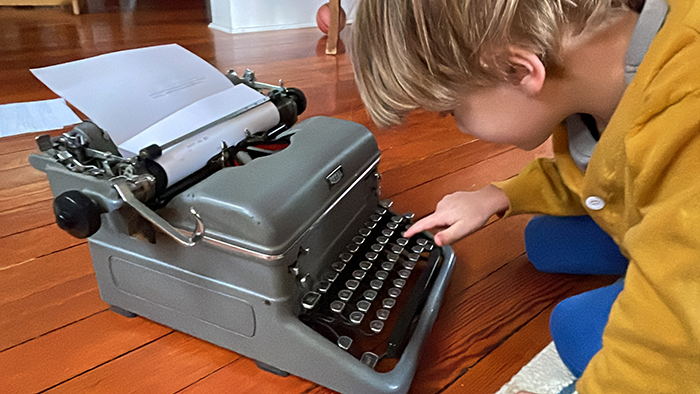
This week I gave my 5 year old something that is a milestone in every kids life in 2022. I mean, you’ve probably read countless articles about how it’s the “hot” item this holiday season, already sold out everywhere, and now resellers are price gouging. Yep, of course, it’s a 1940s typewriter:


I hear a lot of people describe how “kids today are different” and they “need to have things flashing on a screen in order to hold their interest.” Yet, can I just tell you that this 5yo is OBSESSED with this typewriter. To him, it is a magical tool that is both infinitely complex, and totally accessible. He’s writing on it, having lengthy conversations with grandma about it, and learning the mechanics of it.

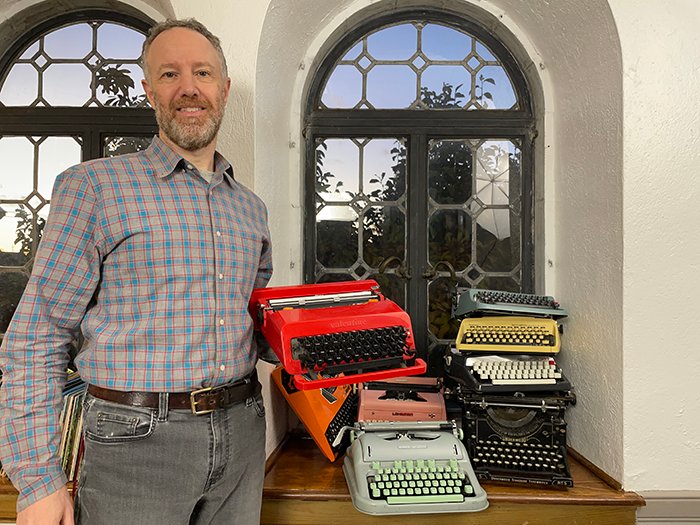
The typewriter I gave him came from my collection of typewriters:


A typewriter is beautiful object, but it is also a tool. It has a purpose, and like any tool, is has a longer life when it is used, not just displayed.

Surrounding myself with typewriters has me meditating on something all the time: our tools do not define us, but they should empower us. They need not be perfect. They can set limits upon us that incite our creative instincts.

I feel limits are essential to making great art. Whether that is limit of time, of resources, of tools, or something else. I spend loads of time every week researching how great art was made, and there are always stories of the extreme limits in which a great work was created. When we think about how we share, I try to keep in mind the same thing.

Can you give up social media today? Yes. You can literally delete all the apps, close your accounts, and walk away. Seriously. You have permission (not that you need it from me.) Go ahead.

And if you did that, how would you achieve your creative goals of sharing what you create? Well, let’s just consider why sharing with potential readers matters:

  1. You want people to become aware of your work
  2. You want to be present in the places where meaningful connections happen between readers and writers
  3. You hope to have meaningful experiences, and ideally, conversations with others
  4. Over time, it would be nice if this lead to meaningful actions that support and grow your career as a writer or creator

Does social media check off some of these boxes? Sure. But is it the only way? Nope. You get to choose how you share. When you share. Where you share. You get to choose the way you become a part of communities. How you develop connections to readers and other creators.

Just for fun, let’s just brainstorm another way for you to achieve these goals that doesn’t require you to share on social media. I am not being ironic when I make this suggestion: why not buy a typewriter? Okay, bear with me here as I explain this…

So maybe you get a good solid typewriter, like a 1949 Smith Corona Sterling series. I believe this is the one that Tom Hanks recommend people start with. Need a new ribbon for it? Amazon, Ebay, and Etsy are loaded with them, usually under $15.

Then, type up a gratitude letter to people you admire. Fellow authors. Podcasters. Literary festival organizers. In the envelope, include a Polaroid of yourself and the typewriter, being sure to tell the person this is the typewriter you used to type their letter on.

Now, wouldn’t that be an amazing thing to receive in the mail? A real hand-typed letter that says you are awesome? Wouldn’t that be a nice way to seed a professional connection? I like to think so.

You may be thinking: “Dan, this sounds like a lot of work.” And you would be correct. Which is why so many of us default back to social media. Not because it is perfect, but because it is so immediate. Because it offers the possibility to reach many more people with much less effort.

Typewriters are a tool. Social media can be seen as a tool as well (among other things.) They should be used where they create experiences that matter to you. I simply want to encourage you to choose the tools that feel right to you, and for you to learn to use that tool as a craft. To show up to make meaningful connections with others by using it.

I’ve written related posts about this topic of social media in the past, and these are all still relevant today:

Thanks.

-Dan

Why your book isn’t getting reviews

Many writers I speak with are surprised at how difficult it can be to get reviews for their books — even from friends, family, or colleagues. Today I want to talk about some reasons why that might be, and I’ll share advice on how you can get more reviews. Let’s dig in…

Why Reviews Matter

For the sake of simplicity, let’s limit the conversation here to you getting reviews for your book on Amazon.com, since it is a huge online marketplace for books. You can certainly apply the lessons discussed below elsewhere.

Why do book reviews from readers matter? Because they offer social proof. Imagine seeing two books online. One has 56 reviews, and the other has 2. Even just with the numbers that may tell you something about the impact this book has had with readers. It’s not hard to jump to the conclusion that the one with 56 reviews may be the one to check out first. Does that mean it is “better?” Nope. Does that mean it is the right choice for your taste or needs? Nope. But it can be a factor in how someone discovers a book or considers purchasing it.

Reviews also give you more context and information about the book. What did readers like about it? Not like about it? What phrases come up again and again that tell you about the experience of reading the book? When considering a purchase, social proof is a huge factor that can help someone make a decision.

This isn’t always about the cost of the book either. Books can be incredibly inexpensive for the value they bring to someone’s life. Often what someone may be factoring in is not just how to spend their money, but their time and attention. When I buy a book, I’m deciding how to spend hours of my time. I’m considering if it will hold my attention, or help lead me to an experience I want to have. That is why reading book reviews can matter so much, potential readers are buying an experience. Social proof extends beyond the point-of-sale, of course, into social media and word-of-mouth marketing.

The 10-Step Process to Post a Book Review

So if reviews are so important, why is it so difficult to get readers to share them? Let’s analyze the entire process of posting a book review on Amazon. Why? Because too often we seem to pretend posting a book review is like the simple click of a button. It’s not. It is a multi-step process, and sometimes a much deeper dive into identity, taste, and being seen. Below are the steps of the process, which I feel fall into three distinct phases:

The Pre-Review Phase

  1. You need to have a copy of the book.
  2. You need to have started reading the book. How many books have you purchased, you are excited about, you see others talking about it and want to be part of that conversation, you want to support the book and the author, but… you just haven’t had the time to start reading?
  3. You need to have spent 5-8 hours reading the book. We don’t talk about this enough, how much time and focus it takes to actually read a book.
  4. You need to feel you have an informed opinion enough to post a review of the book. We assume everyone just has clear opinions about everything on the tips of our tongues. But sometimes people don’t. Reading can be a very personal experience. Sometimes it can impact us, but we don’t have a clear way to talk about the book to others that expresses that.
  5. You have to feel comfortable with the very concept of posting your opinion online for others to see.

The Finding Phase

  1. To begin posting the review, you have to go to amazon.com.
  2. You need to log in if you aren’t logged in already. Here we are already assuming you have an account, but if someone didn’t, that is a long list of additional steps to take. Amazon can seem so pervasive at times. But does everyone have an account? Even if they do, do they like using it?
  3. You need to find the book. Someone may use the search box to do this. Or they may click on their “Returns and Orders” tab, then scroll to find the book purchase.
  4. When you find the book, you have to click on the title or look for an area to review it.Then you have to identify the specific area to post a review. It’s not easy to find, you have to scroll to the book review section, then look to the left where it says “Review this product.” Some people may convince themselves that the place to find this is in their order history, and get frustrated when the option to review the book isn’t listed there. Years ago I did usability testing for websites. I can’t even express to you how common it is for you to think you are asking people to do something so obvious, and for them to take actions that are unexpected, and them feeling frustrated in the process.
  5. Yay! You are now on the “Create a Review” page. That only took like… 5-10 steps.

The Ideation and Writing Phase

  1. Amazon asks you several ways for you to share your opinion of the book. The first is to rate the book on a scale of 1 to 5 stars. I can see how this can trip someone up, asking them to consider what their own rating scale would be for a book in general. What is a 5 star book? What is a 3 star book? Then, is the book I’m reviewing one of the best books I’ve ever read, thereby rating it 5 stars? Of course, I’ve spoken to many writers who hope that if a reader liked a book in general, that they simply post a 5 star review. But the question can be more complicated to the reader than we may initially imagine. The rating scale can come to represent their own taste and identity as a reader.
  2. Then you are asked to write a headline for your review. As someone who has posted blogs and sent newsletters for more than 15 years, I can tell you that writing a headline or subject line can be the most difficult part. To know how to summarize your thoughts succinctly, but also make it feel a little clever so that someone is curious enough to read the full post.
  3. You are then given the option to post a photo or video with your review. From what I can tell, most people just ignore this, but it could be another stumbling block for a reviewer. Maybe 5% of people get to this point and assume a photo is required, so the abandon the review. I don’t know, I’m just trying to consider all of the ways this form raise unexpected questions for a potential reviewer.
  4. Here we are, finally at the place to write your review. It’s just a big empty field. What’s wonderful about this is that it gives you an opportunity to write about the book in your own words, and choosing the length you want. But I’ve written long enough to know how that can cause someone to freeze. Perhaps some people want prompts to help them out, or maybe they begin writing, then feel unsure, then want more time to write. I can see a lot of people potentially bailing on this page here, promising to come back once they have spent more time thinking about the best review to write.
  5. At this point, I imagine you would read through your review at least one time and go through a round of light editing.
  6. Then you have that button to submit your review. This is a huge action for someone to take. To commit to sharing their thoughts publicly, and not knowing if they can later edit or remove them.

Some of these steps are debatable, so to be safe, let’s just call it a 10-step process overall. Let’s think about that for a moment. When I ask someone: “Hey, can you just post a review for my book online?” I’m making quite a few assumptions here:

  • That they read the book (5-10 hours of their time.)
  • That they can successfully navigate a 10-step process all on their own.
  • That they can move through the social anxiety to write a short book report that they are comfortable posting publicly.

Let’s talk more about the social anxiety aspect…

The Social Anxiety of Posting a Book Review

What are we really asking someone to do when we ask them to post a book review? To illustrate their taste. To summarize a book in a paragraph. To recommend it to others. To be seen online.

Do you remember back in grade school when you were asked to write a book report? I do. It was kinda terrifying. I can’t remember too many friends liking the process. Now here we are asking adults to do that, but we are making it even harder. Why? Because this isn’t just a book review that will be seen by one teacher, it will be one posted to the world. I’ve sent out a weekly email newsletter (and blog) for more than 15 years. I’ve posted 30,000 updates to Twitter. I’ve shared hundreds of photos of myself online, as well as hundreds of videos. Yet even I sometimes pause at the process of posting a review online.

Most people haven’t shared as often as I have online. So I can easily imagine they have hesitation to publishing their thoughts on Amazon for others to see, and for it to remain for years there. This act of posting a review can feel inherently social, which is part of why it is so valuable to the writer and other readers. But that can come with its own anxiety. I mean, do you want bump into someone at your local cafe, and have they ask, “Hey, can you do me a favor? Can you give a toast in my honor in the meeting I’m about to walk into?” Being asked to write a review can sometimes trigger the same kind of anxiety you feel when asked to give an impromptu speech.

Asking to post a review is asking someone to consider so many questions about their own taste, their own identity, their own judgement:

  • What rating scale do I use?!
  • How to create a headline?!
  • How long does it have to be?!
  • What do I say?!?
  • How will others react to what I say?!?
  • Did I miss anything?!?

There may even be concerns that people have which aren’t answered on that Amazon page to post your review, such as whether your full legal name will appear next to your review. Then there is always the chance that after someone does post a review, that Amazon’s algorithm will choose not to post the review to their site. That happens.

How to Encourage More Book Reviews

It is entirely possible that I am overthinking all of this. Regardless, if anything above resonates, here are some ways that you can encourage people to post reviews for your books that may make it easier for them:

  • Have a plan for encouraging people to post a review for your book. Don’t just assume it happens magically on it’s own. Sure, sometimes it does. But consider who you would ask. When you would ask them. How you can provide information to them that helps make the process easier.
  • Ask people to post reviews. I put this as separate step because I think every single time someone asks, it can be difficult. Asking people to do this doesn’t just help you, it helps other readers learn about this book and how it may impact their lives in a positive way.
  • Create a script that you can use to ask. This way it is easier for you to ask this without feeling self-conscious.
  • Have a link to where to post the review, and maybe even brief step-by-step instructions.
  • Prepare people ahead of time so they aren’t stunned at the review screen. This could be vague suggestions (“It can just be a sentence!”), or encouraging them to respond to a prompt in their review (“Just write about the one thing you loved most about the book.”) Of course, you may feel you don’t want to influence their review at all, so you can say “Just be honest.”
  • Provide examples of reviews, just so they can see what makes a useful review, or even to lower expectations. Not every book review needs to be a thesis paper.

Of course, your experiences here may be different. I simply wanted to take an empathetic view at what we are asking readers to do when we ask them to post a review, and consider how that help make the process easier for people.

Thanks.

-Dan

Do your friends & family support your writing goals? (podcast)

I was speaking with a writer recently who shared a question someone asked them. You see, this writer is embarking on a new phase of her life where she wants to write fiction and creative nonfiction. Her friend asked: “If you were going to do something with your writing, wouldn’t you have done it already?” Of course, this kind of question can be deflating for a writer or creator. Today I want to explore why those close to you may not support your creative goals, and how I would respond to that question.

You can listen to the podcast by clicking ‘play’ below, or in the following places:

You can watch the episode here:

Do your friends & family support your writing goals?

I was speaking with a writer recently who shared a question that a friend asked them. You see, this writer is embarking on a new phase of her life where she wants to write fiction and creative nonfiction. This, after decades of building an amazing career in other fields. So this friend of hers asked:

“If you were going to do something with your writing, wouldn’t you have done it already?”

The implication was something like: You are in your 40s now, why bother starting from scratch with this new pursuit when you are so accomplished in these other fields, and at the height of your career there? Why not focus on what you are an expert at and what has been working well for you?

Of course, this kind of question can be deflating for a writer or creator. It’s not uncommon for those who dream of creating to get comments like this from well-meaning friends and family. I try to have empathy with the person asking the question. They aren’t trying to crush anyone’s dreams, instead I think they are often confronting their own pre-established narratives of who this person is and how they fit into their lives.

It can be difficult for a friend, a brother, a partner, a coworker to be asked to see you in a brand new way. Why? Because you likely already have so many easily defined “roles” in their lives. And maybe they rely on you so much, they appreciate you so much, that they feel threatened that a new interest will lead to them being abandoned. Maybe they are struggling and desperately want to feel that you are always going to be the same person, in the same role, supporting them in the same ways.

There are millions of variations of questions like the one above. Do any of these sound familiar to you?

  • “That’s so cute you want to write a novel. But I mean, let’s be real… how are you gonna do that with our big party coming up?”
  • “That’s you… always dreaming. Remember that time you wanted to start your own TV show?”
  • “Writing? Everyone I know who tried writing never made a dime on it.”
  • “A memoir? Why not work on something else that would be perfect for you? Like that cupcake business idea you had years ago?”

It is common for writers to express to me their own conflict about deciding to commit to writing and creating. There are many inner doubts that one can have, even if they feel totally competent in their actual skills in the craft of writing. So of course, when someone close to you questions your creative goals, it can exacerbate one’s inner doubt.

So let’s answer the question that was posed at the start of this piece: “If you were going to do something with your writing, wouldn’t you have done it already?” Below is a sample answer, and I’m inserting my age just to customize it. If it resonates with you, feel free to borrow it for conversations you have with those around you:

——————————————

“If you were going to do something with your writing, wouldn’t you have done it already?”

That is a great question. Thank you for putting it that way, it helps me get clarity on why this matters so much to me. You see, I’m 49 years old. And up until now, I have kind of followed this expected path. When I was young, I did as my parents said, and honestly, I was truly excited to live up to their expectations. It deeply mattered to me. Then I went to school, and that progression sort of had me tumbling along the path set by that huge system. Third grade leads to fourth, and so on. By the time I got to high school, there was already talk of careers and clubs and internships, all with an eye on creating this sort of resume for my college applications. Oh, yes, it was absolutely expected that I would go to college. And I very much appreciated that I was fortunate enough to go to college. That I had support systems around me, and that my parents were going to find some way to make it work: third mortgage, loans, etc.

Then I was asked to pick a major. At age 19, I was asked to decide what I wanted to train in as a career for the rest of my life. What?! I mean, all I wanted to do was listen to music and go to thrift shops to find super cool vintage clothes.

Like many people I know, this lead to getting a job, then a career. Of wanting to afford rent with friends, then my own place, then a bigger place, then eventually a house. I wanted to find love and then raise a family. One thing just seemed to lead to the next.

Now, don’t get me wrong, at every moment in this journey, I got to choose. I made the choices I did conscientiously and often with vigor. But now, here I am at age 49 getting to make another choice. And that is the point: I get to make this choice. Doors are not closed to me because of decisions I made years ago. Doors are not closed to me because I have responsibility or others see me in certain roles. Doors are not closed to me because of my age.

You ask, if I were going to do something with writing, wouldn’t I have done it already? I suppose the answer is no. I was too busy putting that dream on hold to attend to other dreams and responsibilities. I didn’t develop that skill of writing because I was developing other skills. But now is the time. I want to not only learn this craft, but explore that identity. What I’m realizing at 49 is how much more I have to create and share than I realized. And to be honest, I’m excited. And I don’t want to look back at age 59 and think, “Gosh, I wish I would have started a decade ago. How much could I have accomplished with my writing in that decade?”

Thank you for this question. It just illustrates how much you support me and care about what matters most to me. It’s such a clear and hard question to answer, and exploring it has added fuel to this fire. I appreciate you being here with me on this journey. Now tell me, what are you excited about doing this year?

——————————————

I feel it is critical to explore what matters to you at any age. Regardless of where you feel you are in life, and what others expect of you. Working full-time with writers for more than 12 years has certainly illustrated this to me. Writers can begin any age, and be truly ALIVE in their creativity. That is the opportunity that each of us have. No one can tell you the right moment except for you.

Is there well-meaning advice others have shared with you that felt like it diminished your creative goals? Let me know.

Thanks.

-Dan