
Why we write and share

Kathy Pooler“Upon retirement she embarked on a new adventure as an author…” This is when I met Kathy Pooler. I met her “after.” After she raised her kids. After she retired from her career in healthcare. I met Kathy when she was 65, when everything was just beginning for her as a writer.

Kathy passed away on Thursday May 5th after a long illness. (Her full obituary is here.)

When I started my company 12 years ago, an amazing community of writers came together around what I was teaching. One of the first was Kathy. She had been working on writing a memoir for years, and upon retirement was doubling down on her new life. Life as an author.

She published her first memoir in 2014, and her second in 2019.

Kathy joined many of my programs, was an incredible supporter of my work, and that of so many other writers. I know she forged lifelong friendships with the writers she met in my programs. She kept showing up, kept writing, kept connecting.

She often shared my work on her Twitter account, including two in April. In the past decade, she shared 27,400 Tweets, each a word of support or a connection to someone. They remain, as did the good will created in how she supported other writers. She shared her life in her blog, including her post from January: “Still Above Ground and Fighting.” There are hundreds of posts here, where she shares her voice and amplifies others.

That this is part of why we write. Part of why we share. The impact of these actions last long beyond what we can imagine.

Last week I shared a photo of my 5 year old watching Mister Rogers for the first time:
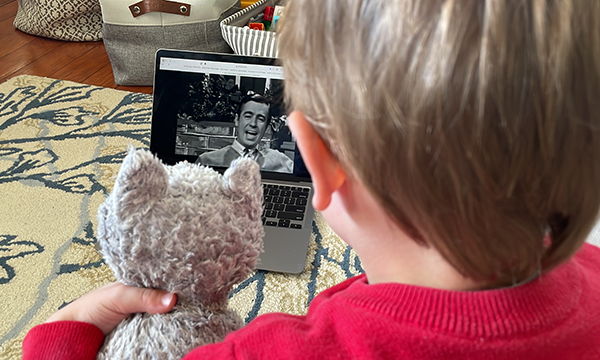
Mister Rogers

It’s the first show we are letting him watch, and I started with the very first episodes in the series. So here we are in 2022, with my son watching a black and white TV show filmed in 1968. He was immediately immersed in it as if it was happening live right now.

Those rudimentary puppets? You know, the ones where the mouths don’t even move, and some of the voices are obviously Mister Rogers himself? They are totally magical to my son. They are alive.

50+ years later, Mister Rogers message resonates as it did the day it first aired. Even if the show looks dated to adult eyes, to someone who has never experienced it before, it is alive. It is vital. It is a gateway to incredible things. This is what writing does as well. What books do. This is why we create. And why we share.

But that isn’t always easy. Success as a writer is not a straight path. In 2016, I interviewed children’s book author Stacy McAnulty. She recently published her 29th book. I mean, can you imagine that? Just look at some of them:
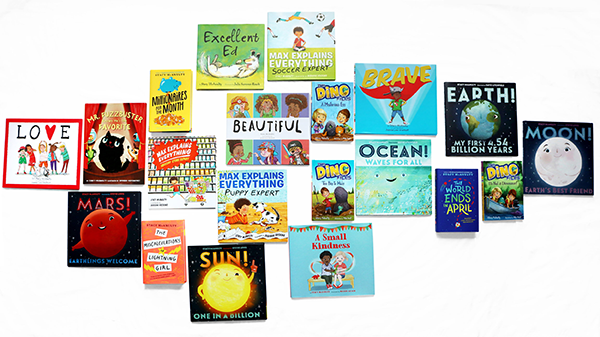
Stacy McAnulty books

Her most popular book has more than 2,000 reviews. Many others have hundreds of reviews. In releasing her newest book, she decided to hold a local event:
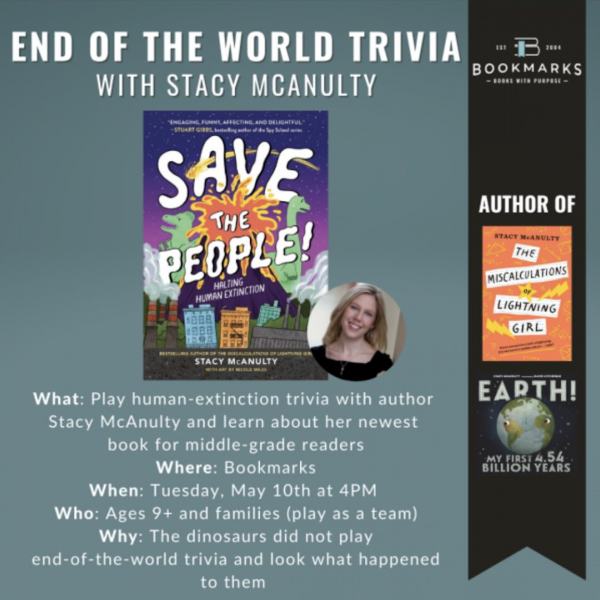
Sounds amazing right? She prepared to get a crowed: “I was determined to make it work. I sent 160 letters to local educators—every science and English middle school teacher in the county. (Not the cheapest way to communicate. Stamps are $$$)”

Well, the result was what authors have nightmares about. This is the crowd 10 minutes after the event started:
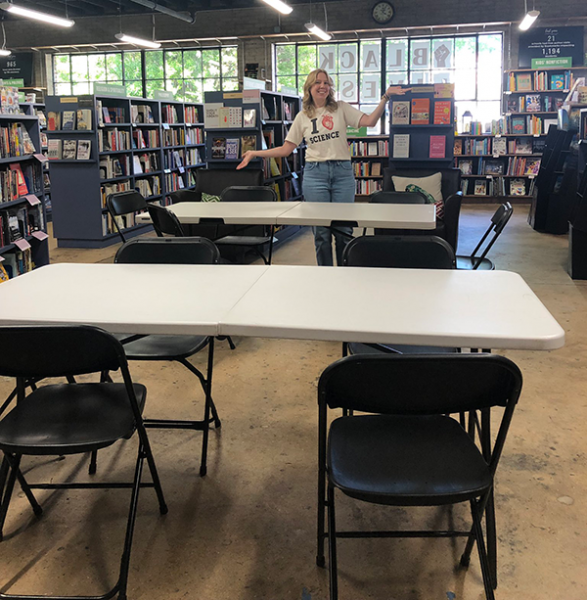
Stacy McAnulty

She described her preparation for the event: “This wasn’t just a reading. It was fun trivia that I spent hours creating. I also had prizes and snacks.”
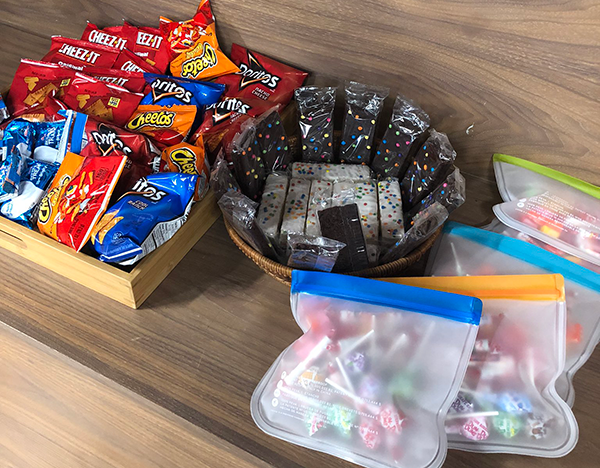
But then…

A reader showed up!

Stacy shares:

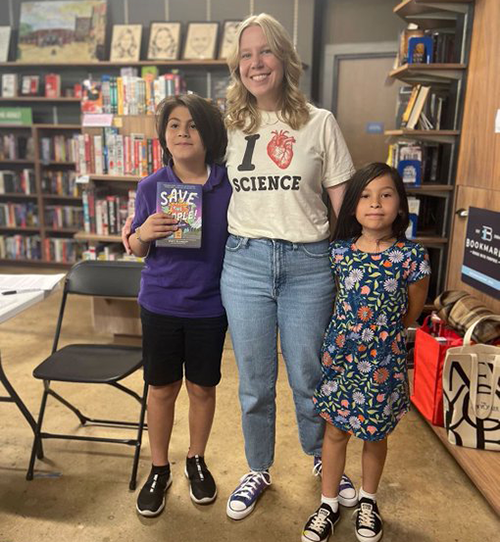
“But then, at about 4:15, a young reader came in with his mom and sister. He was clutching a worn copy of THE MISCALCULATIONS OF LIGHTNING GIRL. He said that he loved my books. His mom bought him the new book as a birthday gift. The three of them played trivia with me. They got all the prizes and snacks. We had a BLAST! His mom told me he begged to come. She was late because she had to drive carpool and she also had a meeting later in the evening. She almost said no, but her son begged. After it was over, the bookseller said that I made that reader’s day. Maybe but he certainly made mine. To show my appreciation, I bought him a copy of MILLIONAIRES, as a birthday present.

Stacy McAnulty

How did this moment happen? Well, remember all those letters that Stacy sent out? She says, “I asked the young reader how he knew about this event. (The family didn’t come to downtown WS often, and I think it was his first time at the store.) He said his Language Arts teacher told him. He had the letter and swag I’d sent to educators. The teacher connected us.”

So I ask you: was this worth it? Worth it for Stacy to impact the life of one reader with all this effort?

Each of us may answer that differently. But it’s what I think about when I see my son watch a 50+ year old episode of Mister Rogers. And it is what I think about when I consider Kathy Pooler’s books. The work not only remains, but it grows inside of people.

This is why we write. This is why we share.

Thanks.
-Dan
Finding joy and purpose in how you share

I want to invite you to an online workshop with me next Friday May 13th at 1pm ET . We will discuss finding joy and purpose in how you share. Register here. Okay, onto today’s message:

So many writers I speak to (including two writers I met this week) tell me about how overwhelmed they are with all they are doing, and all they are told they must do in order to share their work with readers. Today I want to encourage you to do something different:

Do less.

Consider this: what if you just focused on one or two things. But did them really really well? In the recent workshop I ran on book launches, I talked a little about this. When I work with a writer to prepare for their book launch, typically we will craft one to three marketing campaigns. Part of this process is to choose what they will do, but also what they won’t do. I find that this choice is empowering, to let go of the guilt of not “doing it all.”

I would rather you focus on two things in the process for what you share around your writing:

  1. Optimizing for joy. To ensure the experience is fulfilling to you.
  2. Creating meaningful moments for your readers.

Everything else kinda gets in the way. So for a certain writer, that may mean skipping applying for awards, avoiding doing giveaways, not worrying about optimizing for SEO, skipping an ad strategy, and so much else. But instead, they focus that energy on one thing that will truly feel good in how they share their work.

Does that sound unprofessional? As if we are skipping some kind of industry “must do”? I’m fine with that. I’ve just seen too many writers run themselves into the ground because they are told to do a million things, and end up feeling burned out and bitter. I want you to feel a sense of joy and purpose in how you share your writing. I want it to be a part of a your journey as a creator, where one book launch leads to the next, as you grow as a person, and have meaningful experiences with readers.

To illustrate this, I want to talk about… doughnuts.

In 2001 I was renting an apartment in a house, when a woman moved in next door. We met on my front lawn one day, and now we’ve been married for more than 18 years. Three blocks away was this little shop that sold bread called The Bread Company. It had strange early morning hours, so it was rarely open when I walked by it. At the time, the street it was located was a sleepy little corner of town.

That shop closed and in its place Rachel Wyman​ established a new business: Montclair Bread Company. Soon after she moved the bakery across the street to this huge building that used to house a motor vehicle inspection station. Their stature just grew and grew.

I’ve never been to this store. I’ve never tasted their food. I have never met the owner. But they make baked goods, which I love, so I follow them on social media. I mean, who doesn’t want to see more baked goods?!

Yesterday I saw they made a huge announcement. Instead of selling pastries and breakfast food and pizza and bread and lunch sandwiches and cookies…. they will only be selling doughnuts. For years, doughnuts were their speciality, but they also offered a wider menu. I imagine this gave them an expansive customer base, and had them thriving not just in selling baked goods, but having a breakfast crowd, a lunch crowd, etc. So this means a lot of changes:

  • A brand new company name
  • A total change in their menu
  • A new business model
  • A second location in upstate New York
  • I get the sense they may open more locations across the country
  • Expanding their mail order business
  • New product lines
  • Expansion of wholesale, etc.

The owner has chosen to focus on her true passion. This, of course, is not out of the blue. She wrote a book on doughnuts that was published last year, and doughnuts have clearly been their biggest seller awhile now. She is doubling down on what matters most to her, to her customers, and the future she wants to create.

I mean, why be just another bakery that also sells lunch, which has to master 100 crafts, when you can become a world-famous doughnut shop that can continue to innovate in one area?

I find that we tend to resist making polarizing choices because we worry it will limit our possibilities. We only see the limitations as: “If I only do this one thing, that means I can’t also follow this trend and that trend, and do that thing I heard about in a podcast, and that other thing I read in a blog, and do the thing someone mentioned on social media the other day…” Of course, I love the idea of possibility. Having grown up as an artist and spending all of my time with writers and creators, possibility is baked into why we do this.

But choosing is where the magic happens.

This is why I focus so much in my work on encouraging you to focus on individual readers. To create moments and connections that will truly matter. To consider how your writing can bring joy and purpose to someone’s life. Where you put your focus — on choosing to do less (but do it really well) — is part of that.

Please join me Friday May 13th at 1pm ET where we will discuss finding joy and purpose in how you share. Register here.

Thanks.
-Dan

What to do a year before book launch

In the past couple weeks in this newsletter, I have explored defining your creative voice and creating a sharing system. Today I want to focus on how to prepare for launching your work a year (or more) ahead of time.

A year? Yep.

This is the work that too few authors consider. Instead, they wait until they feel their book is about to launch before they take action. The problem with that? They launch unprepared. They haven’t laid the groundwork they need, they don’t have a plan, and they are stuck doing what they didn’t want: shouting on social media that their book is launching. The result is that their entire book launch feels more like a crap shoot, and they throw their hands up and say, “Well, whatever happens happens. What else can I do about it?”

While luck plays a factor in success, preparation does as well. I want to frame this within three scenarios:

  • Scenario #1: You are and writer who feels you have no established platform. Maybe you have a website you haven’t updated in years, maybe you kinda share on social media, but it’s haphazard and unfocused.
  • Scenario #2: You are a writer who feels you have a platform, but it isn’t working. Here you feel you have some accomplishments you can be proud of, maybe it’s a consistent blog, or you have some followers on social media, but you feel it isn’t aligned to how you want to be known, and worry it won’t convert to book sales.
  • Scenario #3: You are a writer who feels you have a decent platform, but worry it is not at all focused on your next book. You look at your website, social media profiles, newsletter, and other efforts, and worry if they need to be overhauled. Equally, you are concerned about focusing them on the next book too soon. So you are stuck in limbo of being overwhelmed by what you feel needs to be done, and hesitant to mess it up by doing the work too soon.

Below is my advice for each scenario. And if you feel you don’t fit into any of these, I think all of this still applies to how you can best prepare for launching your book a year or more from now. Let’s dig in…

Scenario #1: “Ack! I don’t have a platform!”

Okay, breathe. Most people don’t have any kind of “platform” they hope for. So, you aren’t alone. And I’ve found that many people who you may think have this amazing platform, stay up at night worried that they don’t. Likely, you have more of a platform than you think.

So your book is launching in a year or two, and you don’t have a platform, and you don’t know what to do? Cool. Here are a few things I think you should consider. Is this list comprehensive? Nope. For that, I tend to work directly with people for months at a time, personalizing a comprehensive plan. (Learn more about that collaboration here.) But there is so much you can do right now to shift your mindset and take clear and reasonable actions. If you feel you don’t have a platform at all, this is what I would recommend:

  • Consider what people will find if they Google your name. If you are brave, you can go ahead and actually Google your name to see what comes up. If possible, use an incognito browser window so that you are less likely to see Google results that are tailored to your past behavior. Why do this? Well consider how word-of-mouth marketing works. A friend tells their sister about you and your writing. They write down your name, and then, a few days later, Google you. What do they find? Do you have a website? Do you have a LinkedIn profile last updated 8 years ago? Are you on social media? Use this exercise to consider what the most basic elements of your platform should be: where you show up online and what you say about what you create and why. Then, step by step, craft each element.
  • Consider where your ideal readers are. And what they like to talk about. If you are like many writers, this question will terrify you because you aren’t sure where to look. So to make this easier, look for landmarks. What other books are they reading? What podcasts do they listen to? What content would they see on Instagram that would get them to stop scrolling? What do they look up on YouTube. Consider them as real people. Don’t worry about pitching them. Just consider a situation where one person turns to another and says, “I have to tell you about this book I read.” Imagine that is your book. Who are these people? Do you have to make a lot of assumptions in this process? Sure. But that is just a starting point. Become obsessed with understanding who your ideal reader may be. Then show up where they are. Be pleasant. And listen. Focus first on being curious about readers, not pitching them.
  • Quick: tell me about what you write and why. Feel pressured? Not sure where to begin? Yep, it’s a difficult question to be confronted with, and often it happens when you least expect it. We like to imagine that it happens when we are fully prepared, with someone who we feel will really “get” the impetus behind why you write. But instead it happens at odd times. Maybe you are at work and you are leaving a meeting and you are thinking, “Hmmm, I wonder if that cheese danish is still in the kitchen,” (this is me in the scenario, by the way, I love cheese danish), and then suddenly a colleague says really loudly, “So Dan… how’s that book coming along?” You look up and suddenly 8 eyeballs are on you. “Ummmm…. book… Oh yea… um….” This is why I encourage to to know how to talk about what you create and why. Not just an elevator pitch, but a conversation. Consider not how you describe a thing, but how you craft a conversation around the themes and ideas you love to write about.

Scenario #2: “Well Dan, my platform exists, but it’s pathetic.”

Okay, so you have some elements of a platform, but you feel it isn’t really working. Maybe you blogged for a year, send out a monthly-ish newsletter, or you’ve Tweeted a lot in the past few years… but you feel that like 10% of it was about your writing, and even that felt difficult. If you feel you have something of a platform, but it isn’t really working for your writing aspirations, this is what I would recommend:

  • Have clearer goals. Consider the actions you would love people to take. Is it to buy your book? Pre-order it? Tell a friend? Subscribe to your newsletter? Talk about a certain topic? Get clear about the ideal actions you would like people to take, and then reframe your platform around those. Not in a promotional way, but by crafting experiences that lead to these things. Let’s take a simple example. Maybe you want people to talk about your book on Instagram when it is released. Well, then why not develop an audience of people who love hearing about books and talking about them. Maybe a year ahead of book launch you start a new feature on your Instagram where you engage readers with simple questions around book recommendations. You slowly develop this around your platform, and learn how to get people chatting about books. A year from now when it’s your book, you will be an expert in what gets conversation going. Clear goals leads to a clear actions.
  • Share more frequently. So many people barely show up in the lives of their ideal audience, so they aren’t able to build a sense of communication about what they create and why. No, I don’t want you stuck on a hamster wheel of “content creation,” but in working with writers, I nearly always find that sharing more leads to more connections with readers. The first step here is to analyze what may be holding you back from sharing besides a lack of time. Do you have any internal narratives about not having permission to share? What are those? How do others navigate these challenges? Then find 5 people who you love to follow online. You feel they are authentic and helpful and just awesome. Use their behavior as a guide to sharing more often in whatever channels make the most sense for you. It’s difficult to share when you don’t give yourself permission to do so.
  • Have colleagues. The surest way for your book to be released to crickets is if you are in total isolation. Publishing a book is a professional action, even if you consider it a hobby. You should have colleagues. Other people who create who have some kind of professional connection with. Not trading favors, but an actual colleague who you can email, text, or call to chat about the journey of being an author. I always remembered a story Miranda Beverly-Whittemore shared when she was in a poetry class. They would regularly have well-known writers as guest speakers. But the instructor encouraged the class to not worry as much about networking with the guest speakers, and instead to look around themselves at the other students, encouraging them to build connections and stay connected. That in 10 years, these connections will feel meaningful, and perhaps even helpful in their careers. So if you feel you don’t have colleagues, don’t do a calculus in your head of trying to find an “influencer” to befriend. Writers are everywhere. Just talk to them.

Scenario #3: “My platform is great, but a bit dated.”

You worked hard to create a platform, but when you look at it, you worry it that it is not in line with your next book. You want to be strategic and move into “pre-launch” mode, but you also don’t want to mess up what is already working, or start promoting the next book way too soon. So you feel stuck between knowing there is a lot to do, but not sure when to do it. This is what I recommend if you need to re-align your platform for a launch:

  • Prepare to pivot. Reassess all of your messaging and all of the channels you are present on. Then, make simple changes one by one. Don’t worry about doing a complete website overhaul. Instead, make one thing on the homepage better. Then next week, make one more thing better. Slowly just simplify your platform and make sure it is aligned to your next book.
  • Make every action a social action. For anything you share, consider how others can engage with it. Even consider if you can involve people in how your content is created. Also, don’t just focus on content, focus on connection. Sometimes it is way more valuable not to post something online, but instead to send out emails to reconnect with people, or establish a new connection.
  • Test your big launch ideas way before you think you need them. Meaning, if you have thought up a specific way you will promote your book around launch, don’t wait to execute it. Do a test first. So if you are going to pitch podcasts, then do a test a year ahead of time by pitching 10 smaller podcasts. If you are going to do an interview series on Instagram, test it by doing a micro-version of it months and months before launch.

Is there more you can do? Yep. This is the work I do day in and day out with writers. But all of my advice above is meant to be a starting point.

Thanks.
-Dan

Create a Sharing System (Podcast)

Many writers and artists who consider how others will find their work look to the common channels: social media, email newsletters, and the like. But right away, they are confronted with challenges: “Um what do I share? And how often do I have to do that? And why will anyone care? And… shouldn’t I be just writing my next book instead of worrying about all this?” So today I want to talk about the value of developing a system for how you share. Does “system” sound icky? Like a thing that will trap you? It isn’t. It will set you and your creativity free. 

You can listen to the podcast by clicking ‘play’ below, or in the following places:

You can watch the episode here:

Create a sharing system

Many writers and artists who consider how others will find their work look to the common channels: social media, email newsletters, and the like. But right away, they are confronted with challenges: “Um what do I share? And how often do I have to do that? And why will anyone care? And… shouldn’t I be just writing my next book instead of worrying about all this?”

So today I want to talk about the value of developing a system for how you share. Does “system” sound icky? Like a thing that will trap you? It isn’t. It will set you and your creativity free. Let’s dig in…

What is a Sharing System?

A sharing system is establishing a simple process to be able to share, without being overwhelmed. Sometimes this is called a content strategy, but I think it’s more than that.

This is where we break down a much larger process into a series of component parts. Doing so allows you to carefully develop each, and then string them together to something more powerful. For instance, perhaps you have had someone tell you, “If you want people to find out about your writing, share three times a day on Twitter.” That sounds like a lot of pressure, and now three additional things to do each day. The prospect you face is to know how to talk about what you write, which a lot of writers struggle with to begin with, three times a day.

But what if you knew exactly what to share? If you could look at an entire week, those 21 Tweets, and knew that they broke down into 5 categories of Tweets? You knew exactly how to balance them. You could do some of that work ahead of time, and found that by the end of the week, it truly felt like you created something?

This is where everything feels aligned to a cohesive strategy around sharing your writing, not just 21 updates about your lunch.

Remove the Overwhelm and Confusion of Sharing

When you consider sharing what you create and why, a writer is often confronted with these questions bouncing around in their heads:

  • “I don’t know what to share”
  • “I don’t know where to share”
  • “I don’t know how to share”
  • “Is this even worthwhile? What is the return on investment of doing this?”
  • “Okay I shared. I’ll bet no one even wants to hear from me again.”
  • “Wait, you want me to do this again? Every. single. day?!”

I mean, do you want to wake up each day and go through this list again and again? I don’t. A system helps you answer each of these questions once and for all. Then it gives you a process to move through how to share with clarity and confidence. The system you develop for sharing should improve over time. So that it feels better after six months than it did the first day. Where you are constantly making tiny improvements so that you no longer have those overwhelming thoughts filling your head every time you consider sharing your work.

Don’t Waste Your Creative Energy

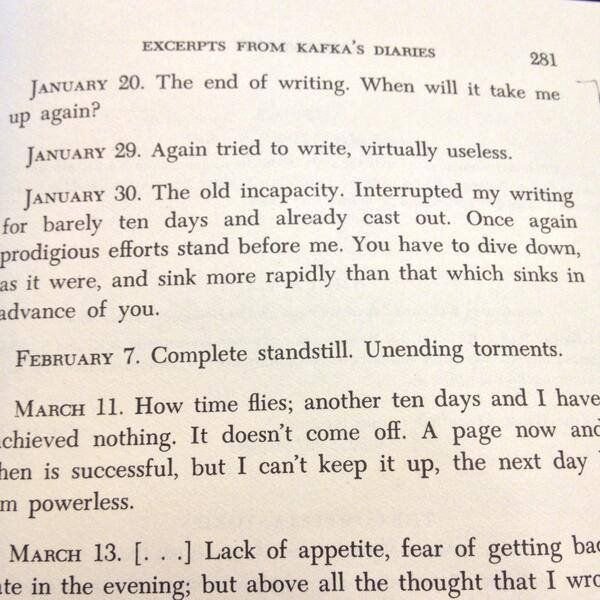
If you are a writer, your first job is to… make coffee. After that, your second job is to write. I imagine your days are busy, filled with responsibilities of work, family, home life, health, and so much more. So fitting in writing is already a struggle. I saw someone share this on social media recently, and it resonated, an excerpt from Kafka’s diaries:

There are similar entries from John Steinbeck’s diary (I found the excerpts through Austin Kleon’s blog):

  • June 5: “My whole nervous system is battered…I hope I’m not headed for a nervous breakdown.”
  • June 11: “My life isn’t very long and I must get one book written before it ends.”
  • June 18: “I am assailed with my own ignorance and inability… Sometimes, I seem to do a good little piece of work, but when it is done it slides into mediocrity.”
  • July 8: “I wonder how this book will be. I wonder.”
  • August 24: “My nerves are going fast… I wish I could just disappear for a while… Where has my discipline gone? Have I lost control?”

And here you are, trying to write amidst your otherwise busy life. Plus you are also asked to share about your writing on social media too. I imagine that oftentimes you feel that you just don’t have the extra creative energy to give to it. Why? Because it’s hard to wake up every day feeling the pressure to be smart/funny/educational/interesting on social media. The solution?

Yep, a sharing system.

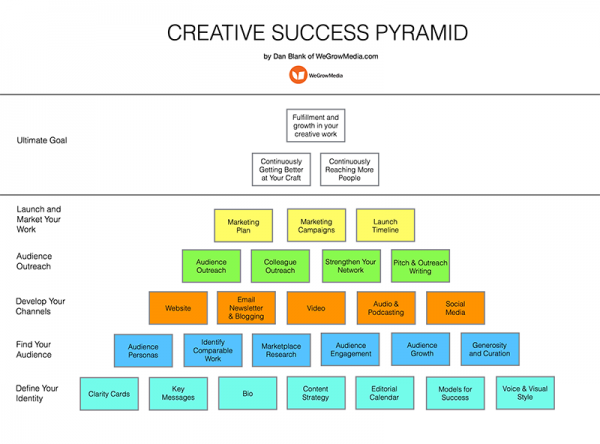
If you joined my workshop last week about Defining Your Creative Voice, you would have heard me talk about a process I go through with clients of defining their Key Messages. If you look at my Creative Success Pyramid methodology, you will see it is one of the most foundational elements near the bottom left:

Creative Success Pyramid

When you know how to describe what you create and why, knowing what to share is soooooooo much easier.

Structure Enhances Creativity

I grew up as the art kid, where every day could bring some weird new project or collaboration with friends. So I appreciate the value of one’s artistic process having zero structure. No rules, no boundaries. But when we talk about having a career in the arts, and developing an audience around what you create, I find that sometimes that a lack of structure leads to inaction.

Why? Because every day you have to reinvent the wheel. You have to be super charismatic on the fly, and re-motivate yourself to want to be public with what you create and why. The less you have to invent each day, the easier it is to simply move through tasks that are critical to ensuring others find out about your work.

Art thrives with boundaries. Whenever I read about how great work is created, I always learn about the extreme boundaries that the writer or artist had. This comes up constantly when I interview people on my podcast too. Sharing benefits from boundaries as well. Give yourself some kind of structure to work from — ANY kind of structure at first.

Your Sharing System Should Be Flexible

If you read this far, I have to imagine that you are thinking, “I like the concept in theory Dan, but I hate systems. My days are already defined by so many expectations and obligations, I do not want to be trapped by one more system to adhere to.”

Which is why I want your sharing system to be flexible. A sharing system is meant to truly fit within your life. So that you are no longer juggling a million to-do lists for all of the author platform and book marketing tasks you are told you have to be doing. In the work I do with writers, we are often working within systems and (I’m about to say a scary word)… spreadsheets. Do I love spreadsheets? Nope. Do I find them a useful tool that allows creative people to systematize aspects of their career so they can focus more on creating? Yes!

The systems we create for ourselves have to be authentic to who we are. They have to be malleable and changeable. They serve as a foundation to work from, instead of a rigid construct that confines you.

Thanks.
-Dan