
Your connection with readers is a journey

I recently received an email from a writer who shared a compelling story of the power of a single reader. This is what she said:

“I’ve done lots of book signings and I often hear from other authors that it “isn’t worth their effort” to do a signing where they only sell a dozen books.
But this week I received the Facebook message below.
It’s an interesting example of how ONE book sold to ONE complete stranger FOUR years ago earned me a superfan!
She has never contacted me before, but I’m so glad she did because of course I responded and we have now arranged that I will visit her book club this coming Tuesday!
I will be nurturing this relationship and so glad she reached out to me!”
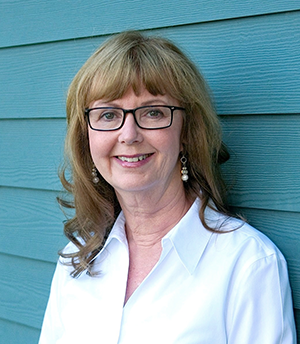
Elinor FlorenceThe author is novelist Elinor Florence. The note she had received from the reader said (this is an edited version of the note):

“I am leading a book discussion of your book Wildwood on Tuesday and would like to know more about you. I met you [at a book signing once], and because I really hadn’t heard of you at that time, I only bought Wildwood. [I] am now wanting to read Bird’s Eye View.”

“You are a very compelling writer, and I have now read Wildwood 3 times and recommended it to [a large book festival.] I am one of your biggest fans now, and everyone I told about the book has absolutely loved it!”

I mean, isn’t that what every author dreams of hearing from a reader? That someone didn’t just buy your book, but read it. Didn’t just read it, but told their friends about it. And even more, took the effort to let a large literary festival know about it, to hopefully feature the author. Even the Facebook message is a huge step, because so many writers never hear from their readers. If you want a reason why you may want to consider being active on social media, this is an example. Perhaps if Elinor wasn’t on Facebook, she never would have received this note.

Of course, Elinor makes the point that this entire process took years to unfold.

Every Reader Counts

As Elinor and I emailed this past week, I looked back to see when my first communication with her was. She subscribed to my newsletter on October 5, 2013, more than eight years ago. Since I send a weekly newsletter, that means she has received more than 430 newsletters from me in that time.

It was two years later in 2015 that she attended one of my webinars.

It was more than a year later in 2016 when she sent a lovely note to me where she said:

“Thank you so much for your ongoing Friday posts. I have saved some of your advice that is meaningful to me, and copied it into a document on my desktop, where I read it often.
In spite of living in a tiny village in the Rocky Mountains — with no writing group, no bookstore, and no fellow authors to inspire me — I have done enough marketing that my wartime novel is now considered a Canadian bestseller (as reported this summer by The Globe & Mail, and The Toronto Star — Canada’s two largest newspapers).
I owe some of this success to my small core of online advisors, of which you are definitely one.”

I featured Elinor in my newsletter in 2017, sharing a compelling story of how she found readers for her book.

Then there are emails between us from 2018, 2019, 2020, and this year. The journey between a reader and a book and an author can take time. In emailing about this very post, Elinor mentioned that while she had read my book (Be the Gateway) in 2019, she hadn’t reviewed it online. She did so yesterday, posting a review to Amazon and Goodreads. Every interaction can have unintended — and wonderful! — consequences.

Attention is a Scarce Resource

I was reading author Sarah Hays Coomer’s newsletter this week, and she shared a story of how she is reflecting on the value of where she puts her attention:

“I read a not-very-good book about attention last week. At first it was interesting… but then her attention began to wander and the book never really made a point or illuminated much of anything.
It was disappointing, and I recognized I had just given 6 hours of my attention to something that didn’t merit it. But that revelation, in itself, turned out to be useful. It made me realize my role and responsibility in the choice to start and continue reading.”

Something writers don’t always take into account is that the “transaction” of a book is not just the cover price. It is asking a reader to spend 5-10 hours with it. So many books are purchased, yet unread. Which is why I believe in authors sharing, to help ensure that these books don’t just get sold, but are read, and create word-of-mouth marketing.

As Sarah points out, so much of this is about attention. Which is why I love the story Elinor shared about consistency and connection.

Thanks!
-Dan

Finding Joy in Sharing Your Writing (Podcast)

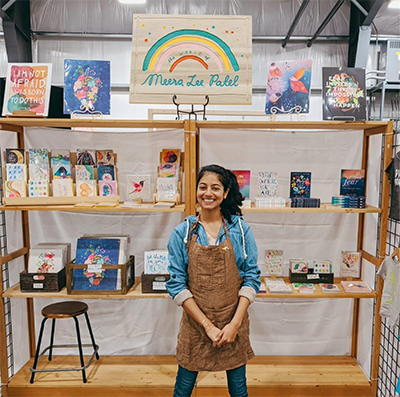
Meera Lee PatelToday I want to share a case study of the work I did with author and artist Meera Lee Patel. She is the author of four books which have sold more than a million copies in total. She has more than 50,000 followers on Instagram, and a thriving career as an artist and writer. I share the process we went through to focus on shifting her creative identity, finding confidence in sharing her voice, creating authenticity in outreach, and having a clear plan for what she shares.

You can listen to the podcast by clicking ‘play’ below, or in the following places:

You can watch the episode here:

Finding the joy in sharing your writing

Today I want to share a case study of the work I did with author and artist Meera Lee Patel. We have known each other for a few years, and last year she reached out to me about working together.

Meera Lee PatelMeera is the author of four books which have sold more than a million copies in total. She has more than 50,000 followers on Instagram, and a thriving career as an artist and writer. I think it would be easy for anyone to look at what she has achieved and just be awed by it — like she has “made it” as a writer and artist. And of course, she has. Her body of work is astounding and inspirational. But as any creator knows, the work we do is a journey, and at different points we need to adjust our path and ensure it is filled with a sense of deep fulfillment and joy.
When we began talking about working together, these were her goals:

  • To feel as though she gave her next book the best possible chance at success. That book was more than a year away from publication when we began working together.
  • To have a system to share her work that felt authentic to who she is and what her work means to her. To make sharing her work filled with a sense of joy, not obligation and burden.
  • To give voice to the aspects of her work that she most wanted to be known for. Within this was the concern that the direction her work is growing may not be where much of her audience wanted to go.

We decided to work together for three months, which is the minimum amount of time I work with someone. We spoke every other week on the phone, worked through my system, and customized everything based on her goals and challenges.

At the end of our time together, I asked about results. This is how she described the outcomes of our work together:

Identity Shift and Creative Clarity

Meera Lee PatelMeera has had some big changes in her life recently. She had recently given birth to her daughter, moved from Tennessee to St. Louis, and changed her entire schedule and focus of her work by accepting a Fellowship to pursue her MFA in Illustration & Visual Culture at Washington University in St. Louis.

That is a lot of change at once, and I don’t have to remind you that this is all happening amidst the near constant changes to our lives in the past couple of years. That means every little decision was more complicated.

Meera’s new book and return to school amounted to something of a career shift. She put a lot of her regular work on hold, and has been carefully considering what she wanted to create. Writing will increasingly be a bigger part of her work moving forward.

What we worked on was how to best express this so that it feels as though it resonates with her intentions. Likewise, she wanted to feel that she is signaling to her existing audience where her work is headed in a way that brings them along in a meaningful way.

She didn’t want to just grow her audience, but rather, focus on the followers who resonate with her new creative work. Inherently, this is about a shift in her identity, one where she feels she has permission to be true to herself, and not disappoint her existing followers. With that clarity comes permission to create and share.

Creative Confidence to Share Her Voice

It’s one thing to know what you want to do, it’s another to get it done. In making such a big creative shift, having confidence in one’s own voice is critical. And it’s not easy.

Meera is someone who has diligently and carefully shared her art and writing over the years. In shifting her focus, she wanted to be conscious to do it in in a way that didn’t feel haphazard to her or her readers.

Here, confidence is not solved by saying, “Go for it!” It is paying attention to the details, ensuring you have the foundation set, and where you are leading people. It is detailed work that is partly strategic, partly psychological, and partly emotional. Just like writing and art!

This is where a collaboration becomes especially meaningful. To stress test her ideas, work through scenarios and getting another set of eyes on all she is considering. Here, she can reaffirm what she does want to develop, and how to amplify her voice in doing so.

One big outcome was a revamp of her email newsletter, which wwas never her favorite thing to do. In our process, we developed a new format, new frequency, and most importantly: infused it with a sense of joy.

She says now that her newsletter is the most regular writing she does each week, that it feels 100% aligns to her creative voice, and she loves showing up for it.

Authenticity in Outreach

Having built a successful career as a writer and artist, Meera is comfortable with pitching her work, and developing a wide network. But like anyone who creates, she wants to ensure that when she is tending to these connections and forging new ones, that the process is infused with a sense of authenticity and generosity.

In working through this, we came up with the idea of focusing on gratitude emails. To stay connected with those she already knows, and create new connections by sending emails where she expressed gratitude for who they are and what they create. In other words, don’t make it about you, make it about helping others feel good.

She began this and was amazed at how great it felt, and effective it was. It allowed her to flip her perspective on what marketing can be. That the goal can simply be to do something nice for someone, and that will still have a meaningful impact on your own creative goals.

Having a Clear Plan

If you have followed my work for awhile, you will know that I have developed a system called The Creative Success Pyramid, which helps creators get clear about their identity, understand their ideal audience, and share their work in a meaningful way.

For clients, we work through this system in a 15+ tab spreadsheet that walks through each element. Meera found this incredibly useful, and it felt like the perfect match to the creative aspects of her life. Here within the system was a clear plan to consider her voice, her audience, and how it connects to sharing on social media and elsewhere.

If you want to explore working with me, you can learn more about my process here. And you can learn more about Meera and her work on her website.

Thanks!
-Dan

Why engage with your readers

Last week I asked my readers for their feedback on a possible title for my next book. The response was amazing, thank you! Today I want to share my process for analyzing this data, and illustrate why engaging with your ideal audience — even long before your book will be published — is not only useful, but deeply fulfilling.

What Engagement Looks Like

For me, engagement looked like this:

  • 150+ responses
  • More than 11,000 words of feedback

Plus, these emails contained other words of thanks, updates, of questions that weren’t related to the book title. I didn’t count those in the 11k. I was surprised at the total word count when I added it up, illustrating why we engage: because people want to share. They want conversation. They want to feel that their words count. They want to co-create with us.

How to Get Engagement

This is the big question, right? Some of the answers will be downright annoying:

Q: “Dan, how did you get 100+ responses to your question?”
A: “Well, I sent out a weekly email newsletter for 15+ years. Oh, and I’ve sent 29,500 Tweets in that time, 2,965 Instagram updates, hundreds of podcast episodes, as well as hundreds of webinars, courses, and other programs.”

Nobody wants to hear that! And while those things are true, they not the entire story to how to get engagement. Yet they do support what I often talk about: that the foundation of engagement is showing up in the lives of your ideal readers. To be generous where you can. To care about their goals and challenges. To forge a sense of communication and trust through many small moments.

But in a single email, here is what I did to get engagement in that last newsletter:

  1. Pre-work: my question about the title wasn’t flippant. I got feedback from a close collaborator, Jennie Nash. I came into this question with confident expert advice. We discussed it over the course of many months. And even now, it’s still not a final decision. I also reached out to a handful of people I really respect the week prior to my newsletter to get their feedback. Their answers gave me great insights and further confidence.
  2. In the newsletter I was up front about what I wanted the reader to do. I put it in the first line: “I would like to ask for your help today.” That made it not only clear, but personal. There is a vulnerability in asking for people to help, and that is part of why many people responded. I didn’t beat around the bush: the next sentence asked the question very clearly. “Do you like this title?” and then I shared the title.
  3. I asked open-ended feedback where the reader could use their voice. Meaning, I didn’t funnel them into some form. I didn’t ask them to rate it on a scale of 1 to 5. I asked a question that allowed them to use any language they wanted, any length they wanted. I encouraged them to reply via email so that it felt familiar, not some link to a form.
  4. I gave people permission to hate the title, encouraging them to give me any feedback, even negative feedback.
  5. I then shared more about what the book was about, giving 3 choices for subtitles. Sometimes it’s easy to pick between three things.
  6. Then, I shared my “why.” My belief system around creativity and sharing that the entire book represents
  7. I ended the newsletter with some very personal stories about my childhood, sharing who I am as a writer and artist, and where I come from.

Hopefully, this gave people not only clarity of how to engage, but a deeper connection to me and my work. Of course, after the newsletter was published, I shared this on my blog and all of my social media channels.

There are many other ways that this can be done, but I simply wanted to deconstruct that one newsletter in case it was useful for how you would consider engaging your audience.

How to Analyze the Feedback

How did I process all this feedback? I will admit, part of me was tempted to just casually read it over, and then get a sense of what my gut told me I just read. But that would have been wrong. Why? Because looking at the data and analyzing it means I have to look at reality, not perception. So I used (drumroll please)… a spreadsheet! One by one, I copied each of the 150+ responses to a spreadsheet.

I created the following columns in the spreadsheet:

  1. Feedback: the actual words that people shared.
  2. Reaction: for this I created four categories: Love, Like, Meh, and Didn’t Like. So I would tag each piece of feedback as one of these.
  3. Subtitle preference: which of the three subtitles they preferred, if they liked any of them at all.
  4. Subtitle ideas: lots of people shared their own ideas, so I wanted to put them all in one place.
  5. Book title ideas: some people didn’t fully resonate with the book title I presented, but had ideas that were similar.
  6. Thoughts on the concept of “Human-Centered Marketing” which appeared in the subtitle. More on this below.

What is all of this for? To create a system to process everything. Otherwise, I may end up overwhelmed amidst 150+ emails. So it is critical to move all of this out of email. Then, I want to turn feedback into action, which is why there are so many columns.

Challenge Your Assumptions

So how did people feel about the title for the book, “Share Like It Matters”? This is how it broke down at the time of writing:

  • 15 people really didn’t like it. They had clear and specific issues with it. They would not give a book with this title a second look.
  • 12 people felt “meh.” It just didn’t resonate with them.
  • 80 people liked it. They would notice the title and pick it up.
  • 51 people loved it. The title immediately grabbed them. It lit them up inside and got them excited.

So at this point, it is tempting to simplify things and say that more than 80% of people liked or loved the title, so that is the answer! And while that is true in a sense, I wanted to go deeper. 51 people saying they loved it really jumped out at me. That is not what I expected, though it is what you dream of when choosing a title. That some segment of your audience reacts in a visceral and positive way.

But the 27 people who didn’t like the title mattered just as much. As did the many many many ideas and notes from most of the respondents. Some insights I’m seeing so far:

  • The title of “Share Like It Matters” isn’t perfect. Some people won’t like it, and I will lose readers because of it. People gave really specific reasons why the title doesn’t work, and it gave me a lot to consider. That will apply to any title I choose. The balance I’ve been considering is a title that represents the content of the book, and also is engaging and memorable.
  • In two of the subtitle choices, I included the term “Human-Centered Marketing,” which I’ve used to describe my general philosophy for how writers and creators can market their work. But 18 people either didn’t like the term, or worried that it felt too businesslike and clinical. That is great feedback for me, not just for the title, but for my messaging in general.
  • Also in the subtitle choices, the term “system” really resonates with some people because it signifies a plan to follow, and scares other people because it sounds too rigid.

Why Engage?

In reading all of the feedback, I was not just deciding a title, but also a subtitle, the messaging for my business overall, and learning more about how I will market this book in general. That is an amazing process to go through before a book launch. This is why I encourage writers to begin their book launch process 12+ months before launch date. (If you are a writer planning your book launch in 2023, please consider working with me!) It’s better to learn these things now, when you have time to really create a strategy around them, than when you are in the midst of a launch and have no time to make changes.

Engaging with others also feels deeply fulfilling. I am so grateful to be able to be able to connect with each person about the themes of this book, and get their input. It makes the book feel more alive, even before publication. Plus, it helps the entire process feel fueled with creativity and community.

Thank you for your support and being here with me.
-Dan

Share Like It Matters (Podcast)

I would like to ask for your help today. Can you share your reaction to the possible title of my next book. Here it is: Share Like It Matters. In today’s episode I share more about this title and what it represents in the book I’m working on. I’d love your feedback: dan@wegrowmedia.com

You can listen to the podcast by clicking ‘play’ below, or in the following places:

You can watch the episode here: