Does social media sell books?

There is an article that I have seen a lot of people share from The New York Times this week, where they talk about how Billie Eilish (97 million followers on Instagram) “only” sold 64,000 copies of her book. The implication that many readers walked away with: social media doesn’t sell books.

There has been a lot of reaction to the piece. As I look at Billie’s book on Amazon I see 2,678 reviews, with a stellar 4.8 out of 5 star rating. Reviews have quotes such as: “This is everything I have ever wanted and more,” and “If I could give this a trillion stars, I would.” So the measures for success here will differ depending on where you stand in this conversation. To tens of thousands of people who bought it, and a few thousand who left reviews, it’s a highlight of their year.

What else did Billie release this year in addition ot the book? A few things:

  1. An album
  2. A fragrance
  3. A documentary
  4. Two pairs of Nike sneakers
  5. A line of kids clothing
  6. A tour
  7. And more!

Did social media “sell” her fragrance? Or her tour? Should every product Billie releases be an instant bestseller? Where does that end? The more we dig in here, the more we have to consider our expectations. Nearly two years ago I wrote an essay which featured Billie Eilish, and aligns well to this conversation: “No one knows what will work.” It quotes how she and her brother Finneas (who writes songs with her) don’t know what works, even as they become more successful. Their success is massive, yet listen to how Finneas describes knowing what works:

Interviewer: “Do you think there is one clear formula to a hit record?”

Finneas: “No. Absolutely not.”

Interviewer: “Do you feel you have an idea of what it takes?”

Finneas: “No. Less and and less now that we have had more and more success, because it just teaches me each time that I don’t know.”

That applies to all creative work. Meaning: 97 million followers don’t guarantee a bestseller.

It’s worth noting that social media itself is just a tool, it is not the entirety of one’s platform. Just as 40 years ago, you wouldn’t have a headline of: “One author has a Rolodex of 5,000 names and only sold 60 copies of their book! Telephones don’t sell books!”

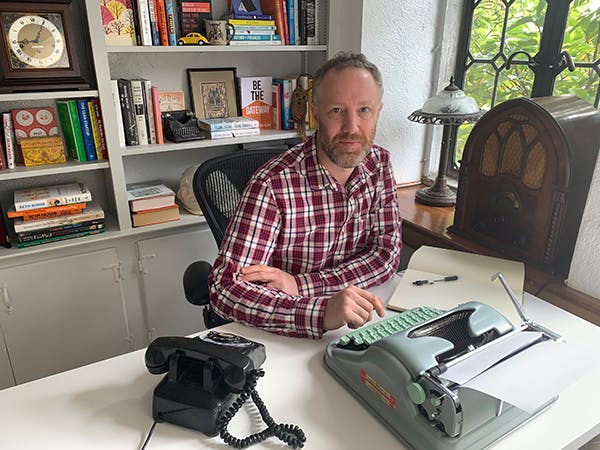
I added a new typewriter to my collection this week. The owner said that her mother-in-law purchased it in 1969 and used it to write letters. Nowadays, we tend to see a typewriter and consider how it may have been used to author a book. Yet more often it was used for basic communication through letters. 40 years ago, I can imagine a hopeful writer deciding to send out dozens of letters to help spread the word about their book in a similar way that we try to use social media today.

I collect old technology for this reason, to remind myself that these are just tools, and how we use them is what matters. Here are I am with a vintage tube radio, typewriter, and phone.
Dan Blank

Your mileage may vary, and so much of what sells books depends on an overarching strategy. Let’s talk more about that…

Your Platform Isn’t a Place, It is a Connection

It goes without saying that what matters first and foremost is to write a good book that will engage your ideal readers. When we talk about “platform,” I have always defined that not as social media or newsletter or any specific tactic, but rather these two things:

  • Communication
  • Trust

In other words, your platform is about effectively sharing what you create in a manner that creates a connection between you and another human being. Could that include social media? Sure. But it’s through social media, not because of it.

I have seen writers and creators diversify the ways in which they connect with their ideal audience, no longer just relying on “followers” in one channel. For example, Rebecca Green established a following of a quarter million followers on Instagram, then launched a monthly newsletter. This gave her the opportunity to connect with her biggest fans on a different platform, one that allowed her direct access to them through email. After that, she started a paid Patreon community, where for $5 per month, fans can see exclusive content that she shares, and connect with each other. How many people do you think from her 278,000 Instagram followers now subscribe to her Patreon? 589. Is that lower than you thought? Higher?

It’s worth noting that I’ve found her Patreon to be such a lovely community of people who celebrate Rebecca’s work. Also, she earns more than $2,500 per month through these subscriptions. She is not only diversifying the platforms, she is allowing her biggest fans to stay connected with her in more and more meaningful ways.

Does this aspect of her platform help her sell more books? Maybe? Likely? Possibly? She did just get a deal with The Jim Henson Company to turn one of her books into a stop motion animation series. Is that because of her platform? Will that animation series sell more books? Again: Maybe? Likely? Possibly?

What I know is that how Rebecca Shares is a joy to be a part of. I mean, just look at her amazing blog, which is a deep dive into what it means to create and live a life full of creative exploration.

Last year I worked with author Julie Ryan McGue on the launch of her book Twice a Daughter: A Search for Identity, Family, and Belonging. It came out in March and currently has almost 400 reviews on Amazon, and her homepage lists the 7 speaking events she had in November alone. When I asked her about the reaction the book has received she talked about how much fun she is having in sharing the book, and the many connections she is making with readers. She says: “Everyday I hear from people in the adoption world and beyond about how inspiring and moving they found my story. It brings tears to my eyes to hear my journey is helping others.”

She said that she continues to be fascinated by podcasts, events, email promotions, webinars, book clubs, ads, and so much more. Was social media a part of all of this? Yes! Was the success of her book because of social media? No. But it did flow through social media. How many social media followers does Julie have? 62 on Twitter, 350 on Instagram, and 462 on Facebook. Yet, she has sold thousands of books. Why? Because her platform is about communication and trust, sharing a great book, and focusing on how to connect with people in a meaningful way.

I love hearing how much fun Julie is having sharing the book more than 6 months after launch. This is how books are sold. Not just through one channel, but by developing clarity in who you want to reach and the experiences you hope to create with readers. It happens by showing up again and again, and making connections in new ways, across channels. Oh, and it takes time.

In the process, she has sold thousands of copies. But her mission is not just about sales. She says: “Book sales are one thing, but inspiring and influencing the choices people make has become my focus now.

When I work with a writer or creator, social media is part of a much larger process. That’s why I refer to this process as Human-Centered Marketing. It is about the people, not the channels. It is a holistic approach with the goal of ensuring the writer feels a sense of authenticity with how they share what they create, and that their ideal readers discover their work in a meaningful way.

To develop this for your own platform, here are three places to start:

Thanks!

-Dan

23 Lessons from The Beatles on the Creative Process (Podcast)

I recently watched a 7+ hour documentary on The Beatles, and kept finding little lessons for writers and artists on the creative process and marketing. In this episode are 23 lessons that I think will address a lot of common challenges that people face when not only creating, but considering how to balance marketing into the mix.

You can listen to the podcast by clicking ‘play’ below, or in the following places:

You can watch the podcast here:

Or read my 2,600 word essay about these 23 lessons.

23 lessons from The Beatles on the creative process

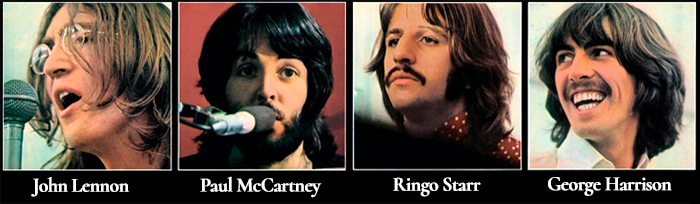
This week I watched a 7+ hour documentary on The Beatles that was recently released, and kept finding little lessons for writers and artists on the creative process and marketing. Below are 23 lessons that I think will address a lot of common challenges that people face when not only creating, but considering how to balance marketing into the mix. The documentary covers a one-month period when The Beatles were recording much of their final two albums. In case you need a refresher, there are four members of The Beatles which I will be referring to by name:


Okay, let’s dig in…

Sometimes we feel left out of the creative process because we don’t show up all the way.
During these sessions, there is a point where George quits the band. He clearly feels at odds with the process the group is taking with the new album. But the thing is, before this happened, the documentary shows us that he mentions that he has all these new songs he’s written, but he doesn’t want to share them because he worries that these sessions won’t do them justice. The lesson for creators here is that if you want to feel a part of something — perhaps it is a certain community of writers, or a social media platform — you have to show up all the way. You have to be open to sharing part of who you are, and connect with others with a sense of empathy.

Creativity can be a mess. Consistency solves for that.
The recording session starts out with tensions and diverging ideas. But then something really, well, ordinary happens. The group just keeps showing up every day. Sure, there are some pivot points, such as George quitting and returning, and later a change of venue. But the songs started coming together because the group just kept showing up. Then, small moments of connection turned into powerful songs. The lesson for creators is that if you feel like your creative process is a mess, or if you keep missing the goals you set out for, keep trying. Try small tweaks to approach your creative work in a new way.

You don’t need to work in isolation.
In watching the documentary, I was surprised by how many other people are constantly in the shot. Not just the film crew, but spouses, kids, friends, business partners, staff, and so much more. At times, it feels like random people I had never heard of are influencing the music. The recording engineer basically arranges parts of Let It Be in a super casual way. At other times, their assistant is helping to decide specific lyrics in one of Paul’s songs. The lesson for creators is that oftentimes we feel that our work needs to happen in isolation, and that any outside influence corrupts “the purity of the creative process.” But the film shows that creativity can be amplified when others are involved.

Even legendary artists have impostor’s syndrome.
It was amazing to watch George describe Eric Clapton’s guitar playing again and again as being something much better than George himself could do. It wasn’t just “Eric is great.” It was often in the context of “I can’t do what we need, I’m not good enough. We need someone like Eric.” The lesson for creators is that if you ever feel like you can’t do your work as good as someone else, don’t worry about it. You offer something unique that no one else can. This is part of what I liked about how long the documentary was. These musicians began to seem like just four people in a room, struggling to make things work. Then at one point I see a shot of George with three of his now priceless guitars, just as he is starting to write “Something,” and I remember, “Oh, I am watching music history happen.”

Being in charge can be a very confusing process.
At times I felt like Paul was clearly the leader, holding the band together. But other times, it felt as if he was being far too controlling of the band. Then later, he confides that he has always felt John was the leader. At other times they mention that their former manager who passed away was the de facto leader, and they feel a bit rudderless without him. Throughout the documentary, you can feel the struggle of leadership, with different members taking a different tact with it. The lesson for creators here is that if things ever feel out of control or not optimal in a collaboration, know that this is a common part of the process. Communication and empathy are critical to find common ground and a path forward.

Indecision permeates the creative process.
For days and days, there are discussions, disagreements, and indecision around a major component of their plans: where to play a show after they write these songs. No one agrees for awhile. New ideas come up, old ideas are pushed again and again, other ideas are explored in detail, then abandoned. Here you have four of the most creative minds of their generation, plus a group of trusted advisors and professionals, and a huge budget…. and no one can figure it out. The lesson for creators is that if you ever feel stuck in the creative process, or frustrated that a collaborator hasn’t magically fixed everything perfectly, that this is a normal part of the creative process.

Marketing is a part of being a professional.
Surrounding everything in the documentary are discussions of marketing and business dealings. The first location is a film studio, then a brand new studio that The Beatles built. There are huge film crews and equipment around them. They are making complicated concert plans, and throughout there are discussions about promotion, business dealing, business partners, etc. This all happens not just near to where they are playing, but something while they are playing. There is no hard line between the two. The lesson for creators is that if you want part of your creative life to have professional aspirations, that the two things may overlap very often. That is just the nature of managing two difficult processes: creativity and marketing.

Even the best artists can feel desperate for material.
It was funny to watch John and Paul feeling desperate for material so they could make their deadline. They kept diving into old songs they abandoned years ago because they were already written. They pulled out songs they wrote when they were teenagers, and kept bringing up cover versions of songs. The lesson for creators is to not always feel pressure to have some wild new breakthrough that no one has ever heard before. Embrace the totality of your creative journey, including ideas you may have abandoned long ago. They may still be a source of inspiration and progress.

The creative process can require patience.
It was amazing to watch people try to fill time while The Beatles wrote music. Ringo shows incredible patience waiting for lyrics to be written or others to work out parts of the song. Yoko Ono can be seen reading a newspaper, Linda McCartney taking photos, and there are constantly people milling about. For much of it, you can see John and Paul goofing around to fill the time. It feels very ordinary at many instances. The lesson for creators here is that not every moment needs to feel like you are making huge creative breakthroughs. Work through the boring parts.

Unexpected surprises become part of the genius of creativity.
One day, musician Billy Preston just happened to stop by because he was in town for a few days for a TV show. The band invites him to sit in on the day’s session, and he immediate begins adding these amazing parts on piano to their songs. Quickly, it just becomes assumed that he will be part of the band. At one point they even ask if anyone confirmed with Billy that they want him back each day. Even beyond the music, Billy’s presence totally lifts the spirits of the group. It is a huge shift of joy and appreciation for the creative aspects of music. The lesson for creators is to be open to welcoming others into your process, and be on the lookout for those lucky moments when genius walks in the door.

Even the best artists have stuff littering the cutting room floor.
It was fascinating to hear entire songs in the documentary that I had never heard before, as well as alternate versions. The lesson here is that we like to think that anything we put effort into should find an audience. But not everything can. Some ideas are “good” but not “good enough” to put your maximum effort to publish.

The creative process is emotional.
Early in the sessions, Paul was trying to get everyone organized — he was the cheerleader trying to get it all in order. But once the group hit their stride a week later, Paul sometimes seemed more distant and uncertain. The lesson for creators is that group dynamics can constantly change, and even effect your own emotions in the process. The creative process is a rollercoaster; get on board.

Marketing is mixed with creation.
There is no obvious line between creativity and marketing in how The Beatles are recording these albums. They are surrounded by a huge film crew, photographers, business colleagues, and so many others. The promotional aspects of the sessions are actually what brought them together: to make a film and album. They are shaping their creative process to meet marketing deadlines. At one point George mentions that he hasn’t played this much music in awhile, so it could be viewed as the marketing aspects actually encouraging creativity. Throughout the sessions, they are constantly talking about marketing decisions for where to play a show, what kind of film this will be and so much else. The lesson for creators is that it can be difficult to put a firm line between “creativity” and “marketing,” and that the reality is that sometimes each benefits the other.

Creativity is expensive.
It was funny to hear the recording engineer ask to delete versions of songs they just recorded. This is the kind of stuff that fans would love to hear. But there is a reality of the time that we are reminded of when the engineer says: “You do realize this tape is costing your two schillings a foot.” Here they are in their own recording studio, with their own staff, wealthy and successful, and they are being reminded of the cost of tape for recording their art. But of course, they are investing in their creativity process. The lesson for creators here is that there is often a constant balance between following your creative vision and the finite resources you have to do so.

Creative work is mixed with real life.
At one point in the film, the band is under an immense deadline of finishing 10+ songs within three days, and then perform them live in front of an audience. Yet the next day, Paul’s young daughter shows up, and lots of the footage from that day shows her playing alongside every member of the band. The lesson for creators is that real life is often mixed with creative and business life. These two things don’t have to be viewed as interruptions, but part of the process.

Deadlines can fuel creativity.
There is constant talk of various deadlines throughout the sessions. What was interesting is that they seemed to fuel the creativity of the band. The lesson for creators is that all great art is created with serious boundaries. Embracing them can fuel your work in powerful ways.

Creativity takes time.
The length of the documentary (7+ hours) allows us to watch the creative process unfold. It takes time. But there are other indications of this as George says he has been working on his song “Something” for more than 6 months. While sometimes creativity can “just happen,” oftentimes it is a slow process that we have to choose to show up to.

Everyone may have different creative goals.
There is a discussion near the end, where they are talking about the goals of each individual member of the band for the songs they are recording. George is happy to just make an album, but Paul wants something more. He keeps asking where this is leading. He wants more than an album, something new and exciting. That is paid off later on when they are playing the rooftop concert, and Paul turns around to see the cops arrived. A huge smile comes across his face and he dances. This is the new thing he wanted, the payoff. To be doing something new and dangerous. Whereas George didn’t even want to go on the roof, but he obliged. The lesson for creators is to take the time to talk with your collaborators about what success looks like to them.

Creativity and sharing is filled with uncertainty.
There is loads of uncertainty up until the last minute to doing what became a legendary moment: the rooftop concert. Even when you have teams of people working, when you have mostly agreement, everything can still feel completely up in the air, on a whims notice.

Collaborations are complex.
At one point, George Harrison tells John he wants to record a solo album. He shares that allowing each member to do solo albums would sustain The Beatles long term, because they wouldn’t worry that all of their creative output could only go into the band. John heartily agreed. Yet, they broke up soon after. Within about a year, each member of the band released their own solo album. The lesson for creators is that it can be difficult to plot out a logical strategy that takes into account every individual goal.

The power of art.
The movie ends with the rooftop concert. They are disturbing the peace, and the police are intent on shutting it down. When the officers finally make it up to the roof, they do something surprising: nothing. It’s as if once they see John, Paul, George, and Ringo mid-performance, they are powerless against the art. It’s as thought it is a living force that the police can’t stop. The lesson here: take creative chances. The result may be different than you expect.

The story of creative work is what we make of it.
Years ago a different movie was made from this film footage, and it told a very different story. One of a band coming apart at the seams, not getting along, and on the verge of a breakup. The story was that these “messy” recordings were saved after the band left the studio, when others came in to “save” them by layering in other instruments and with creative mixing. But director of this new documentary found a different story when he looked at the raw film footage: a thriving creative process, full of positivity and deep connections. In other words; if you are telling yourself the narrative that you are failing, you may simply have the wrong story. Change it.

The Ultimate Lesson: Create.
As I watched the documentary, I occasionally felt as though I entered a time machine. I got so immersed into the documentary, that it felt like the present, as thought it was happening right now. But then I would go to Wikipedia and look up some of the people in the movie I was unfamiliar with: the engineer, the assistant, etc. It was weird to flash forward 50 years, and see who was still alive, who passed away, and what filled their life. Many died far too young. It was a great reminder that if you want to create, do it now. Time is marching on.

Thanks!
-Dan

Want to grow your platform? Do less. (Podcast)

I talk to a lot of writers and artists who want to grow their platform, effectively sharing what they create, and reaching their ideal audience in a meaningful way. Yet, they are overwhelmed with all they feel they have to do in order to market their work. But I have found that doing less can be more effective. Let’s explore why.

You can listen to the podcast by clicking ‘play’ below, or in the following places:

You can watch the podcast here:

Want to grow your platform? Do less.

I talk to a lot of writers and artists who want to grow their platform. They want to feel that they are effectively sharing their creative work, that they know how to reach their ideal readers, and in the process, grow their footprint in the marketplace. They struggle many creators feel is that there is an unending list of tasks they have to do if they want to market their work. They are inundated with tips and ideas that they find online.

But sometimes if you want to grow your platform, less is more.

I would rather see you focus deeply on one channel or one theme, than try to “do it all.” Meaning, you don’t have to be super active on 4 social networks and have a blog and newsletter and podcast and do webinars and such. I have found that doing less can be more effective. Let’s explore why.

Focus on fewer channels, but go deeper.

Imagine if all your marketing energy went into just email. Writing the best newsletter possible. Turning it into more of a community. Focusing people’s attention only to that place. In the process, forging powerful connections that not only grows your network, but lays the groundwork for word-of-mouth marketing for your writing or creative work.

Compare that to juggling a mixed bag of other tasks: Tweeting here, posting to Instagram there, sending out a newsletter every so often, and so on. What if you doubled down on one thing that resonated deeply with you, and would create the best possible experience for your ideal audience?

Whenever I find an example of someone who does something really well, let’s say they have a huge Instagram following, I often find that their other channels are barely updated. Meaning: they are optimizing for one channel, and one community. Last week I did a deep dive into people on TikTok who share videos about books, and noticed for some of them, they would have tens of thousands of followers on TikTok, and maybe 200 on Twitter.

This can align to the business strategy for a creator as well. I was recently working with a client who, in addition to her writing, also offers services and sells products. In developing a marketing strategy, we were considering the idea of honing her products and services down to just one offering. This would focus her own creative energy into the thing she loves most, and would also focus her audience’s attention there as well. Each day, she would be optimizing for the joy she feels in that process, and the ways her work can help transform the lives of her ideal readers.

Creative energy is precious. Use it wisely.

You have a limited amount of creative energy each day. If you are a writer or artist, a bulk of that energy should be used for your craft. To develop one’s platform and marketing, that can require creative energy as well. It can be more powerful to put that remaining energy into one place – one channel or strategy – than to split it into dozens of other “best practices” that diffuses your time and attention. Why? Because so much of what is happening when you are learning a new platform is to develop a literacy of it. So if I am working with a writer to build their presence on Instagram, consider all the things they are learning:

  • How to use the Instagram main feed
  • How to use Instagram Stories
  • How to use Instagram Reels
  • How to take good photos
  • What hashtags they prefer
  • What content feels right for them to share
  • What their writing style and voice will be like on this platform
  • Who to follow
  • How to engage
  • … and so much else.

Now if we add Twitter, the amount you are learning needs to double. Then a newsletter, it doubles again. It’s a lot to take in, it can feel overwhelming, and result in you doing the bare minimum, yet still feeling like you are stretched too thin.

Of course, many of the writers and creators I work with have a presence across many channels online, and I do that myself. But worth noting is that this happened slowly over time. I was active on Twitter for years before I really started sharing much on Facebook. Then another couple years until I started sharing on Instagram. I was sending out a newsletter for 5 years before I started a podcast. That gives me a lot of time to develop a literacy of each channel, the community within each, and develop my own voice and messaging.

When you focus on one place, you can focus your energy on how to create the experience that feels most authentic to you, and gives others the emotional experience that aligns to what you create and why. What do you want people to feel when they follow you? When you focus that energy, you can create a more dynamic experience.

Frequency matters.

When you put more creative energy into one place, that means you are able to show up there more often. For developing an audience online, posting frequently is usually essential. I am constantly studying those who are successfully finding an audience online, and again and again I see that these people show up every single day. Earlier this week I was working with a client, and we were discussing how another author had developed such a big following on Instagram. Sure enough, when we looked at that person’s account we saw they had shared more than two dozen updates in their Instagram Stories in the last 24 hours. This person was showing up in the lives of her readers in a big way, and clearly, they love it!

Do you need to do exactly that? Nope. You will find your own path. I simply share that to illustrate the point that when you show up, it creates more chances for engagement. When I was in college, I worked in food service. I remember someone walking in once, saying, “I’ll have my usual.” They were offended when I asked, “What is that?” That person would go on to say something like, “Hey! I’m a regular! I’m in here every week! You should know what I want.” But the reality was that we had customers who came in twice a day, every day. So for each time that person who came in once a week ordered something, a true “regular” had already been in 13 additional times. That’s 13 other times I would hear their order, have an interaction, and develop rapport.

If your strategy for developing an author platform is to do the bare minimum, you may find growth to be frustratingly slow for this same reason. This applies to so much of what it means to go from a hobbyist to a professional with one’s creative work. For instance, a writer recently told me that they don’t have a network at all in the writing world, but it was their dream to ensure their writing finds an audience. So I began creating a program for them to develop that network in a consistent and meaningful manner. One aspect of that may be for them to send out emails to like-minded creators thanking them for their work. So if they send one email a week, that means they will send 52 a year. Which is nice. That would lay a solid foundation. But… what if they did it daily? That would be 365 emails a year, exponentially more. Is it more work? Yes! Way more work. But if you focus intensely on one thing, growth becomes exponential. It would take 7 years to send those 365 emails at the pace of one a week, compared to one year if they sent daily.

Boundaries are required for great art. Also for great marketing.

Focusing on less can hone your creative energy and the attention of your audience. This is a concept I have been thinking about in so many ways, including the craft of creative work.

In 2017, I set out to finally learn how to play guitar properly. For a quarter century, I had dabbled, picking it up every now and again, learning the same few chords, then letting it languish for years at a time. So in 2017, I began practicing every single day for a year, and then continued that. I found an extra hour a day to create along the way. Awhile later, I felt stuck in my guitar practice, so I hired a coach to get unstuck. Then in 2020 as the pandemic set in, I had to find new ways to motivate myself.

After four years, and all of this work, my goals with guitar still feel elusive. You see, there are soooooooo many amazing guitar tutorials online. What I found was that I kept accruing knowledge, but not the experience I hoped for with guitar. I had all of these disaparate pieces, but nothing tying them together.

So I hired a guitar coach again, the same one I used a couple years back. His name is Mark, and he lives in New Zealand. But this time, I was radically clear about how I hoped to focus our work together. My goal is simple: I don’t want knowledge, I want to be able to pick up an acoustic guitar, sit on my porch, and play a certain style of music for 30-60 minutes. That’s it.

We talked about what I wanted to play, which is key to ensuring I made progress. In considering this, I realized I had been focusing on too many of the wrong things as I learned guitar the past few years. So many guitar lessons I dove into had focused on a genre of music I appreciate, but don’t love, or they taught me to simply mimic famous songs. But that wasn’t my goal. I told Mark about how much I love the work of Will Ackerman and the solo guitarists from the Windham Hill record label in the 1980s and beyond. I had the privilege of interviewing Will a couple years back.

Mark immediately got it and began playing some compositions, asking, “You mean, like this?” My reaction: “YES!!!! THAT! That is what I want to be able to do!”

He replied that is his favorite way of playing when he is alone, and he began creating a program for me to follow. The key ingredient in it is limits. Strictly limiting what I focus on in order to develop this competency. For now, we are only working within one key, and in one finger position on the fretboard. The truth is none of the knowledge he is sharing is anything I didn’t already know. But he is helping me string it all together in a way that I never had before. The results are amazing so far.

Here we are, slowing down, and focusing on one thing. It is all about appreciating the limits, and making incremental but meaningful progress. I am finding that small changes lead to huge results.

If you are hoping to establish or grow your platform, I want to encourage you to do less. To focus your energy on just one or two things that matter most to you.

Thanks!
-Dan