The tools of marketing

What are the tools we have for marketing what we create? For decades, this is what they looked like:

We would sit at our desks and type letters to be mailed off. We would pay for long distance calls to try to reach people in other cities and states. Calling overseas would have only been done in very extreme circumstances. We kept tabs on what is working in the marketplace by listening to the radio, and reading the newspaper and magazines. We would spend hours in the library researching names and phone numbers, feeling like an “insider” when we added one to our Rolodex. (Which reminds me, I need to add a vintage Rolodex to my collection here!) And of course, we would show up to places, trying to meet others, get access, and be a part of the communities that only happened in-person back then, because there wasn’t an internet.

When I wasn’t at this desk, perhaps I would pay someone to sit there for me, and take messages. I recently found these old notes from my dad’s office when he worked in Manhattan in 1987:

If you were a writer, artist, or creator in the days before the internet, your marketing goals would have been largely the same as they are today:

  • To publish your work, meaning that there is more than one copy of it.
  • To distribute this work to places where your ideal readers may find it.
  • To give it the look and feel that may attract those readers to pick it up.
  • To share what it is in a compelling manner.
  • To hope that people not only buy or read what you create, but tell others about it, through reviews, media, or word of mouth marketing.
  • To establish a professional connection with these people. This could be booksellers, librarians, and of course, readers themselves.
  • To create enough recognition for you and your work in the marketplace that people begin to look forward to what you create next. To take your creative work from a dream to a career.

Of course, the tools today are different. I hear from discouraged writers all the time about how difficult marketing is. They talk about how crowded the marketplace is; how their work doesn’t align to the latest trends; how everything they’ve tried hasn’t worked.

But imagine if the only tools you had to share your writing or art were:

  • A typewriter
  • Stamps
  • A phone (that cost you money every time you dialed it)
  • Travel (be it local, regional, or across state or country borders)
  • Placing ads in the media

Those tools worked for decades, and they still work today. But let’s face it, they are often slower. They offer less vision into the marketplace than we have today. The tools themselves tend to get in the way between establishing a real human-connection with those you hope to reach. As someone who loves vintage things, I can’t ignore the fact that that some of the typewriters in my collection weigh 20+ pounds, and make a super loud CLACK every time you type a single letter. That making small corrections required white out (a gooey white liquid that you applied on the paper), or you would simply throw out the first draft and start all over again. That’s different from messaging back and forth with an author or reader on your phone, wherever you happen to be.

Today, writers and creators tend to focus on different tools:

  • Building a website
  • Honing how they describe what they create through copywriting
  • Creating a newsletter and perhaps a blog
  • Getting on social media: Instagram, Twitter, Facebook, Goodreads, TikTok, YouTube
  • Taking photos, creating images, and recording videos
  • Starting a podcast, or pitching to become a guest on one
  • Writing for media outlets, blogs, or elsewhere
  • Being a part of an online event, whether it is a, summit, webinar, etc.
  • Attending in-person events: from big conferences to a local bookstore gathering
  • Soooo much else. Check out the nearly 3-hours of video where I walk through my Creative Success Pyramid that covers the marketing process more deeply.

The downside of all of this opportunity is that it is easy for an author or artist to be overwhelmed by choice. To not know where to begin, or to feel that they are juggling too many things at once. Often, they may also have the pervasive sense that they have to keep searching for the next tool that is the one that will work. And of course, they are inundated with a constant stream of articles and posts from others who are encouraging them to try the next big thing.

So the question remains: when do you invest in tools? And which tools?

While the answer to that question is different for everyone, here is some advice of how I answer that question for myself, and how I often advise clients I work with:

Less is More
Tools matter in how you use them, not how many of them you use. You can take the simplest tool and do compelling things with it that feel meaningful to you, and truly engage an audience. This is why I talk about the idea of Human-Centered Marketing, to never forget that the goal is not the tools, but in how we connect what we create with other human beings. The psychology behind that connection is where the magic is.

The good news is that this means that “fancy” is not always better. Having a simple newsletter is often way more engaging than one that has a professional template, with a large header image, all these different sections, and looks like an entire magazine staff put it out.

This can apply across a wide range of tools. I usually encourage a writer to first create a simple website, because they can let it evolve slowly over time. On the flip side, I think it is worthwhile to consider how to learn how to take photos they can share, create short messages that would engage a potential reader on social media, or how to write a pitch that will get a podcaster’s attention.

This is a form of literacy, I suppose. In other words, I would rather you learn how to create a compelling photo, than learn how to use BRAND X PHOTO FILTER, CONNECT IT TO BRAND Y AUTOMATION TOOL, TO THEN INTEGRATE IT WITH SOCIAL MEDIA CHANNEL Z. I’m all for filters, automation, and social media, but one thing I love about tools is that they often pair with the idea of craft and mastery.

The best writers don’t have a fancier word processor.
The best podcasters don’t need an expensive microphone.
The people most popular on Instagram aren’t that way because of how much they spent on their camera.

Because marketing is about effective communication and trust. Which means tools are a smaller part of a bigger process. As you develop how you will share what you create with others, focus on less. Focus on doing a few things really well. Show up in a manner that is authentic to who you are and they themes that are infused in your writing or art.

Go Deep in Human-Connection

Remember that the tools deliver a message, but they also deliver a feeling. If you have ever seen someone who is incredibly successful, and wondered, “Why them? What they do doesn’t seem so extraordinary?” Perhaps it is because amidst all they share, the are able to convey a sense of connection that simply resonates with their audience. It may be a feeling that just grabs people. I’ve stood amidst tens of thousands of people all singing the same song at a concert — it’s a wonder to imagine how one song (or one artist) can create that, while thousands of other songs fail to attract much attention at all.

It’s not just that one song is inherently better than others. I imagine most of us could point to an artist or album or song that we think is incredibly under-appreciated. And of course, all of us have created and shared work that we hoped would amaze people, only to find it fall flat.

Craft is the first step: create what matters to you and do it as best as you can. When it comes to sharing it, consider the emotion it may give someone, and how their experience of discovering your work and what it represents aligns with their identity, their hopes, their challenges.

As it relates to tools, this is why I have watched some podcasts get longer and longer over the years. Logically, you would think that podcasts would get shorter, because “people are so busy” and editing tools are readily available. Can’t someone cut a 60 minute interview down to the most compelling 3 minutes?

But I see more and more podcasts that are an hour, or two, or three. Why? Because that is where the human-connection is. Not hearing an edit of sound bites, but in feeling a part of a long conversation. For social media channels that you see short post, I would encourage you to then look at frequency. Oftentimes I see a successful creator who focuses sharing short text or video do it very frequently. There are some people I follow on Instagram who share 20-40 times a day. Does that seem like too much? What if it was your favorite author? What if what she shared inspired you? What if it made you laugh? What if what she shared was a meaningful respite in your otherwise busy day. Suddenly those 20 posts become something of a lifeline to your own creative journey.

The tools are the same for the creator who posts once a month or the one who posts once an hour. Again, it is how you use the tools that matter, and I would encourage you to use them in a manner that goes deep on human-connection.

Also: The Tools Don’t Matter

I can imagine some of you thinking: “Wait, what?! After reading 1,600 words about tools for marketing, yo are telling me they don’t matter?!” But I think that is especially true for marketing. You will always find someone who is using an outdated tool to do incredible things. Someone who has a phone or camera or computer that is ancient, but finds a way to share what they create in a manner where it is still incredibly effective.

Don’t let the tools stop you. Whether that means you don’t have what you feel are the “right” tools, or whether you look at the tools and they feel too complex. You can absolutely make do with the basics. Just share what you create and why with a sense of authenticity. Of course, the challenging part of that is to resist the urge to hide what you create, and the creator behind them.

There is more to share on the topic of marketing tools, but I will say, this is what I have done myself. I have sent out an email newsletter every single week for 15 years. I have shared podcasts for years. I have been posting to Twitter since 2008. In some ways, these tools are “old.” But I try to show up each day as who I am, and what I have found is that it has connected me with writers and creators in ways that have truly filled my life with meaning. Thank you for that.

-Dan
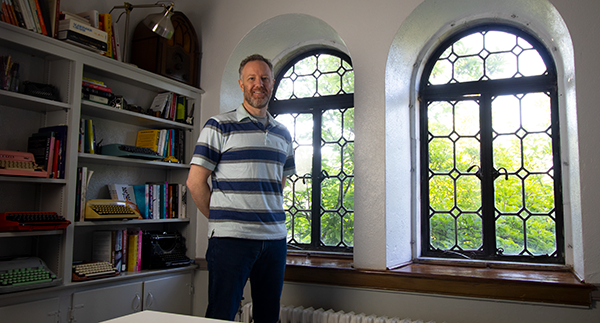
The other side of creating is sharing

Very often, I hear that writers eschew the idea of building a platform or marketing their writing because they are afraid of having to sell their work. They don’t want to be seen as that self-involved person trying to get a sale for their book at every turn.

Today I want to reframe what your author platform can be, and how marketing is different from sales. And dare I say, platform and marketing can be deeply meaningful and even fun, something that your ideal audience wants to engage with you around. Let’s dig in…

Marketing vs selling

The other day I was watching a long interview with Lee Anderton, who owns a music store in England. (I mentioned him a year ago, in this post.) His father started a small music store in the 1960s, and Lee began working there in the early 1990s. Around 11 years ago, he started uploading videos to YouTube. What happened next was astounding: the channel took off, and currently has more than 700,000 subscribers. His shop has grown considerably. In the 1990s, most of their business was directly in their store, with 15 employees and around 4 million pounds in revenue per year. Today most of their sales come via the website, partly because of how much their YouTube channel has grown. They have 150 staff members, and bring in 70 million pounds per year.

Why am I telling you this? Because marketing isn’t selling, but it is a key step in the sales process. If you aren’t concerned with whether your work sells, that is totally fine! You can stop reading and going back to just creating. But if you are wondering how to get exposure for your work in a strategic manner, keep reading….

When asked about the videos, Lee shared the lightbulb moment he had when he stopped seeing the video as a sales channel, and understood that it was really a platform and marketing channel:

“I was doing 1 or 2 videos a month, and about six months in, I’m going ‘this is not bringing any business in, it’s a waste of time, I think I’ll just knock it on the head.” I think that is British for ‘I think I will stop doing videos.’

He continues: “But I just started to see the odd email coming into the store going, ‘I just bought XYC from you, I know it’s nothing that you’ve ever videod, but I enjoy watching you, so I wanted to say thank you for the videos you do.’ It was like, bam — that’s what we can do with the YouTube channel. It’s all about engaging at some intangible sense, it’s not QVC, which is originally what I thought it could be. Its not about doing product demonstrations in the hope that at the end, somebody clicks and buys that. It’s about going, ‘you love music, we love music, let’s just have some fun with it.'”

I will say, their videos are honest looks at the pros and cons of different gear, the celebration of music, and mostly just presenters geeking out over their appreciation for it all. This is the Andertons YouTube channel, and here is the full video of Lee’s interview in the event you want to listen to two music store owners talk for one hour and forty minutes.

What I find fascinating about Lee’s insight is that it aligns so well with what many writers and artists learn about the process of developing an author platform, and marketing their work. They are busy people who perhaps grew up dreaming of writing a book, not posting to social media each day. They worry about selling out.

But what Lee shares does align to that dream of creating. Because the other side of creating is sharing. Years ago, it may have looked like walking into a book club at a local bookstore, or a poetry night at a local cafe. For the writer back then, this was their chance to connect with like-minded creators and those who love the written word.

When I see writers deeply engaged in social media, this is often what I feel. Not that they have turned into self-involved sales people, but that they are in-conversation with readers and creators and booksellers. They are a part of a literary community, and the wider marketplace where writing connects with readers.

I would encourage you to not look at social media as just a way to promote your work, in the same way that we can’t whittle down a carrot into just a vitamin A pill. Your online platform can be many things, and it is you who gets to decide the focus, the tone, and who you connect with.

Can your writing career JUST be you sitting at a desk writing. Sure. Of course. Do whatever makes you comfortable. But it doesn’t have to be just that. I grew up in the 70s, 80s, and 90s, and always saw the arts as something that could extend into conversations where it connects with others. When your creative work connects with a reader, that is where the magic happens.

Sharing online isn’t selling. It is connecting. It is allowing people to understand what you create and why. It is opening up ways to find shared connections between who we are and what inspires us.

The Marketing Funnel

So how does marketing connect to sales? Well, too many people think sales is a two step process:

Step 1: make a pitch.
Step 2: hopefully someone buys what you pitched.

But that isn’t how it works. Or, at least not for sales beyond impulse purchases:

Step 1: you see chocolate.
Step 2: you like chocolate, so you buy it.

What does a marketing funnel look like? This is a diagram I included in my book, Be the Gateway:

The diagram shows that to engage someone, there are a series of steps that one moves through. In this simple example, the steps are:

  1. Awareness: do people even know about your book, what it’s about, why they would love it, who else loved it, and how to get it? Awareness is not a cold sales pitch, it can be talking with someone, it can be a social media post about what inspires you, it can be anywhere you show up that makes people aware of your work.
  2. Consideration: do they not only like your book, but do they have the 5-10 hours to read it? The consideration process is where they debate whether they will love your book more than the many other books they want to read. Will it make them feel inspired, or informed, or even part of a current trend? The other day, I found an unused movie rental voucher from the early 1990s. Do you remember going to the video store back then, and wandering through the aisles unable to choose a movie amidst thousands? Did you ever leave empty-handed? That is the consideration process that readers go through every day.
  3. Conversion: this is the point of sale! When a potential customer spends the $14.99 to buy your book! Dance for joy!
  4. Loyalty: Wait, what?! Oh, that’s right. The goal is not just to sell a book. It is for the person to read the book. Did you know that lots of books get bought, but never read? It’s true. So you want this person to read the book, and perhaps even become a fan of your writing. Perhaps they may even follow you elsewhere, such as a newsletter or social media. I mean, how else will they know about your next book? Or know to show up for a book signing? Or to listen to a podcast episode you were a guest on? Or read an essay you wrote? Or like that photo of avocado toast you posted?
  5. Advocacy: isn’t this what we really want? Not just for a book to sell. Not just for it to move someone. But to have them talk about it. To tell a friend or share with others how this book affected them. A career is built not with a single $14.99 sale, but through word-of-mouth marketing, advocacy, and developing a connection to people who appreciate what you create.

So while the marketing funnel can include sales, that is the primary focus, and it is only one small part of a much larger ecosystem. If you worry that talking about what you create is too salesy for you, I would suggest you reframe how you look at it. Instead of focusing on the sale, focus on the connection to like-minded readers and creators who love writing for the same reason you do.

Thanks!

-Dan

How to navigate a creative reset

Six months ago, I wrote about a creative reset I was embarking on. Today, I would like to share an update, with advice on how to delve into a creative reset of your own. Let’s dig in…

What is a creative reset? Too often, we think of it as a massive change, the kind where you have to upend your life, quit your job, move away, and embark on a bold adventure. But I am experiencing it as something much smaller: a honing of purpose, focus, and effort. Finding clarity and turning that clarity into action.

A creative reset is a way of seeing who we are. Of growing at any age. Of sharing in a way that connects others into inspiration, assistance, or each other. It can also help you better understand not only how to live up to your creative vision, but best share it with others. If you are struggling to figure out how to best market your work, keep reading. I think you may see lots of ideas that blend creativity and sharing in a way that feels authentic to who you are, and connect with others in a meaningful way.

This is what it is looking like for me right now:

Back in the Studio
Each month for the past 14 months, I sent in the rent check for my studio, but didn’t show up there regularly. That was a personal decision to be present at home with my wife and kids during a complicated time. Each month I sent in that check, I was placing a bet on myself. On my future. It was a promise to myself that this space is worth investing in. Because the space represents more than its physicality — it is the space for my inspiration and my work to flourish.

I arrived back at the studio this week.

If you are embarking on your own creative reset, consider how you can give yourself space to explore. That doesn’t mean you need to rent an office, it can be as simple as taking a walk, creating from the park, or rethinking where your creative work happens. A writer I once worked with used to go to the same parking space at Walmart (a spot under a shady tree) and write for 30-60 minutes each day. This was during her commute home from work.

Another writer I know, Jan Sheehan, used this as her writing studio this week, writing from her car parked at a local bluff:

Creative space is all around us, if you define it that way.

Prioritizing the Creative Reset

When I began this creative reset last year, I took two actions to support it:

  1. I created a daily recurring calendar reminder to work on the creative reset every single day. I made time for it in my life, each morning when I knew I had the most creative focus. Had I left it as an optional assignment for when I felt I had “spare time,” I rarely would have gotten to it. Make what matters to you a priority in your life. Add it to your calendar, and block out time each day to attend to it.
  2. I developed a spreadsheet to write down all of my ideas for improvements to my work as part of the reset. This meant I had to get past vague notions for what I wanted to do. In each line of the spreadsheet was a very specific task. Each day, I had to work on one of them. Getting specific about changes helped me not only understand where I wanted to go, but how to get there.

Each day, I had to take one small action to push the reset forward. Sometimes this took a half hour, but many days it took a few minutes. Small consistent steps have made a massive difference, and the calendar and spreadsheet became the support system for it.

Asking, How Can I Do Better?

A fair amount of my creative reset has focused on how to better serve the writers I work with. This is the heart of what I have done for the past decade with spending each day in the trenches with writers and creators on how to best share their work and grow their platform. Even though it has been going really well, I wanted to see where I could improve. The results surprised me.

I looked at every process with a question of how I could improve it. This has led me to changing how I work with people, and developing new resources to help them more quickly and with even better results. In some ways, it feels night and day, how I work now compared to a year or two ago. The feedback from recent clients has been off the charts too.

Too often, when we look at a creative reset, we ask, “What else should I be doing.” We assume that growth can only come from adding new things to the mix, and that if you could just figure out what you aren’t yet doing, that is the secret to a massive breakthrough. But I have been asking the opposite, instead questioning how can I do the same exact things, but better? Instead of spinning my wheels with “bold new ideas,” I’m investing in the people I love working with, and the processes that help them share their message. This has added new layers to the work that feel incredibly meaningful, and effective.

A New Podcast Season

With the creative reset, I decided to end the current podcast season this week. I want to take a month or two to improve the podcast overall, and map out a new season of episodes. I’ve been doing a version of this podcast for a decade. Even back in the 1990s, I was interviewing creators for the music fanzine I published, and got to chat with members of Oasis, They Might Be Giants, Weezer, Blur, and many others.

For the next season, I did something I have never tried before: mapping out an entire year of episodes all at once. I created a document with 52 lines, one for each week of the year, a blank slate. I considered who I would love to talk to, what topics to cover, and how to infuse the podcast with a clear sense of purpose for listeners.

I also brainstormed a wide range of actions to improve the podcast in small ways, from where it is shared, to how it is recorded, to the structure of the episodes themselves. In many ways, the podcast has always felt like a hobby because it is a total joy to interview creators who inspire me. But in considering how I can do it better, I’m realizing that there are many improvements that can better serve the guests and listeners.

My book

About a year ago, I stopped working on my next book. That was a decision to put more focus on being present with my family, and for my clients. With the return to the studio, I have more creative space to write again. My plan is to open up the draft of the book in June to revisit it for the first time in a year.

It’s funny, the manuscript has something like 75,000 words, a solid structure and clear intention. There is a title and back of book copy already written, and I’ve gone through rounds and rounds of edits on it. But, I have no idea how I will feel about it after so much time away. I’m excited about that, because I know that time will only make the book stronger.

I think it is common for people to step away from creative projects because of how busy life can be. But stepping back into them is a key part of honoring that work, and ensuring what we create connects with people.

More Social Media

I am consistently on Instagram, Twitter and other social media throughout the day, and have always found it to be a powerful way to connect with others. Much like the items above, I’m considering how I can better show up for writers and creators in this space. I wrote about my social media reset back in February, and I’m entering a new phase of that.

I’m liking the idea of sharing more resources, and doing more with video and collaboration. I have no idea what that will look like yet, but I’ve been experimenting more and more with what I share, especially on Instagram.

If you want to see and hear me talk through everything above (and more!), check out my latest podcast episode.

Thanks!

-Dan

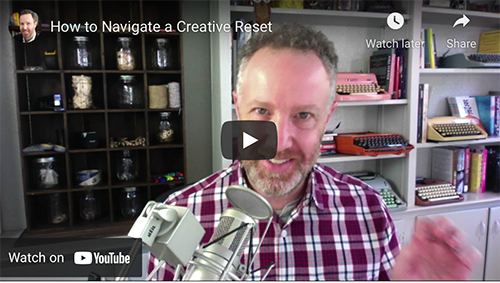
How to Navigate a Creative Reset

Today I want to talk about the concept of a creative reset, and share advice on how to make incremental improvements to your work. I will frame this all in my own creative reset, which I last shared on this podcast in December. You can find out more about my work at wegrowmedia.com and on Instagram and Twitter at @DanBlank.

You can listen to the podcast by clicking ‘play’ below, or in the following places:

And here is a video version of this episode:

How social media connects us

This is a much more personal post than I usually share. I have been thinking a lot about Joel Friedlander. If you are a writer, you may know him as someone who has provided incredible resources on book design and publishing over the years. He’s shared more than 2,500 blog posts and 22,000 Tweets exploring these topics.

He passed away last week.

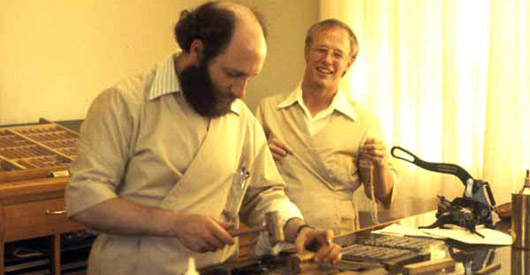
When I started WeGrowMedia in 2010, he was one of the early people I connected with and who supported my work. His lifelong focus was how to make books beautiful. Here is a photo of Joel from 1978, making up letterpress forms:


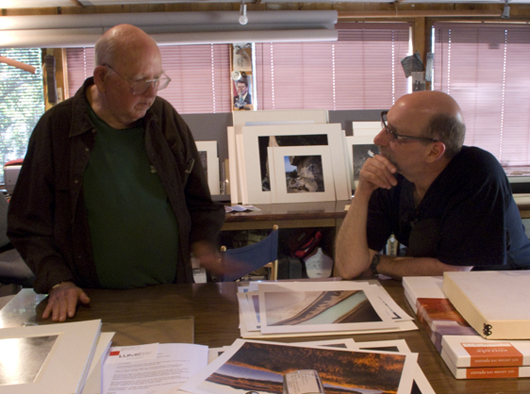
Here he is planning a book with photographer Al Weber in 2009 (photo by TMillea):


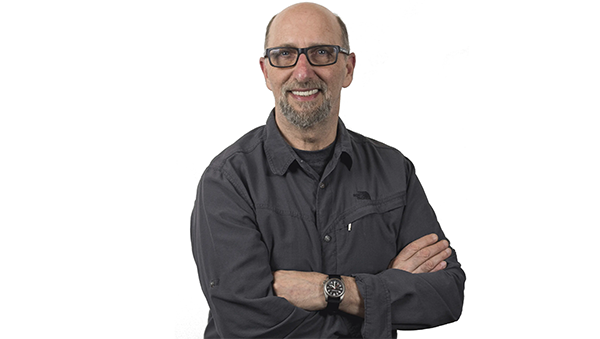
It was around the time this photo was taken that Joel began his website. He started the blog in 2009 as a means to find more clients for his book design company. But in the 10+ years that followed, it grew into something so much more. He has helped thousands and thousands of writers in that time. This is how I knew him through social media posts, email, and webinars:


I first interviewed Joel for my own site in 2011, then again in 2012, and 2013. He was a part of my book launch for my book Be the Gateway in 2017. At the time, I analyzed the publishing process and wrote:

“Interior layout: This was one of the more stressful parts of the process, because it was an education for me to really notice how books are made. There are 1,000 things about book design that I have been exposed to throughout my life, but never truly noticed. I went through revision after revision here, ordering proof after proof at each stage. I also have to note the wonderful feedback that Joel Friedlander provided via email when he looked at the proof file for just a few minutes. His notes made me immediately regret not reaching out to him sooner. Next time!”

But sadly, there won’t be a next time for me collaborating with Joel. In a recent interview after Joel sold his company, he said: “I’m at the end of my work. I’m finished.” Of course, Joel’s work lives on in the lives on through the thousands of lives he has touched, including mine. I won’t ever look at book design the same way, thanks to him.

Through social media, Joel has been a part of my everyday life. I would see his profile photo again and again in small moments each week. Much like a coworker who works a few aisles away from you at an office, and you pass by in the hallway throughout the day. I know that social media can be complex for individual creators for so many reasons. But at times like this, I’m thankful that Joel went online in 2009, that he began blogging, sharing on social media, and connecting with other creators across the country, and across the world.

This is something that writers and creators teach me every day. Many of my current and former clients are launching books this spring and summer, including:

I follow what each of these writers each day on social media and newsletters. The effect is feeling they are a part of the fabric of my life. They are showing up to create, to share, to help, and to connect with readers in new and meaningful ways.

Thinking of these writers and Joel, I am reminded to continue honing the clarity that drives my work. I have written about this recently in my posts about my creative reset, and my Clarity Card process. These aren’t just things I write about, I work on them each and every day.

In June, I’m planning a new phase to my creative reset:

  • Returning to my studio full-time. This creates space for more videos and resources to create.
  • Opening to the draft of my next book, which I last opened a year ago.
  • Planning out the next season of my podcast.
  • Considering the “next phase” for my work. Spoiler alert: the basics will all remain the same, I truly love what I do. But I’m considering if there are new ways I can help writers and creators share their work with authenticity and effectiveness.

I’m curious, are you planning any new creative projects, or a new phase to your work? If so, click reply and tell me about it.

Thanks!

-Dan