Why I Create and Share

Today I look back on the moment 25 years ago that became the birth of this podcast. But not only that, I reflect on why I create, and why I share. In this episode I share the story of how I created a zine in the early 1990s interviewing my favorite bands like Oasis, Blur, Weezer, and They Might Be Giants, and how that turned into the podcast you are listening to now. I also share why these experiences are the foundation for not only creativity, but filling my life with fulfilling connections and moments. I encourage you to consider the same questions for yourself.

You can listen to the podcast by clicking ‘play’ below, or in the following places:

Creative action plan

A few weeks ago I talked about a creative reset I have been working on. The last quarter of every year, I spend three months on a creative and strategic reset. The idea is to review my daily work and compare it to what I want to be creating and sharing.

Today I would like to share more about that process so that you can use it to focus your efforts with how you grow your author platform and focus your marketing efforts. Below I’ll share the template for my Creative Action Plan. I’ll also share my own intentions for this year.

Last year taught me that intentions can easily be thwarted. But that doesn’t mean we don’t make them. Because setting an intention allows us to adjust when things don’t go as expected. For your creative goals, you never know what will “go viral” and you can’t 100% plan for a book launch that meets your expectations.

But you can prepare, and to me, that is the necessary groundwork for developing a strategy to create more and ensure your work connects with people in a meaningful way.

A SIMPLE LIST OF ACTIONS

In previous years, this process is one where I create a long document filled with ideas. But this year I did it differently. I was concerned of becoming overwhelmed by too many big ideas that would be complex to execute. So instead I created a simple list in a spreadsheet. The purpose of using it is to focus on small meaningful actions.

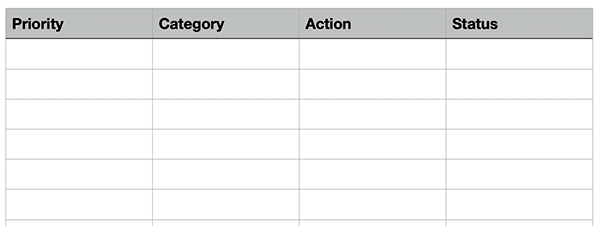
The Creative Action Plan spreadsheet contains the following columns:

  1. Priority: Because this list of actions is likely to get long, the priority column is where I can move certain tasks to an immediate priority to work on it now, and then assign other tasks as those I will get to in a few weeks or even months.
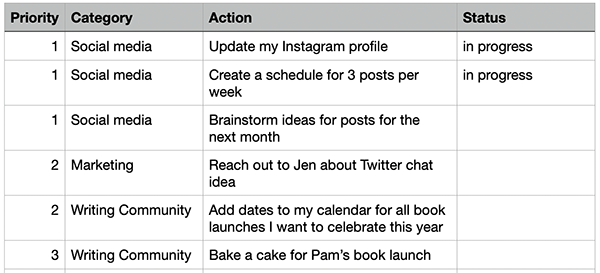
  2. Category: I group like items together by categorizing them. So for your own goals, perhaps you have categories of: social media, outreach, book launch, publicity, etc. I also sometimes color-code the categories so I can easily see similar tasks at a glance.
  3. Action: This is the primary focus of the spreadsheet, the list of specific actions you want to take. Each row should have a clear action you can take. So you wouldn’t have a row of “redesign website,” instead it would be one step to get there that you can do more easily. E.G.: get photo for homepage; write About page; pick website theme; etc.
  4. Status: For the tasks I am working on, I keep track of how progress is going, and mark them as done when complete.

It looks like this:


And here is an example of what it could look like when filled out:


As I work on each task, I sometimes need to add additional tabs to the spreadsheet. So let’s say one of your tasks is to become more involved in the Bookstagrammer community (those who chat about books on Instagram), then perhaps you create a new tab that lists out all of the Bookstagrammers you find.

Or if you want to focus on celebrating the book launches for other authors in your genre, you would create another tab with their names and book launch dates.

The goal with the entire spreadsheet is to write as little as possible, keeping it focused on small actions. Often that has me breaking down bigger ideas into tiny actions. At first I may write out a task like “Update Twitter profile” and then realize that is really 3 tasks: get a new profile image, rewrite my 1-line bio, and then determine if I can create a more helpful link than just my homepage.

I find the smaller tasks mean I can make progress more quickly, partly because I am understanding the goal in a more nuanced way, but also because it allows me to take action without feeling overwhelmed.

You can download the Creative Action Plan template here.

QUICK DAILY TASKS

In my calendar, I set a recurring daily task every morning to work on these creative intentions. This means that every day, I have to take some action on one of these tasks. That action is sometimes big — I email 5 people or work on a larger strategy. But oftentimes, it is ridiculously small. I send one quick email, or I fix one tiny thing.

The whole idea is to integrate this kind of work into my daily life. As I mentioned above, that removes the sense of pressure and overwhelm that often stymies projects like these. I have found that fear is often what holds people back from pursuing their creative goals more seriously. Everything about this process is meant to be so simple and small that it reduces the fear that keeps us from taking action.

I put the Creative Action Plan in a place I will see it all the time on my computer. For instance: clear your computer desktop of all other files (just throw them in a folder titled “everything else!”) and then have the Creative Action Plan alone on your desktop. Maybe change the name of it so it stands out even more: “____CrEaTiVeAcTiOnPlAn____”

If you are using a paper planner, you can do the same thing: clear your desk of all else so the action plan is all that you see in the morning.

This is how I have been setting creative intentions this year, including platform and marketing. I am challenging myself to double down on creating and connecting. I am focusing on these things:

  • Honing the work I love doing.
  • Creating more fun and useful experiences for writers and creators.
  • Focusing on the depth of connections – how can I have more long conversations and help more people truly make progress with their creative goals.

This will all happen within the work I already do: consulting with writers, interviewing people on my podcast, in my newsletter, and my social media channels. Stay tuned!

As you enter the new year, I would love to know what are your creative intentions for this year? Reply back and let me know.

Thanks!
-Dan

Your platform is an experience to create

Your author platform and the marketing you do around your writing is not about a thing. It is not about promoting an object or making sale. Instead, it is about creating an experience for yourself and others that fills us each with a sense of purpose, connection, and possibility. Can that also lead to more readers, more book sales, and big career growth? Yes!

This is about the moments that make up our lives. The experiences that draw us in, that connect us to each other, and help us express who we are.

So today I want to talk about lessons from the biggest New York City dance clubs of the 1970s and 80s can teach us about creating experiences around what you create. Can Studio 54 help you become better at developing your author platform and the marketing around your writing? I think so.

Will this be a bizarre newsletter? Yep. Will it also speak to what drives us as creators and readers as well, to truly connect around writing and art? Yes!

Let’s dig in…

Studio 54

What most of us have heard of Studio 54 is the scandal, the massive success, the wild rumors, and the over-the-top photos that seemed to be the highlight and last call for 1970s disco culture. But as someone who doesn’t leave the house after 7pm because I’m already getting ready for bed, that isn’t the part that I’m interested in.

You see, Studio 54 did something amazing. The founders set this night club in an old 1927 theater, originally called Gallo Opera House. Over the years, it housed broadway shows, movies, and was a TV and radio studio for CBS.

Captain Kangaroo was filmed on the Studio 54 stage.

For the dance club, the founders of Studio 54 tore out all of the lower seating, including the sloped flooring. They literally made the dance floor where the stage was. They developed theatrical sets, with dramatic moving lights, and and an endless series of nightly themes.
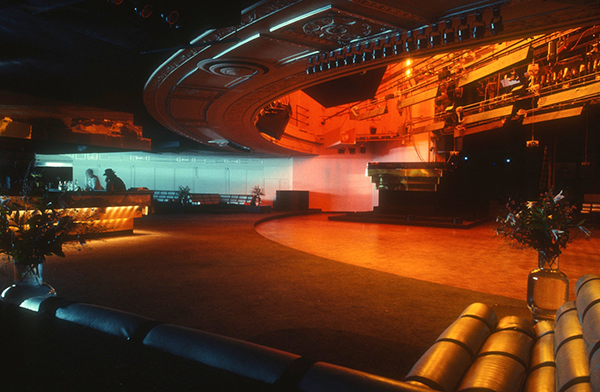
 

(Photo by Adam Scull)

Studio 54 took a known place — an old theater — and repurposed it in a magical new way. The audience became the performers, and they encouraged you to change places with the audience and performers throughout the night. This is how they used the theater to change people’s expectations:

“Using left-behind rigging, they emitted or dropped fog, wind, snow, sunrises, sunsets, and tornados, not to mention streamers, balloons, and even little gifts on the 2,000 dancers below. “The level of expectation was an assault on the senses and made everyone’s heart beat a little faster,” says Schrager of the special effects. “I think it was a catalyst caused by other elements as well, including the design of the space…up to that point there was never an effort made to make the design flexible and fluid. This all worked together and made people let their hair down and have a great time.”

They took the DJ out of what would typically be a box in the back of the room, and put them elevated over the dance floor, front and center. They hired a separate person to run the lights, which was something no other dance club did at the time.

Studio 54 invested in the experience it created for those who arrived beyond just heart pounding music, darkness, and drinks.

In the theater, they did keep the upper level seating which elevated the entire concept. On the chairs of the balcony they left small binoculars so you could more closely observe the dancers below.

 

(photo by Richard Drew)

The magic of Studio 54 was that they encouraged you to take on a different role.

This is what social media has encouraged us writers to do now. To consider new ways of sharing what we create and why; new ways to show up and connect with other people; new ways of considering what it means to have a career as a writer. I know, many of you may bemoan that. You want to sit quietly and just write. And honestly, that’s great! You can totally do that and not worry about the connection to readers or colleagues.

But… if you do want to have a life filled with those who love reading and writing, who have a deep connection to you and your work, then I encourage you to consider what you create not as content you are posting to the web, vying for attention, but as experiences you create that helps others connect with the themes you write about.

One of the most amazing details of the Studio 54 story is that it took only 6 weeks to convert the old theater into the dance club. I know that for many aspects of your author platform, you may feel you are starting from scratch and that it will take months or years to get up to speed. What I encourage is that you view this as an opportunity, not a problem.

Some of you may be concerned that Studio 54 wrecked an old theater. But at the time, lots of theaters were only playing movies, in disrepair, or were abandoned. Many were destroyed, including the theater I write about below that housed The Palladium. Studio 54 remains today, refurbished back to its original glory, perhaps because of the success of the dance club. Here is a more recent photo of the theater:
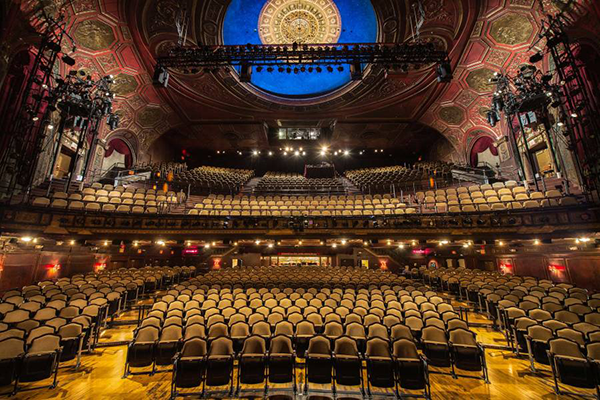
 

(photo by Andrew McGibbon)

This place can be both things. A club. A theater. More is created in that process of walking into a space and reimagining what it can be without expectation. The same holds true for our author platform. So many writers worry that “if I focus on marketing, I am no longer a writer.” But I don’t think it works that way. You can be many things at once, all with the same mission aligned to why you write in the first place. Locking yourself into these identities can hold you back creatively. It is my hope that this post inspires you to look at what you can create — and how — in new ways, one focused on meaningful connections to real people.

The Palladium

Studio 54 was a bold idea executed brilliantly at the height of the disco era. But its initial success was short lived. Soon the founders were in prison, the club sold, and there was a massive backlash that killed disco.

But then in 1985 the founders came back with a new vision, and a new club.The Palladium was also created within a theater, but its design was nothing like Studio 54:

 

(Photo by Timothy Hursley)

Here there was a radical focus on architecture, music video, and art, with an enormous Keith Haring mural on one side. The banks of monitors overhead moved and spun around, and the walls of light on the sides of the dance floor constantly changed colors. Can you imagine how immersive this experience must have been?
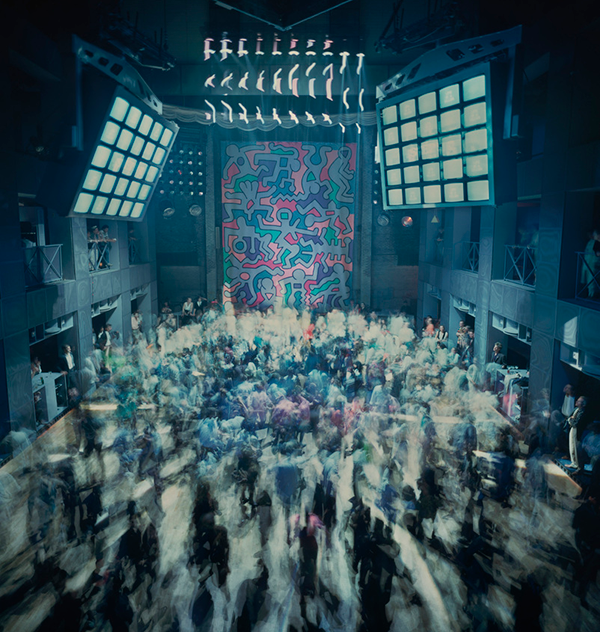
 

(Photo by Timothy Hursley)

This club was about seeing and being seen. It wasn’t dark like many clubs in New York City, with low ceilings, or in huge unfinished industrial lofts. Looking at the images above, it’s easy to forget that The Palladium was constructed within an old theater. But you can clearly see that here:

 

(Photo by Timothy Hursley)

The stories I tend to like most are not about invention, but reinvention. That is a major theme I cover in my podcast, The Creative Shift, digging into how we take a risk to pursue creative work and new ideas, even after other identities and responsibilities define who we are.

That is why I feel like The Palladium is such a critical part of the Studio 54 story. After a massive failure, they took the same idea and did it in an entirely new way, in a very different era. Beyond that, the founders went on to help create the boutique hotel craze, and were wildly successful with it to this day. The idea is the same as Studio 54: how the guest should be immersed in a new experience, one that helps them see their own identity in a new way.

That is the gift you have to share with your own platform. Not just to present and promote your own work. But to connect with other people and help them feel a sense of joy and expression.

How can these places inspire what you create in your author platform? Some ideas:

  • Focus on the people, not the media. The “social: part of “social media.”
  • Measure success not in ‘likes’ but in moments. Moments when you make someone think, someone laugh, someone feel heard, someone feel inspired.
  • Think outside of the box. I often say “ignore best practices,” which means to not just copy a copy of a copy of what everyone else is doing. What you share is a blank canvas of possibility. Don’t be afraid to draw outside the lines, even if we are talking about a Tweet, an Instagram post, or a newsletter.
  • The best way to grow your writing career is to connect with one new person each day. How can you do that? Send a thank you email each day to another author, a reader, a person who supports books like a bookseller, or a conference organizer. This also happens to be the best way to fill your writing career with a sense of fulfillment.

Each of the places that you connect with others online are places that can fill our lives with connectedness and fulfillment. This is not about performance. Not about promotion. Not about just selling a book. It is about celebrating what we create, how we come together around it, and the sense of possibility that comes from those things.

Thanks!
-Dan

The attention span of your audience

I often hear writers say that nowadays, people don’t have long attention spans. They say this when expressing their hesitancy to share about what they create. The context may be to:

  • Not post too often on social media
  • Only send infrequent newsletters
  • Write only a very short bio for their website
  • Only tell their friends and network about their book at the moment of publication, not before
  • Not talk about what they write and why
  • Share very little about themselves

So they justify doing less, less, less, and frame this in the logic of “Well, people have short attention spans, it’s better if I don’t share much of myself, share too often, or take the risk of talking about my own work.”

Their concerns are that as they develop their author platform, build a community around their writing, and prepare for a book launch that they don’t want to bug people.

These writers say they don’t want to overwhelm people. They describe how they personally don’t like getting a lot of newsletters, or don’t like it when someone shares posts more than once a day on Instagram.

But like my post last week, part of this is the fear that if we do too much, we will be seen as a “self-serving marketer.”

So today I want to talk about this topic and why this matters as you develop your platform and grow your audience. Why do I think people have a long attention span? Simple: we make time for what we appreciate. And we see this all around us.

If you are a writer or creator, you likely do this because throughout your life, you have been inspired by others who have published work that you love. Art, books, music, performance, and more. Perhaps this is part of why you do what you do.

What we create is about what we want to see in the world. But it is also about who we are, the way that we understand, explore, and express our identity. We make time for that.

Is there more media and content out there today than their was 20 or 40 years ago? Sure. But that is because we are better able to create and share. We are now able to find individuals, ideas, and art that inspire us in ways we never could have imagined back then.

In some ways, this work has become more in the moment, more bite-sized. A Tweet, an Instagram story, a video shot quickly on someone’s phone, then published. And perhaps that is why many people fear their audience has a short attention span.

But in totality, I think it is really the opposite. Our attention spans are longer because while many engagements may be small — our ability to connect with one person, or follow one topic has become expanded. If an artist I follow shares 12 posts on Instagram per day, and I view all of them, then in a given month I have gone so much more deeply into their creative process, their inspiration, and who they are as a person.

I see this play out in other ways. I see podcasts that are getting longer and longer. Hourlong interviews. Two hour interviews. Three hour interviews.

I’m seeing Instagram Live and Youtube live Q&A chats that go on for 20, 30, 40, 60, 90 minutes.

I am seeing people getting better at expressing who they are — holistically as a human being, and as a creator — and sharing that at length in essays, videos, blogs, and on social media.

And I see audiences not only following, but engaging.

If you worry that people today only have short attention spans, let me ask you:

  • Do you only read short books?
  • Do you only watch short movies?
  • When you hear about a new TV show everyone is talking about, do you refuse to watch it if the season has more than 8 episodes?
  • Do you find yourself only scanning news headlines, and never reading the articles?
  • Do you find yourself only checking Facebook or a social media for 30 seconds or less, because you lose interest?
  • If you come upon an essay about a topic do you love, do you first check to make sure it is 500 words of less?

I didn’t think so. I would imagine that you would tell me about how you love digging deep into art and media that inspires you.

My guess is that our attention span is perceived as short because we are looking for what will engage us deeply. So yes, we are constantly sifting through the content that doesn’t interest in order to find what does.

From an author platform and marketing perspective, consider this: your ideal audience isn’t the middle of the bell curve. You know, the masses of people who may buy your book but never crack it open. Your ideal audience is at the edges of that curve: the people who will not only buy your book, but read it. Not only read it, but be affected by it. They will talk about it with their family, and recommend it to friends.

That is who you are engaging. That is why you do this work of learning how to communicate what you create and why. And the deeper you go, the more likely you will find and engage the right people. Those whose interests and identities align with what you create.

This is how relationships work in really life. It is about the quality of connection, and also about frequency of connection. This is how we develop a sense of community with those who live around us, with those who work in the same office as us, with those who are regulars at the same gym or coffee shop as us.

This is how human beings connect around shared experience. The way we do it online is similar. This is a skill that you build — learning how to communicate effectively and build trust in the process. The good news is that a lot of this is very old fashioned:

  • Clarity in writing
  • Focusing on what people love talking about or the reality of your own lived experience
  • Being consistent
  • Engaging with others as a way to show they can engage with you
  • Being a generous, caring member of a community

This is classic advice that would have been as applicable in 1990, 1970, 1950 or 1920 as it is today. The basics of psychology, trust, communication, and connection remain the same.

Build these basic skills of what it means to communicate your message to someone, and build trust with them. Not only is it effective, but it feels good! Imagine a writing career that felt fulfilling.

Are people distracted? Sure. Are they busy? Yes! Because of this, people are very mindful of where they put their attention. If you want to attract and engage an audience, you have to develop the skill of keeping people’s attention. Not by begging for it, or doing things you don’t like, but by doing the opposite.

Sharing authentically.

Being proud of who you are.

Giving your self permission to create and share.

Knowing that your creative journey will resonate with others.

Connecting in meaningful ways to others who create.

Engaging with readers as real people.

Thanks!

-Dan

A Creative Reset

The last quarter of every year, I focus on a creative reset. This is time to collect and organize my ideas and with a sense of intention, prepare a sense of creative clarity for the next year. In this episode, I share a bit about that process and why I’m pausing this podcast for the month of December. But it will return in January with some amazing new episodes. Thank you!

You can listen to the podcast by clicking ‘play’ below, or in the following places: