A book marketing case study, with Amanda Montell

Today I want to share an extraordinary book marketing case study. This features the work I did recently with author Amanda Montell, focusing on the paperback release of one book this summer, and preparing for the launch of her next book in mid 2021. First, let’s look at some of the results:

  • From May to July her Instagram followers grew from 8,200 to 13,000 (plus: she continues that momentum today, with 14,300 followers)
  • She experienced an increase in the level of engagement from her followers. Amanda described it as “high-quality, super-engaged followers, who comment, like, DM, and post about my book every day. My engagement rate is a high 6%!”
  • 450 more Goodreads ratings in three months through the paperback release. She directly attributed the social media engagement to sales of the book.

Below is an overview of some of the work we did, and how you can apply these lessons to your own platform and launches:

Clarified Her Mission and Message

When I first began working with Amanda, she had a big following, loads of experience and an amazing online presence. Yet, we still took a good hard look at how what she shared online may not fully line up to how she wants to be known as a writer.

We got really clear on her ideal audiences too. She saw the work I did with Leigh Stein around audience personas and wanted to be sure we put her ideal readers at the center of our work. It’s worth noting that Leigh published a novel and Amanda’s books are nonfiction, these strategies apply to both.

Created a Series of Focused Social Media Campaigns

What followed was a series of specific campaigns that we developed. Too often, writers approach marketing on social media as an unending treadmill of posts. “I’ll just keep posting about my core message, keep being generous, keep showing up.”

Now, that is great to develop and grow your author platform. But it is different from the idea of a marketing campaign — a specific idea that has a beginning and end, that centers your audience’s attention, and has specific goals around engagement, growth, or promotion.

From the spring into the summer, Amanda launched several different programs:

Campaign #1: Amanda University.

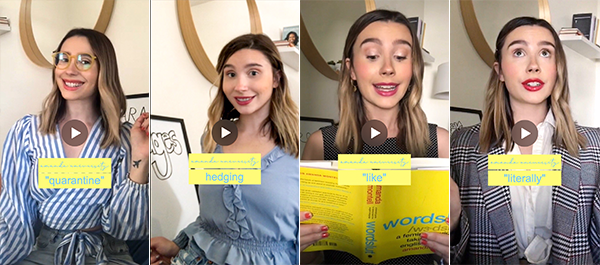
She posted a video every weekday for a month. The tagline was “Amanda University: where you will earn your PhD in owning your voice.” Every day she teaches a useful and oftentimes surprising lesson. You can see them here. Throughout these videos, she featured her book, Wordslut: A Feminist Guide to Taking Back the English Language, as assigned reading and the source material for many of the lessons.

Some of the video topics:

Why “literally” doesn’t mean “literally” anymore.
What “quarantine” REALLY means.
The linguistics of “like.”
The truth about “filler words.”

Here are some examples of the videos:
Campaign #2: Smash the Standard: An Amanda University Summer Intensive.

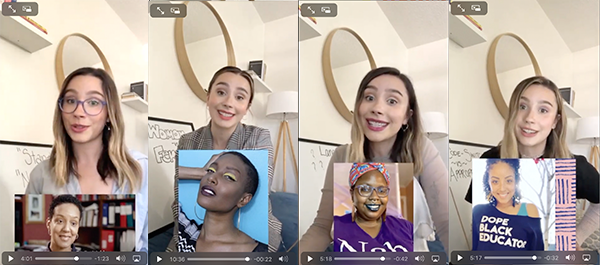
Amanda wanted to continue the success of the initial program, but with a less labor-intensive schedule and a new focus. The framework of this series: “every Tuesday we’ll debunk a linguistic myth or unpack a confusing question.” It started with this video.

She also added something important to each video, “featuring the work of a brilliant intersectional feminist scholar you should definitely follow.” So in the latter part of the video, she would recommend an author or scholar and talk a bit about their work. Focusing her attention on others in these video was another way that Amanda was using her engagement to expand the conversation in new ways.
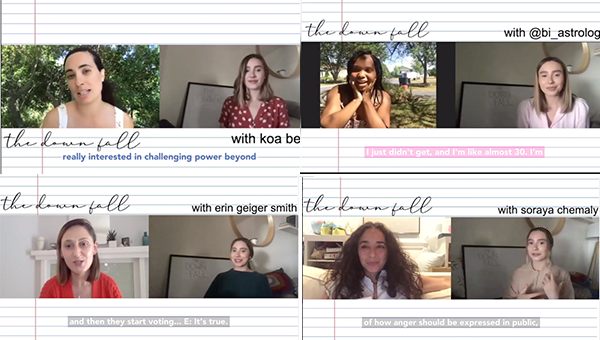
Campaign #3: The Down Fall: An Amanda University Autumnal Interview Series.

This new campaign launched in September with this post.

Here she is taking the same basic concepts that have been working well for her, but then extending them in bold new ways. With marketing, you don’t always have to reinvent the wheel, just keep making improvements and finding new ways to find joy and conversation in the process.
Having campaigns means that you get breaks too. You can see the break between the end of May when the initial Amanda University ended, and end of June when the Smash the Standard summer intensive started, plus a similar break before The Down Fall launched.

Steady — Engaged — Growth

The campaigns listed above resulted in steady growth in terms of new followers. She received between 200-600 new followers per week. That is noteworthy, because sometimes you hear about a “great marketing example that results in huge follower growth” but it is a one-time spike that can’t be sustained or replicated. Amanda hit upon something that continues to be sustainable for her, the growth continues to this day.

It’s worth noting that the campaigns listed above were in addition to her regular posting of showing up, sharing her message, and being generous to others. Amanda is always working to engage her audience in multiple ways. These stand out compared to the longer videos — they are easy to immediately understand, like, and share.

But there is more. She had also created a series of images/memes under the title “Own Your Voice.” Plus she created merch not only for her book, but her message. What is merch? Merchandise! T-shirts, sweatshirts, tote bags. Her message connects with her readers on a personal level, and she identified phrases that someone would want to wear to represent this.
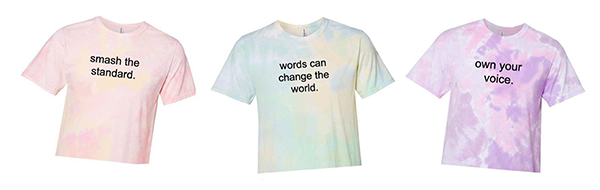
I mean, think about that. Someone literally wearing your mission as their identity. It’s inspiring, and such a great metaphor for how an author’s platform can engage with readers in a human-centered manner.

Developing a Yearlong Book Launch Strategy

Something I can’t share much of anything about is the work we did to prepare for her next book launch, which happens in the middle of 2021.

We developed a yearlong marketing plan that includes multiple phases. The result was a 15 page marketing deck that outlined the work she has done, the work planned, and exact timing. It covers the specific campaigns and the bridge she is creating from one book to the next in terms of themes.

She is sharing this with her publisher in order to communicate with them what she is doing, and create a starting point for conversations on how to amplify this work. The document starts with this phrase:

“[The] marketing and publicity plan will implement a three-pronged strategy, rolled out in four phases.”

This is Amanda setting the stage for her own career as a writer. For involving others in a deeply collaborative way. Creating multiple ways for her message to have a meaningful impact with others. Yes, this is all centered on the books, but it also grows beyond them.

It’s funny, because with everything I shared above, I’m not able to talk about maybe 1/3 of the work Amanda and I did, because it focused so much on the launch of her next book, and that work isn’t out there yet. So, stay tuned.

How You Can Use This For Your Own Work

Perhaps you are reading this and wondering, ‘But how does this relate to book sales?’ Well, here is a collage of some of the people who have been reading Amanda’s book and then sharing it with their followers on Instagram. It’s worth noting that the first image on the left is from Emily Ratajkowski, who has 26 million followers:
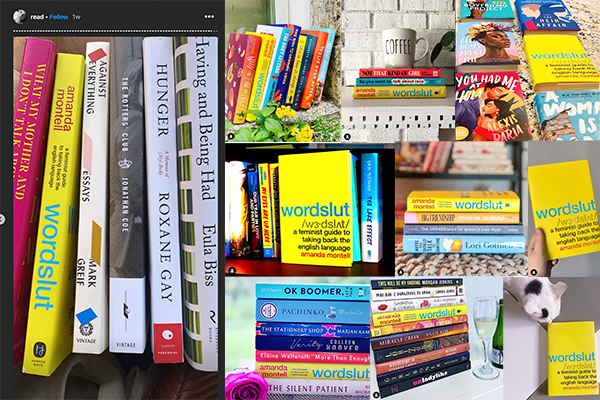
Which of the marketing tactics listed above directly lead to book sales? We don’t know. And that is the thing about marketing that is worth understanding, you don’t always know which tactic worked, which didn’t, and which leads to a sale.

I’ve mentioned before that I have a weekly Mastermind call with my friend Jennie Nash. In the past couple years we have developed an expression for how to find fulfillment and success in our endeavors:

“No one know what works, but we know that doing things works.”

This is how we remind each other to not get frozen with inaction, but instead to keep creating and keep sharing.

For Amanda, everything listed above is in addition to other publicity work that she had gotten for herself or through her publisher.

She is incredible at forging connections with people, and turning an idea into action.

I bring this up because undoubtedly someone is reading this trying to find the hack. Trying to identify the single most powerful thing Amanda did that they can copy, thereby getting most of the value with the least amount of effort.

But it doesn’t always work that way.

What you don’t see here is the changes and adjustments that we made along the way. The ideas we developed which were later ditched. The total shift to the title/branding of some of the campaigns listed above.

This work is a creative process in itself. One focused on the core reason we create and how that connects with another human being in a way that truly matters.

Amanda shows up to this work. She knows her mission and believes in it fully. She isn’t half-baking anything here. In fact, I feel like she is successful not only because she’s a great writer and incredibly smart and creative, but because she is clearly all-in with her mission.

Amanda is invested in collaboration. She is not only filled with ideas, but is an amazing listener with those she connects with, and those who follow her. That is one of the many reasons her work feels as though it is filled with energy — this living thing that others get to be a part of. You can find Amanda on Instagram and her website.

Thanks!
-Dan

When your book keeps reaching new readers

In working with writers every day, something I always think about is the commitment they are making to their craft, and how that leads to powerful transitions in their life.

To me, that is the heart of not just why we create, but why we share. It’s why I focus so much on what I call Human-Centered Marketing — that moment when your work connects in a meaningful way to someone else’s life.

Malcolm LemmonsThis week I published my interview with author Malcolm Lemmons. This is how he described his creative shift from being a professional basketball player to becoming an author and entrepreneur:

“People asked me if I had ever thought about writing a book. It was something that never crossed my mind before. Writing was always something that came naturally to me, but being an author wasn’t something I aspired to be. But then I thought how I would be doing an injustice to other athletes who needed to hear my story, to understand what it takes. That was the beginning of my transition. Once my first book was published, that was the door that opened up other opportunities, and the beginning of me seeing myself as being more than an athlete.”

This is a powerful moment. The idea that our work can truly help others. And how can even change how we see ourselves and what we create.

As Malcolm considered shifting his career away from basketball, he describes how he struggled to find a new purpose. What gave him a clear path? Writing and storytelling.

In my latest podcast episode, we talk about that creative shift. There is so much in this episode that directly applies to the work that writers and artists face each day. You can listen here.

But of course, the work of an author doesn’t stop there. The life of a book extends far beyond the day it launches. While a lot of attention gets paid to publication, bestseller lists, and sales ranks, the truth is, you have years to connect your writing to the hearts and minds of those who will appreciate it.

Beth Ricanati, M.D.Nearly two years ago I shared a book launch case study with author Beth Ricanati, MD. (You can listen to that episode of my podcast here.) At the time, she shared how she had gotten her first book deal, but then the marketing department at the publisher said: “She has no social media presence. We are killing the deal.”

Beth described that moment: “It was heartbreaking. I was so upset, I put it away for two years. That was that.”

But of course, she didn’t stop there. She pursued other ways to publish the book.

In the meantime, she focused on her social media presence, growing her Instagram to nearly 6,000 followers. When the book came out, she totally flipped how many authors view marketing. Instead of worrying about being seen as pushy in sharing her book, she mailed copies of it to friends, supporters and those in her network as “gifts.” She said she was at the post office every other day, just constantly mailing out gifted copies.

Much like Malcolm, she saw her book as a way to help and serve others.

She set up 20 events around the book launch, and made them fun and interactive. How did she get these speaking events? She started with her existing network, by reaching out to friends.

She described how this pushed her outside of her comfort zone: “The whole public speaking thing was terrifying. I had to really work on that. I was not comfortable public speaking, but now I’m more comfortable with it.”

In January of 2019, I asked her how she thinks about the book promotion four months after publication, and she said, “I think it is just getting going. I feel like it’s a snowball going down a hill, and it’s gaining momentum. It’s super exciting.

Turns out, she was right. A couple weeks ago, I recorded a second podcast episode with Beth about how she is continuing to promote her book and ensure it reaches new readers.

She had been doing more and more events around the book, but then the pandemic hit. At the time, she thought: “There goes all of my spring events, and my business just stopped. But then a week later I shifted to online events, and it just started this whole new business!”

She has been doing online events every week since April. She describes the experience this way: “[I am meeting] with people all over the country, with people I never would have thought to connect to. It’s a constantly growing community. To feel so connected right now, it’s feeding me. It’s been this upward trajectory of more and more. I have found the more I reach out and connect with people, the more people reach out and connect with me. It’s this wonderful virtuous cycle that just keeps growing.”

These events helped her understand who her readers actually are, and how many more potential readers exist than she originally thought. She said, ”I’m continuing to learn.” Learn about her audience, her own book, and even her next book. The conversations she is having with readers are leading her to what her next book will be about. What’s more, she talked about how this set her next book up for success. “I have my people, my team.”

You can listen to my second interview with Beth here.

-Dan

From Professional Basketball to Becoming an Author and Entrepreneur. My Interview with Malcolm Lemmons

Malcolm LemmonsWhen Malcolm Lemmons shifted his career away from professional basketball, he describes how he struggled to find a new purpose. What gave him a clear path? Writing and storytelling. In today’s episode, we talk about his creative shift. There is so much in this episode that directly applies to the work that writers and artists face each day. Malcolm is the author of two books: Impact Beyond the Game and Lessons from the Game.

You can listen to the podcast by clicking ‘play’ below, or in the following places:

You can find Malcolm in the following places:
His books:

malcolmlemmons.com
Instagram
Twitter

How to use Clarity Cards

I was talking to a writer this week, when she said this:

“Our call is only 5 minutes old and I already have the best takeaway. Clarity Cards are a tremendous exercise, connecting your intentions to a physical manifestation of it, writing it down. I’m 50 and now I have that feeling like it is the first day of school. That no matter where you are in life, you can always create these opportunities for yourself.”

Back in June, I shared a step-by-step post taking you through my Clarity Card process. Today I want to revisit that and share a case study of how it works.

What are Clarity Cards? It is an exercise where you get clarity on what you create and why, and you prioritize this amidst the rest of your busy life. At the end of the 5-step process, they look like this, a pyramid of 10 cards:


They look simple, but they have a powerful way of reframing not just your creative goals, but your entire life. I have taken hundreds of people through this process, and have used it myself for years. I have seen this exercise lead to profound breakthroughs for people, as well as practical ways to find more time and energy to write.

I have the privilege of talking with a lot of writers and artists. I wanted to revisit Clarity Cards again today because I’m noticing some trends in what I hear frequently; maybe some of this resonates with you:

  • They are juggling too many responsibilities.
  • They are making daily progress, but lacking a deep sense of fulfillment.
  • They have an endless to-do list that fills them with a sense of overwhelm.

So today I want to share a case study of how a client of mine — Elizabeth Heise — is working through Clarity Cards. She is the writer I quoted at the top, and we have been using Clarity Cards to help center her author platform in terms of the messaging and themes, as well as being sure to develop a strategy that supports all where she wants to put her energy.

You can start by going through the Clarity Card exercise here.

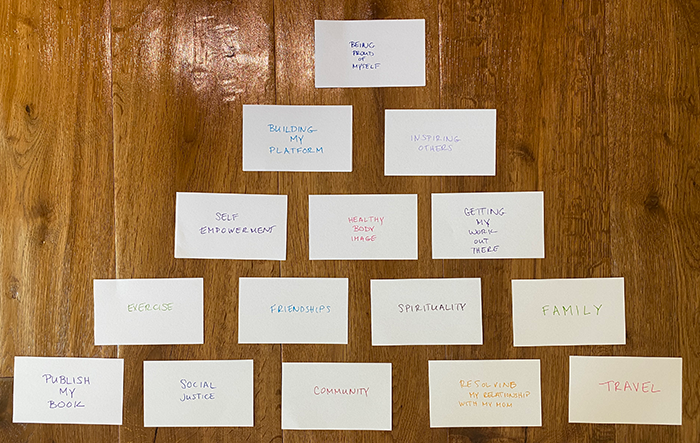
When Elizabeth went through it, this was her first draft of her Clarity Cards (shared here with permission):


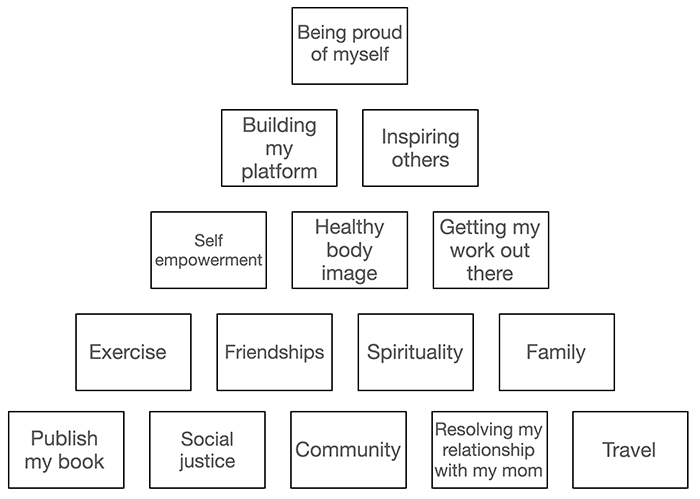
In case that is difficult to read, here is a digital version:


What you are seeing here is her putting her biggest priorities near the top of the pyramid, and then other important responsibilities and goals near the bottom of the list.

The first thing I noted is that she added an extra row of cards, there should only be 10 cards, but she snuck in 5 more! That is fine for a first draft, but it illustrates how difficult it is to focus our attention on just 10 things when our lives are so busy.

The card she put at the top of the pyramid is really inspiring: “Being proud of myself.” We talked about that card and what it meant, and why feeling a sense of personal fulfillment creates a strong foundation for everything else she is responsible for.

This can make her feel better about her writing, her responsibilities with family, friends, and everything else.

Elizabeth had noted how it felt odd that her “family” card was in the bottom corner, when in her day-to-day life, they occupy the top three slots. So we discussed how if you are tending to your high priorities on the pyramid, this empowers you to truly show up to the cards lower on the pyramid. The way she framed it is as a “guilt eraser.” That she can put herself first, and that this makes her an even better parent. A better friend. Etc.

Another eye-opener for her was that “Inspiring others” fell higher in the pyramid than “Publish my book.” I mean, her book actually falls into the row that we will later cut from the pyramid!

This insight is huge. I love books — they are magical and powerful. But I appreciate it when an author can look beyond just the milestone of publication day. To consider what happens in a readers’ mind when they read. How they hold a story or inspiration or idea in their mind long after a specific book may have been discarded. How it can inspire subtle actions that they take in their lives.

Elizabeth is reflecting on that here, this idea that her work includes the book, but that the book is in service of a larger goal to inspire and help others. We will explore ways she can do that in her platform before, during, and after her book launch.

In order to get this down to 10 cards, we discussed how some of these cards could be grouped. For instance, “Building My Platform” and “Getting My Work Out There” could be combined. Potentially “Being Proud of Myself” and “Self-Empowerment” could be as well. There are several other possibilities we discussed as well.

This forced us to consider making each card more specific. For instance, “Friendships” is kind of vague. What is her intention in order to best honor her friendships? Was it a specific action, such as weekly get togethers? Or something else?

We also talked more about that idea of guilt which can hold people back. For instance, a parent can spend every moment of their time caring for their kids and still worry that they haven’t done enough.

To help resolve this through Clarity Cards, you can write the overall theme on the front of the card, and then a more specific intention on the back. So maybe the front says “Family” and the back says, “Have a sit-down family dinner 5 days a week, and a game night once a week.”

Clarity Cards can represent overall goals in your life — the big vision that includes everything of where you want to go. Or, you can look at them as representing a period of time. You can say “This version of my Clarity Cards focuses on the next 6 months of my life.” So your intentions can be more specific because of the context.

Your Clarity Cards can change and evolve over time. In fact, they should! You can redo them every quarter, or every year, looking at your life with fresh eyes, and making adjustments that speak to where you are right now.

If you create your own Clarity Cards, please consider emailing me a photo of them. If you don’t want to share the words on them, just flip them over so I can only see the backs of the cards.

Thanks again to Elizabeth for allowing me to share all of this!

-Dan

“It Keeps Growing.” Promoting Your Book 2+ Years Post-Launch, with Beth Ricanati, M.D.

“I’m selling more books and the message is getting out there.” This is author Beth Ricanati, M.D. described the results of continuing to promote her book two years after release. She has been running workshops in-person and online in support of her book, Braided: A Journey of a Thousand Challahs. In the process, she is finding new audiences she never considered before, is having more people reach out to her, and it has paved the way for her next book. 

You can listen to the podcast by clicking ‘play’ below, or in the following places:

You can find Beth in the following places:
bethricanatimd.com
Braided: A Journey of a Thousand Challahs
Instagram: @bethricanatimd
Facebook