Podcasts connect with readers

Today I want to talk about a reader connection strategy that is perfect for what all writers want: deep conversations around the themes they write about.

This is what happens when you are a guest on someone’s podcast. When you are able to have a long conversation with the host about the themes you write about, your creative process, and so much else. It’s a powerful way to help you establish and grow your author platform, reach potential readers, and make a meaningful connection with a like-minded creator — the podcast host.

Let’s dig in…

Why Podcasts Matter

Podcasts have been having an amazing renaissance the past few years. They are widely listened to, there are many options, and more than that: they move books.

Again and again, I hear from authors how they would get an appearance on a major TV morning show, and saw barely a blip in book sales. But that a podcast appearance would cause a huge ripple effect in their book sales. (Just listen to the amazing Jessica Lahey discuss this on a recent episode of the #amwriting podcast.)

Podcasts are thriving in places where blogs may be languishing, Facebook Groups feel overcrowded, and traditional media feels distracted by the news of the day. What’s more, podcasts are a clear way to connect with niche audiences.

If you are unfamiliar with podcasts, many of them offer deep one-on-one conversations that draw the listener in. These conversations can be 15 minutes long, but many are 45 minutes, an hour, or even 2+ hours.

What do people talk about? Sometimes it is a specific topic, teaching, or story, but a good interview may do all three.

Podcast hosts have developed a trusting relationship with their listeners. This is an amazing opportunity for writers. It’s akin to showing up to dinner with a book club that has met every week for years. These are people who know and care about each other. Trust is just oozing from the room. I mean, isn’t that the kind of place you want to have conversations around what you write and why?

For the listener, this is a very intimate platform. You are in their ear for 20 minutes or more. That is a powerful place to be as a writer who is passionate about the topic or genre they care about.

Create a Podcast Strategy

When should you consider being a guest on someone else’s podcast? Start way before you think you need to. If you wait to pitch podcasts until your book is out, it may be too late. At that point, you are just learning how to pitch, just learning the landscape of podcasts, and just learning how to be an amazing guest interview.

Keep in mind, that many hosts don’t want to talk specifically about your book. Instead, they want to chat with you about ideas, stories, themes that may be within your book, but also extend beyond it.

The first thing I would encourage you to consider is to brainstorm anything you could talk about on any topic. Yes, this can center around your writing, your creative process, and inspiration, but it can also extend beyond that. Write down anything that you could talk about that feels central to who you are.

You can listen to other podcasts to study what people talk about. I think you will find that many interviews cover a wide range of topics and types of stories. You don’t have to be an expert on a topic in order to pitch yourself to a podcast. You simply have to have a story to tell that engages the host. Don’t worry about credentials or accolades. The host wants to make a great show, not fill in a resume.

As with all aspects of your author platform, the foundation is trust and communication. Work on that now. Way before you think you absolutely need to. Trust and communication take time. Give it the time it deserves. This doesn’t just better serve your book, but your career overall, and also your sense of fulfillment as a writer in the marketplace.

A Step-by-Step Process:

Okay, here is a step-by-step process to begin learning about podcasts and how you can consider being a guest:

  1. Buy wireless headphones and familiarize yourself with podcasts by listening to them. Don’t have time? Neither does anyone else—which is exactly what makes podcasts so popular. Listen while folding laundry, doing the dishes, driving, jogging, or doing yard work.
  2. To find podcasts you may like go to your podcast player of choice. Some ideas of where to start: Apple Podcasts, Spotify, Listen Notes, Stitcher, Podchaser, Overcast, Player.fm — there are so many! All are good, just pick one and search the names of authors you know or like. Search for topics that interest you. Don’t worry about finding podcasts that are 100 percent aligned to exactly what you write. Start with your passion in order to find joy in listening.
  3. Search for the names of comparable authors — these are the authors whose books will be shelved next to yours in a bookstore. See were writers are showing up and what they talk about.
  4. When you find a podcast you like, see what else is recommended on that page. Most podcast apps will have sections with suggestions such as: “Listeners who listened to this also like…” as well as links to other podcasts in the same category.
  5. Don’t just focus on the most successful podcasts, pay attention to those with a smaller audience as well. A small podcast with a single host focused on meaningful conversations could turn out to be your favorite. Chances are, your research will start off with very popular podcasts that would be difficult for you to successfully pitch. Use the suggestions of similar podcasts, or other podcasts within that category, to find small and mid-sized podcasts that you could more effectively reach.
  6. As you listen, make a note of what types of podcasts you prefer, what types of guests, what the hosts tend to focus on. This is all critical marketplace research to help you understand how you can not only be a guest on podcasts, but consider them as part of a larger strategy to later promote your writing and books. Look at the way the podcast episode titles and descriptions are written to get a sense of how you may pitch that podcast.
  7. Brainstorm what you can talk about. As I mentioned earlier, yes you can focus on your writing, but it can also extend beyond it. Consider what your ideal audience loves talking about. This is one of the big lessons that social media has taught us: people want to engage with real people. Those who have interests, hobbies, and a voice. Use yours. Don’t treat a podcast pitch as just a promotional vehicle. Consider it as you would show up to a dinner party, book club, or writing retreat.
  8. Do sample interviews to build your confidence. Repetition will build comfort with the process, and open up new ideas for what you can share.
  9. Pitch yourself! Keep the email ridiculously simple. Ask if you can be on their show. Tell them what you love about their show. Share a line or two of what stories you can tell, and what you could talk about that would interest them and their listeners.
  10. Of course, if you do have a book to promote, absolutely work to identify podcasts that focus on related genres or topics. Turn your book into a powerful conversation, and consider how podcast interviews can become a robust part of a book tour.
  11. Create a spreadsheet or keep a notebook to keep track of podcasts you’ve approached, wish lists for the future, and insights you pick up along the way.

Even if you are reticent to consider pitching yourself on a podcast, what I like about this process is that it forces you to ask deeper strategic questions about who your ideal readers are, where they show up, and what they like to talk about. And you are able to consider how you fit into this ecoystem.

If you want a place to start, well, you can check out my podcast! This will give you a sense of how the work I do translates to interviews with writers and artists. It’s called “The Creative Shift with Dan Blank.”

I often gush about the #amwriting podcast, so you should definitely check them out. (I’ve been a guest, here is my episode.)

Also go listen to some episodes from Brooke Warner and Grant Faulkner’s wonderful Write-Minded Podcast. (I was a guest earlier this year, here is my episode.)

Thanks!

-Dan

P.S.: A version of this essay was published over at Career Authors recently. That community is great resource!

To create is to share

Often I will hear someone pine for the “days when a writer could just write.” When they didn’t have to worry about platform or marketing.

The thing about that is, a writer can always just write. Write for the joy of the process. To get their thoughts down. To grow as a human being. To create what hasn’t been before.

For many who write, that is enough. Tucked away in notebooks and computers are their words. They write simply to write. And I think that is a beautiful thing.

But, that may not be enough for you. You may have a bigger desire to have your writing reach readers. That can be for many reasons — to help, inspire, validate, and fill the world with stories and information.

In your efforts to share your work, you may have found some roadblocks. Ideas that fall flat. A silent reaction to what you share. Today I want to encourage you to keep going. To keep creating and keep sharing. This is the work of the writer. I want to illustrate this with four examples below, from different creative fields. Let’s dig in…

Success! (With Your 99th Idea.)


Andrea J LoneyThis week I shared my interview with children’s book author Andrea J. Loney on my podcast. I can’t even express how inspiring this conversation was. (go listen!)
She talked about the value of collaboration, persistence, and how her experience working at a circus, in theater, stand-up comedy, and writing for TV helped her realize her dream of being a children’s book author.

Her first published book was her 11th completed manuscript. I want you to imagine those 10 other ideas that she had first, still sitting on a hard drive somewhere. Her next published book? Not her 11th or 12th manuscript, but her 19th.

She said that this was also the 99th idea she had written down for a children’s book (she does keep a list.) The result? Earlier this year that book, Double Bass Blues, received a Caldecott Honor.

She described the path to get here, when she started taking the idea of being a children’s book author more seriously:

“I joined so many groups, I met so many people, I put myself out there. I read hundreds of picture books, at least 20 books a week. I also read Middle Grade and YA novels, at least 2 a month. I took courses and joined a few different critique groups until I found one that worked for me.”

Her road to success began with connection. She kept creating and kept sharing.

A Personal Message to Individual Fans

I’ve been mildly obsessed with the site cameo.com. If you haven’t heard if it, it’s where you can pay to have celebrities record personal videos to you or a friend. Want Stanley from The Office to record a 2 minute video wishing your spouse a happy birthday? For a few hundred dollars, you can make that happen.

Want LeVar Burton to do give you a pep talk? You can do that too.

My friend, author/illustrator Lori Richmond, recently bought one of these for her sister’s birthday. Who did she choose? (Drumroll please….) None other than Debbie Gibson. If you are like me, it may have been years since you last thought of Debbie, perhaps decades since you heard her music.

But I have to say, when I saw the video, I was blown away. Debbie shows up in this video. She recorded a personal message for Lori’s sister, sings a song, and gives some parting words. This is the video.

I think Lori said it was the best money she ever spent on a present her entire life, and her sister was blown away.

Why am I talking about this to you, the writer who wants to ensure their work finds a readership? Because watching Debbie’s video, I couldn’t help but feel here is this creator who continues to do the work to connect with people. In doing so, her message is spreading. I mean, here I am gushing about how amazing her videos are.

I can easily see a celebrity scoffing at this idea of doing individual videos for fans. They may worry that by doing personalized videos is not why they got into creative work. They may ask, “Is this selling out?” Or they could worry about 1,000 other questions.

Yet when you watch the Debbie video, you see a pro. She uses Lori’s sister’s name again and again, speaks directly to the camera, has great lighting, knows how to give the entire video a narrative arc. This is a skill she developed.

Even though she can’t perform concerts the way she would hope to this year, she is showing up to connect with her audience. She is using tools we all have — the stuff that bonds us as people — simply “seeing” each other.

Investing in In-Person Events in a Quaratine World

I saw a couple of posts from artist Katie Daisy where she was beginning to look for a small rural farm to buy so she can do in-person events. What?! Why would she do this in the middle of a pandemic, when that is the exact type of thing that has become complicated?

You see, she has this amazing career that can continue to thrive amidst lockdown. She paints and shares her work on social media to 100,000+ followers, and she sells prints of her work (and other products) on Etsy where she has had more than 100,000 sales.

Yet, she wants to invest in new ways to engage her audience. One that will come with a sizable investment of her time and money. She has already asked her followers if they would show up to in-person events/classes if she held them. She is envisioning a flower farm, studio, and shop that would become a place for her art to connect with her audience.

Here is a creator who is looking beyond this moment to invest in deeply human ways to come together around art and creativity.

Appreciating the Value of Print in a Digital World

Awhile back on my podcast, I interviewed Brian Heiler who runs a blog and community online that is obsessed with… 1970s and 80s toys. Yep.

During this year, as many people were pushed past their limits and dealing with more anxiety than they could handle, I saw something special happen in this community Brian created. Again and again, someone would post a message in the Facebook Group that this community of people nostalgic for vintage toys has been their special little escape. The one place they could connect with like-minded people, and appreciate the simple joys of life.

So this year, when mailing things between countries has been more complicated than usual, when money is tight for many people, when the internet allows you to reach thousands of people at a low cost, what did Brian invest in?

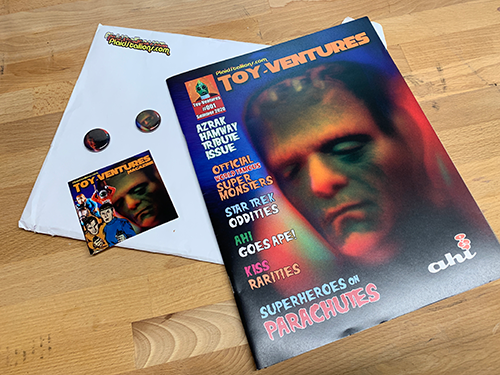
A print magazine. My copy arrived the other day:


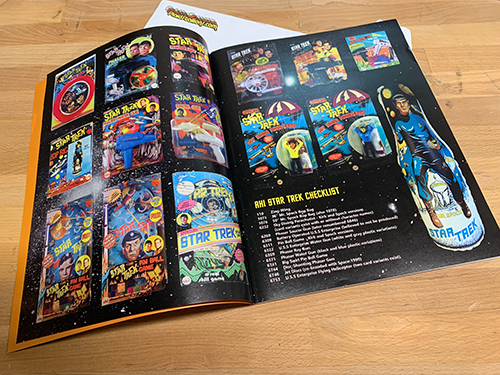
This blew me away. I believe most (if not all) of the other big toy collector magazines went out of business years ago. Yet, here is Brian moving his online community into a print magazine.

I mean, look how much work this was for him! And in what other magazine will you find a huge image of a Mr. Spock punching bag?!


This is Brian investing in deepening the connection to his core audience. Investing in the full human-centered experience of this hobby: holding something in your hands, and appreciating it without a screen.

Everything I shared above is dramatically more work than simply posting a status update to social media and hoping for Likes. And to be honest, these ideas are not necessarily specific tactics you should try. But if you are wondering if it’s worth the effort to connect with more people, perhaps to use social media or send a newsletter, consider the the intentions of these creators. Brian who is printing a magazine, Debbie who is doing hundreds of individual videos, Katie who is trying to buy a farm, and Andrea who found success at idea #99 — and consider that making an effort to connect with your people may be worth it.

Thanks!
-Dan

“The book that won the Caldecott was my 99th story idea.” My Interview with Andrea J. Loney

Andrea J LoneyEarlier this year Andrea J. Loney’s book, Double Bass Blues, received a Caldecott Honor. When I asked her about that journey she described how her very first book deal was for her 11th manscript. The next book she sold, Double Bass Blues, was her 17th manuscript. In our interview, she talks about the value of collaboration, persistence, and how her experience working at a circus, in theater, stand-up comedy, and writing for TV helped her realize her dream of being a children’s book author.

You can listen to the podcast by clicking ‘play’ below, or in the following places:

You can find Andrea in the following places:
andreajloney.com
Instagram: @andreajloney
Twitter: @andreajloney
Her books

Two ways to create an effective author website

I spend a lot of time on author websites, and today want to highlight two pages you should focus on to ensure yours is effective (and awesome!)

I’m sure you may have heard a lot of marketing-speak when it comes to building an effective author website. Phrases such as “marketing funnel,” “call to action,” and “lead magnet.” I spent plenty to time developing those for authors I work with.

But there are more foundational aspects of a website that are critical to get right. You see, I spend a lot of time research authors and reaching out to invite some of them to be a guest on my podcast. As someone who is actively trying to showcase the work of an author, to understand their creative vision better, and to connect with them, I often find that the two most important pages on their website are broken.

Let’s dig in:

Your Contact Page

It is not uncommon for me to be on an author’s Contact page and find myself at a dead end, confused, and even frustrated at times. Too many authors don’t share a clear and simple way to contact them.

So my first piece of advice is to simply have a Contact page. Why? Because the entire point of a website is that you want to have a place to communicate about your writing and life as an author. Consider who you may be communicating with.

What if one of those people wants to represent your work in the marketplace — an agent or editor. What if someone wants to ask you to be a speaker at a literary festival, or invite you to be a guest on a podcast? What if they have a question about your books? What if someone wants to tell you that your work moved them?

There should be a link on your website navigation bar that says “Contact” and a page that offers clear instructions on how you prefer to be contacted.

I would encourage you to provide a direct email address, and not use a contact form. This is probably the most controversial advice I’ll share on this topic. In my experience, contact forms tend to break eventually. Sometimes it is an issue of it being outdated, an old bit of code that stops working years later. But often it is because the contact form was setup years ago by the creator and it directs the messages to an old email address that the author doesn’t use anymore.

The author never even realizes that people are trying to reach out and going into a black hole.

If you are concerned about putting your primary email address out on the web because of spam, then create a secondary email address just for your public author correspondence. In most email programs, you can easily route this right into your main inbox, or to where you can see it very easily.

If you do use a contact form, don’t have it double as your newsletter sign up form. I have seen this and it is confusing because I’m not sure if the author will even see my email, or if I simply joined their newsletter list. Also, it feels a bit odd to require me to sign up for your newsletter if I want to email you.

A lot of Contact pages will have lists of options such as:

“For publicity inquiries, contact my publisher at publicity@publishername.com”
“For rights inquiries contact my agent at agent@agencyname.com”

Now, if you are an author who is unable to field all of the many inquiries you receive, I totally understand if you have to do this. But if you are not drowning in people trying to contact you, don’t pass me on to other people unless you really need to.

Be a central part of the process of how you communicate with others about your career as a writer. Why? Well, as someone who hosts a podcast, I can tell you that pretty much every time I have reached out to the publicity department at a publisher because the author website told me to, the answer to the podcast request has either been “no” or (more often), I never received a reply at all. Why is this the case? I’m not certain. Perhaps it is because my podcast is not a household name, so it wouldn’t be considered a significant “publicity win” worthy of their time. Or maybe it is because they aren’t actively working on publicity for that specific author, their last book came out years ago.

Whereas when I email an author directly — even a successful big-name author — I usually receive a response. Even if they don’t want to be on the podcast, they are often honored that they were asked because it is validation of their work.

As an author, put yourself at the center of your career. Communication is the key aspect of that. Don’t immediately pass inquiries off to others even before you see them, unless you have a specific reason to.

If email is not the best way to reach you, then be clear about what is the best way is. For instance, you may write on your Contact page: “Below is my email address, but a better way to reach me is to Direct Message me on Instagram.”

Set this expectation so that people aren’t left wondering why they aren’t hearing back from you. My plumber and tree trimming service do this — their phone messages clearly state: “If you want a quicker reply, text me.” Authors should be this clear as well.

In addition to the primary way you want to be contacted, tell me where else I can find you. List out your social media links, newsletter link, etc.

Your About Page

The About page is going to be one of the most visited pages on your website, if not the most visited.

Why? Because oftentimes someone lands on your website because they heard about you or your writing elsewhere. They have a reason to come here, and they want to know more about who you are, what you write, and why.

Your About page can of course have a short third-person bio that clearly communicates who you are and what you write. But too many authors stop there. Why not have that quick professional paragraph, but then share more. Tell us why you create. What inspires you. Tell us your backstory of what brought you to writing.

Take us behind he scenes of your creative process.

Share photos from your life. The more “real” they are, the more ways you are giving people to find a connection to you.

Worried about oversharing? Well, this is your About page. The one page on the internet that is all about you. It is the page that someone chose to go to because they want to learn about you. These people can choose to stop reading whenever they want to. Don’t worry that it is too long — every viewer of this page knows that can choose to stop reading at any time.

I mean, have you ever read a memoir or autobiography, gotten to page 2 and said to yourself, “This person just goes on and on about themselves. Ugh.” Of course not. Don’t be afraid to show up on your own About page.

Sure, be mindful of the visitor’s time and put important professional information near the top. But then, go deeper. That is what I try to do in my own About page.

One way to think about all of this — having an effective and awesome Contact page and About page — is to “be a good host.” I heard that phrase from one of my clients this week, writer Elizabeth Heise. She heard that phrase to describe how to write a good memoir, and I think it applies to your author website too. These people have arrived to your website just as they may arrive to your home for a party or gathering. Give them ways to connect that are purposeful and meaningful.

Thanks!
-Dan

Checking in…

I wanted to check in and share what I’ve been learning from writers this year, what I’ve been creating, and what you can expect from me moving forward.

This week I did a private presentation for authors and agents at a literary agency. I shared five case studies on how to get more book sales and reviews, with each focused on a specific marketing strategy:

  1. Podcasts Sell Books
  2. Social Media Sells Books
  3. Social Ads Sell Books
  4. Direct Outreach Works Better Than Social Media Likes
  5. Know Your Audience Better Than Anyone Else

The authors asked questions about what to expect from their publishers, how to frame the ROI of their own investment in time/energy on marketing, how to approach bookstagrammers and podcasters, and more.

I’ll be sharing these case studies in future issues of this newsletter.

Speaking with writers is central to what I do. I grew up as the creative kid, I married an artist, my friends have always been creators, and my days are spent chatting with writers. This week I interviewed author/illustrator Vesper Stamper for my podcast, and I loved how she framed what she has learned in her career:

“In my career, what I learned is that it is all about relationships. It’s all about relationships.”

Yes, the creative act alone is a worthy endeavor for personal growth. But I have found that oftentimes our work is more powerful when shared. When someone is moved by it.

As a writer, I encourage you to not just focus on what you create, but in connecting your creative work to others. 16 years after she graduated from college, Vesper finally got the book deal she had been dreaming of. She describes the moment that followed:

“Getting the book deal was incredible and bewildering. What followed was one of the loneliest times of my entire life. When you are mid-career and you finally get your big break — the big leagues, great offer, 2-book deal — I announced it on Facebook, I got a bunch of likes, but nobody called me. Nobody texted me. Nobody asked me to go out for a congratulatory drink. It was crickets. I had become so obsessed with my career, that I had neglected those friendships. So when I had my big break and nobody showed up for me, I didn’t have anyone to blame but myself.”

In recognizing this, she decided to fix it. She reached out to five friends, reconnected and said, “I need to reinvest in my relationships — will you walk with me through this season?” They stepped right up to the plate.

This year I have focused on one-to-one conversations and connections in my work and life. Each weekday is spent in long conversations with my clients — writers who are connecting with readers, launching their books, growing their author platforms, and infusing those processes with a sense of creative fulfillment.

Between that work, I am often emailing, direct messaging, and chatting with writers on social media.

I have doubled-down on my podcast, and have felt honored to be able to speak with the writers and artists who have been guests on the show this year. They have featured so prominently in my newsletters this year because I learn so much in hearing about their journeys as writers. I love hearing how they navigated creative risk, bet on themselves, and found ways to fit creativity in an otherwise busy life.

Of course, I have been spending lots of time with my family. Each day, the only time I leave the house is to take a walk with my 9yo son, wander through the garden with my family, or take a drive with them to see the world around us. Otherwise, we spend our time talking, playing, and creating.

I’ve continued sending my weekly newsletter, which I’ve done every week for 15 years. And of course, I’ve continued to write and practice guitar.

In some ways, my world feels really small because I don’t travel any distance to connect with those who inspire me. But in many ways, my world feels expansive. I’m focusing more on how I can grow as a person, as a creator, and how I can have more meaningful connections and experiences with writers and artists.

Of course, that aligns to my mission in my work as well: helping writers feel their work is reaching their ideal audience in a human-centered manner. It is such a joy to be a part of their work, and helping them share their voice and connect with readers.

In terms of this year, what Vesper said sums up how many creators I speak to are focused on — this conclusion that despite a difficult situation: “I can choose my outcome.” This is what she says she learned growing up, and what books taught her.

When I asked her if she has ever experienced her creative vision not matching up to the expectations of those around her, she replied:

“Welcome to my world. I fight this battle on a daily basis. I have never fit. Up until about the last 6 to 7 years, I was always trying to bend myself to fit the will of the industry. I always assumed there is some kind of unwritten script that I’m not following. Now in my 40s, I’m at peace with that. I don’t know how to be anyone other than me.”

That reminded me of my favorite thing I’ve ever seen on the internet, this 2 minute video about fitting in vs finding your own path:


So much of what Vesper shared about her journey as a writer, an illustrator, a singer, a performer was about including other people in creative work.

She attended the arts high school that was featured in the movie and TV show Fame, and described the experience this way:

“You were surrounded by people doing stuff all the time. Dancing on the subway, gospel choir in the lunchroom. Pickup songs in the hallways. It was everywhere, in the atmosphere. I wanted to try all of it.”

When she pursued a career as a singer/songwriter, she said:

“My time on stage was when I could look out at an audience, and really care for people. I never saw it as wanting everyone to look at me. In fact, I hate being the center of attention. I love drawing other people out of themselves and helping them find their own journey.”

When she later met with editors and agents at writing conferences, she talked about resisting viewing the moment as a transaction, saying:

“These are human beings, and I can care for them as acquaintances and friends because I will encounter them again. Over the years, I was able to make friends and relationships that, even if I didn’t acquire anything from them, that wasn’t the point. The point was being able to care for people. We are going to treat each other like people and humans, and I have more than reaped the benefits of that professionally and relationally. I wish younger writers understood this, these professional relationships you develop, those are the things that will take you through 40 years.”

Vesper also talked about the importance of collaboration: how her agent and an editor helped shape key aspects of her work, and how this is something that made the creative process even better.

In our chat, she made a point that I want to end with here: there is never the right time to pursue your creative vision. You have to make the time. Your life will adjust to make room for it.

You can hear my entire conversation with Vesper Stamper here.

I want to thank you for allowing me to show up in your life as well. This work means so much to me, I appreciate that you make room for it — and me — in your life.

Thank you.
-Dan