So many writers I speak to mention Rachel Hollis as someone they admire when it comes to the platform she has developed with her writing, business, and social media. This week I thought it would be interesting consider what we can learn by observing how Rachel uses social media. The goal is to demystify how this incredibly successful author uses it, and how that can help you consider better ways to use social media yourself.
Who is Rachel? Well, her book, Girl, Wash Your Face: Stop Believing the Lies about Who You Are So You Can Become Who You Were Meant to Be, has more than 14,000 ratings on Amazon. Honestly, I’m still learning so much of her story, but this is the first line of her bio: “Rachel Hollis is a #1 New York Times best-selling author of Girl, Wash Your Face, a TV personality, top motivational speaker, top podcast host, CCO of The Hollis Company and mother of four.”
Her success is just breathtaking.
For our social media case study, I want to only look at her Instagram account from a single week, January 23rd to the 29th. In that time she (and/or her team) shared:
- 13 regular posts to her feed (the square images)
- 47 images or videos to her Stories feed
- 5 IGTV videos
Okay, let’s (over)analyze each:
Instagram Posts:
This is what her posts looked like for the week:
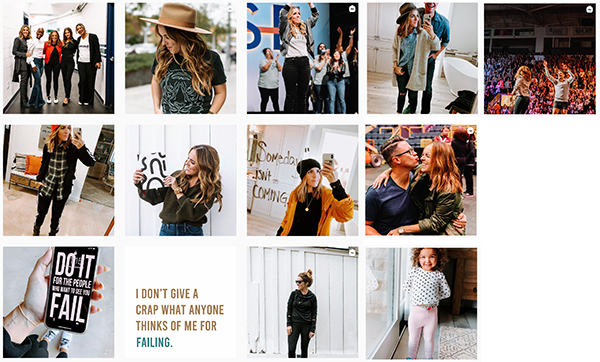
What I see here is a lot of photos and videos of Rachel. She is the center of her platform, and she is putting herself into the feeds of all who follow her.
I speak to so many writers who worry about taking selfies. Their concerns are myriad, but often people express to me that they just feel that selfies are too self-involved. They scoff at the idea of it. As if, taking a selfie is the lowest form of being self-involved, overly self-promotional, and vain. Sometimes they justify it as “I heard that your social media channels should be 90% about sharing others, and only 10% about yourself. So I’m not doing selfies.”
Are these people wrong?
Honestly, there is no “one right way.” When I look at what Rachel shares, I see someone who has found a way that works for her.
Of these images and videos, I see different types of content:
- Posed shots from an event with others.
- A produced video from an event. This video has two camera shots, captions, a background image.
- A 5-minute video of her and her husband talking to the viewer.
- What looks to be an impromptu selfie.
- A promotion for a planner she sells.
- A photo of herself in the mirror, but the text of the post includes a 311 word message that is radically honest and personal.
- Two images of quotes that also include lengthy text in the post.
- Two 2-3 minute videos from her podcast.
- A photo of her and her husband that also announced a new event.
- A 1-minute video on a specific topic.
- A photo of one of her kids.
What I see is someone sharing a wide different variety of posts. Video and photos. Things that are short and long. Things that are both quick and things that are very very deep. Things that feel very produced, and things that feel truly in the moment. She asked questions and also shared what was on her mind. The topics are wide ranging too.
Yet, of course, all of it feels 100% cohesive because Rachel is at the center. Her voice. Her message. Her brand and business. Her presence.
Did she use hashtags? That is something that so many authors ask me about all the time, as if it is a magic bullet to going viral? Nope. Did she stick to super short videos because research shows that people have short attention spans and videos that are 7-10 seconds perform 80% better on Instagram? Nope. (Also, I made those numbers up.)
She is finding her own best practices that work for her by showing up as who she is, with clear helpful messages, in any format that can best do that. If a 5 minute video can help her audience better than a 7 second video, then she opts for the 5 minute video.
But! She does share lots of short videos too, over on Instagram Stories. Let’s dig into that next…
Instagram Stories:
Here are the Stories that Rachel shared in the last week:
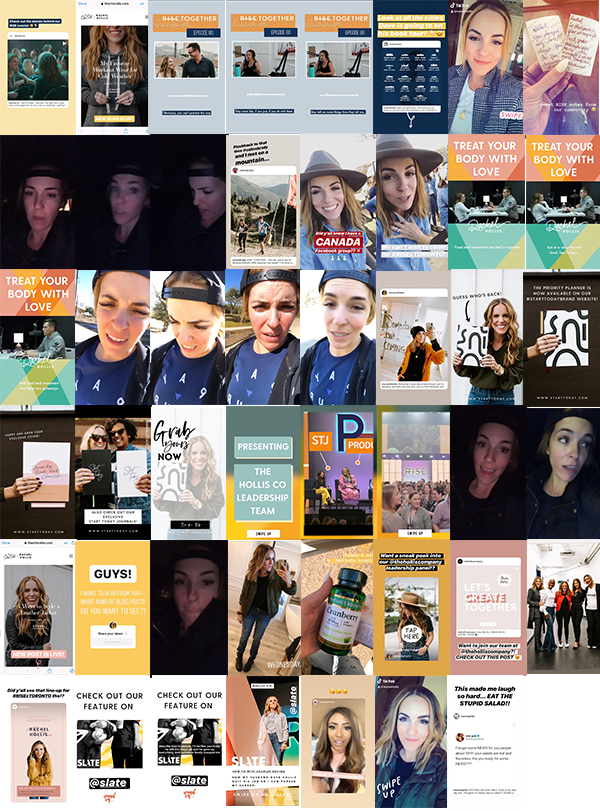
Some observations of what I see here:
- Of these, 17 were photos and 30 were videos. Like above, these are a mix of different types of content. Some is very promotional for her business, some is in-the-moment honesty, and then everything in between.
- She also cross-promotes across other accounts. She will re-share posts from other accounts she is affiliated with in some manner: her company @theholliscompany, her brand @letsrise.co, her other brand @thestarttoday, and her husband @mrdavehollis (who also runs the company with her.)
- She doesn’t use Highlights feature. To me, this is another “best practice” that she simply ignores.
- She works across platforms. She references her many other media and sub-brands such as her podcast, her website thechicsite.com (which is separate from thehollisco.com, msrachelhollis.com, starttoday.com.) and is often cross-promoting them. In one Story she mentioned a “Canada Facebook Group” that she runs. I looked her up on Facebook and discovered that The Hollis Company has 13 groups that it runs. That Canada group? It has 8,000+ members. We also see a post from TikTok is cross-posted to her Instagram Stories. Then a photo from a Story shows up in her regular feed. A video from the podcast gets re-edited for Instagram. A section of a talk she gives gets turned into a post. A photo from an event months ago, gets re-shared.
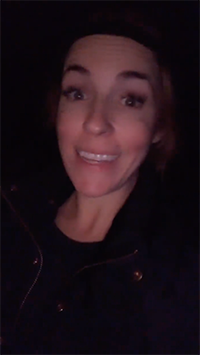
The Stories that really grabbed me were the ones where she shared videos as she went to run or workout. Here she is outside her house, in the dark, and she explains that it’s 6:30am, she’s done with her workout:
In this one she heads out to workout:
In this one, she checks in after a workout:

In this one she talks about how cold it is outside, and how she is still going to workout:

These are all from separate days in the week. Why do I share these specifically? Because I can see a writer saying “Well, I’m not going to share that I workout, because that would be showing off.” Or, “I would share a workout image, but I go when it is dark out, so people wouldn’t even be able to see me. So I won’t do it.” Or “I’ll share a workout video, but not that often — I don’t want people to get tired of them.” Or even “I work so hard to present myself in a certain manner, I don’t want to share photos or videos when I’m sweaty, in the dark, and in workout clothes.”
What Rachel shares is her choice. Just as each of us have a choice. Each of us gets to choose that. I do think it’s worth noting that these videos jumped out at me because they were so authentic.
How She Got Here
Whenever I research someone successful online, I like to go back to see their first social media post. Why? Because I always find the same thing: they started as we all do, they worked for a long time with little recognition, and it took years to find an indication of “success.” Rachel’s first post on Instagram was August 25, 2012. Her early posts look like a lot of people’s posts do, everyday images with 10-30 Likes each:

I began analyzing her growth on Instagram. How did she get so big? How long did it take? I went through her 4,000 updates, and looked at the number of “Likes” on posts with her in them. With the numbers below, I’m generalizing in order to give you a quick glimpse:
- For the first three years on Instagram, she grew very slowly. Dozens of Likes per post.
- Then in 2015 there was a jump where she regularly got 100 Likes on posts.
- A year later, she received 200-400 Likes per post.
- As she went into 2017, she usually had 1,000-1,500 Likes on a post of herself, with some posts going viral.
- But something happened in 2018, her engagement on Instagram skyrocketed. 5,000 Likes per post. Then 10,000. Then posts that would get 30,000 or 80,000 Likes.
What happened? She released her book, Girl, Wash Your Face.
Now, her growth on Instagram happened because of many many many other things she has done over the years. But it was astounding to see the jump in engagement in 2018 align with the release of her book. It illustrates the power that a book has in sharing one’s message and connecting with readers.
Now, some of you may be thinking, “Dan, she could have saved herself 6 years of posting to Instagram, and just joined Instagram the day Girl, Wash Your Face published.”
But success doesn’t work like that. For one, I imagine that her incredible engagement with fans is part of the reason the book was a success. For another, when success came, she was READY. Ready in all-caps kind of ready.
Not just on Instagram, but she had clearly been working so hard in so many ways for years. Instagram is just one way to get a lens into all she has done.
So many authors wait to begin engaging with people. Begin sharing. Rachel is an incredible story of someone who showed up as a whole person on social media. I only listened to a tiny part of one interview with her, but in it she discussed her path to success this way:
“I grew that one woman at a time. For years, it was me responding to every single comment, every single direct message, because I thought, ‘If you are going to take the time to reach out to me, I’m going to take the time to write back.'”
I talk to so many writers who dismiss this kind of slow growth. They say, “I tried Instagram for awhile, a whole year. I could never get past 20 Likes on a post, it was so disheartening.” So they stopped. In the numbers above, we see Rachel kept going for years after that. I think it could even reasonably be argued that it was more difficult for her to get engagement on Instagram back then because there were so many fewer people on the platform.
I spoke to someone recently who told me, “I remember when I thought of joining Instagram back in 2012, but it felt too late by then, like I missed the boat.” I hear people say things like this all the time. Yet, Rachel’s first post on the network was August of that year, and it would take months… years… of sharing before she saw big growth in the numbers.
What Other Writers Can Learn From Rachel
There is so much to learn from Rachel, and honestly, I feel like my research this week barely even scratches the surface into all she has done and all that could be learned. But here are a few things to consider:
- Try many different things. Rachel doesn’t just share one kind of post, she tries it all!
- From what I can tell, she made this social from day one, and kept it social. What I see in her updates is her family, her team, the people she meets, the things she experiences, and of course, all that she creates. She clearly involves others in this, it is not some little effort hidden away.
- Feel free to learn “best practices” but don’t be afraid to ignore them. Don’t scoff of doing a very long video or taking selfies with the justification of “Well, research says that something else is better.” Find out for yourself. This is about communicating what you create and why to other human beings. Always focus on that 1:1 connection.
- Show up as a whole person. This is social media, after all. If you choose to only share the tiniest sliver of who you are, then how will you engage others. You can — and should — absolutely establish boundaries that make you feel safe. But you get to choose what those are for you.
- Be helpful – find meaningful moments that someone else may appreciate in the day.
For all of what Rachel shared, what “performed” better in terms of views and likes and sales? ALL OF IT! You can’t just skim off the top 10%. You have to show up and keep trying, and not everything can perform at the top 10%. Don’t try to do less with the idea that if you just do the few things that perform well, that you can save yourself the work of showing up fully.
Learning what works for you takes time. Through 8 years, 4,483 posts, she has found what works for her. Find what works for you.
Must you do what Rachel does? No!!!!!! Rachel chooses this. She has a multifacted worldview, life, and business. This is what Rachel chooses for herself. You don’t have to post 47 times to Instagram Stories next week.
But I want to encourage you to consider what you can share. What you want to share.
Is there an author or artist that you follow on social media who you think I should do a case study on? Let me know.
Thanks!
-Dan

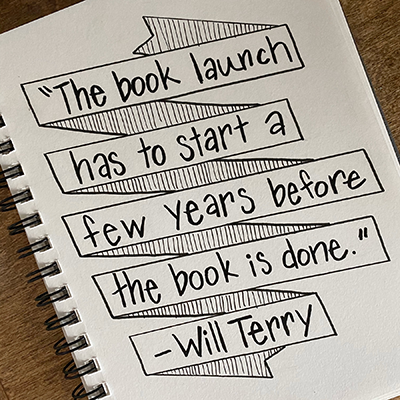
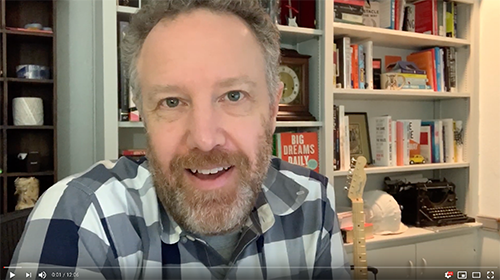
 Last summer, Teru Clavel released her first book: World Class: One Mother’s Journey Halfway Around the Globe in Search of the Best Education for Her Children. It was published by a major publisher (the Atria Books imprint of Simon & Schuster), was well reviewed in major media (Publishers Weekly, Library Journal, Kirkus, etc), she appeared on the TODAY Show plus other TV and radio, and was interviewed on dozens of podcasts. She’s got a blog on Psychology Today, plus shares on social media and so much else. In this episode she gets radically honest about the book launch process – what worked and what she learned along the way. Including this: “This is not easy. There are so many rejections. For one success, there were hundreds of pitches where I got rejected.” You can listen to my interview with Teru here.
 Finally, how does one find the time and energy to embrace creativity after the bottom has dropped out of their life? In my interview with Shannon Connery,PhD, she gets honest about what it means to build a life filled with intention, creativity, and happiness. She says: “Now I find creativity really energizing and engaging. I feel inspired by the process. I wouldn’t have done any of this in my old life. Before I was stripped of everything, I cared what people thought, I cared about fitting in. I would never have just started a podcast and put it out there. But because I went through all of that, and now have an authentic life with friends, and people who are 100% supportive if I want to write a book.” You can listen to my interview with Shannon here.
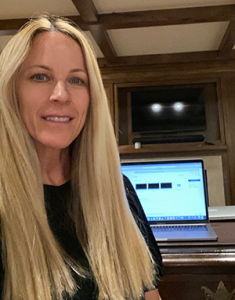 How does one find the time and energy to embrace creativity after the bottom has dropped out of their life? Today I am excited to share a powerful interview with Shannon Connery,PhD who gets radically honest about what it means to build a life filled with intention, creativity, and happiness.