“My whole life is hanging on the tiniest spider web of one email.”
That is what a writer said to me recently who was waiting to hear back from a literary agent. I thought that was an incredible way to describe the process of what it means to find success as a writer. To write. To publish. To connect your writing to readers. It can feel harrowing… like at every step you are confronted with a moment where your dreams will come true, or come crashing down.
My friend Jennie Nash is having a moment like that herself. I interviewed her this week to discuss a change she is making in her business at Author Accelerator. She was radically honest about how much is riding on this, and how complex the process feels.
From the outside, Jennie has been offering more and more resources for book coaches, culminating in her amazing The Business of Book Coaching Summit this week. But internally, she has been working for months and months to analyze how she wants her business to evolve, making some massive behind the scenes changes.
When I asked her if I could interview her about this she said “Yes, but let’s do it later in the year, when I know if everything worked or not.” I encouraged her to do what so many people shy away from: to talk about the creative risk she is taking while she is smack dab in the middle of it.
She agreed, and it is one of the most powerful discussions I’ve ever had in my podcast. She doesn’t hold back, and it is an inspiration for any writer or creator to hear. What she shares is the reality of being “in it” — the creative process. And all the risks that come with it.
It’s often a scary place to go to as a creator or business owner, and may be even scarier to hear as a client of that business. But it’s valuable to look these realities in the face. It’s the only way to ensure that the people you do business with are aligned with your values. Jennie is a person who values honesty and integrity, and she is also deeply committed to serving her customers and clients.
That communication is critical. This week I have been doing a free training series on social media for writers in a private Facebook Group that I run. What I find is that many writers are apprehensive of embracing social media for the same reasons that Jennie considered waiting to discuss her creative shift, and that the author at the start of the email felt as though her life was hanging in the balance of an email.
Because this business of being a writer — of finding a path to create and share — is not easy.
It is filled with emotional and psychological complexity. At every turn, even small decisions can seem to have profound implications for our creative work, and even our identities.
This is why I encourage writers to get involved in social media. To embrace it. Because it helps us do the things that matter:
Share your experience of the creative process.
Learn to communicate why you write.
Understand who your readers and colleagues are way before a book launch.
Connect with like-minded people who love the type of writing you create.
Have fulfilling conversations that make you feel part of a community, instead of isolated and struggling.
To show up to your writing is a risk. To share that writing is a risk.To engage with others with why you create is a risk.
One of my favorite quotes is from Bono reflecting on the transition U2 made in their music from the 1980s to 1990s: “You have to reject one expression of the band first, before you get to the next expression. And in between you have nothing. You have to risk it all.” Today I share an extraordinarily honest interview with book coach Jennie Nash who is making a profound creative shift with her business. Her story applicable to every writer or artist who dares to create and release it to the world.
Jennie gets really honest here about the realities of running a business and taking risks. It’s often a scary place to go to as a business owner and may be even scarier to hear as a client of that business, but it’s valuable to look these realities in the face. It’s the only way to ensure that the people you do business with are aligned with your values. Jennie is a person who values honesty and integrity, and she is also deeply committed to serving her customers and clients.
You can listen to the podcast by clicking ‘play’ below, or in the following places:
How many times have you heard someone pitch you on a “can’t fail method to systematize your book sales.” Or your newsletter subscribers, social media followers, or something else. The components are always the same:
“I’ve done it again and again.”
“It’s a system that you follow step by step.”
“The steps are surprisingly easy.”
“Once you do it, you can set it and forget it. Success happens and keeps happening.”
“Let me tell you a story of Becky who did this and how it changed her life…”
You are sold things like this again and again, and what I have found is that it leaves writers feeling discouraged. They try it but it doesn’t work for them. They hear these pitches again and again and begin to feel that it is they — the author — that is broken. Because it’s working for all these other people, “why not me?” The comparisonitis builds up making them feel bad about themselves.
So today I want to talk about the truth, and also offer you a clear path to success on your terms. We will cover this in two parts:
No one knows what will work.
Embark on a discovery process to identify what will work for you.
Okay, let’s dig in…
No One Knows What Will Work
There, I said it. No one knows which book will succeed and which won’t. No one can give you a step-by-step plan on how to get results for so many things in life. Even though this sounds jaded, I am a very positive person, I believe the glass is half-full, and I spend most of my time helping writers make progress.
So let’s talk about why I say this, because understanding this actually helps you get to the path that will work for you.
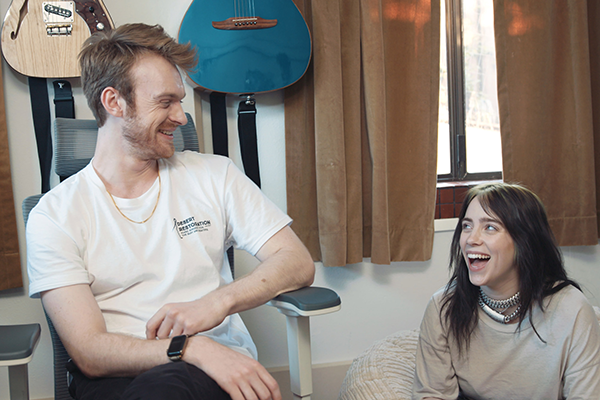
I want to share an example from another creative field. This is Billie Eilish and her brother Finneas:
They make music together. How successful have they been? A few highlights:
Her album debuted at number #1 on the Billboard charts.
She has eight gold and four platinum singles in the US.
Their music was streamed billions and billions of times on Spotify and Apple music in 2019.
Billie has 48.9 million followers on Instagram.
Oh, and it should be mentioned that Billie is 18 and Finneas is 22.
Recently, I began binge-watching interviews with them. Turns out, they were homeschooled, she still lives in her parents’ tiny house, and all of their biggest hits were recorded in the two bedrooms of the house. Growing up, their parents slept in the dining room so Billie and Finneas could have their own rooms.
Interviewer: “Do you think there is one clear formula to a hit record?” Finneas: “No. Absolutely not.” Interviewer: “Do you feel you have an idea of what it takes?” Finneas: “No. Less and and less now that we have had more and more success, because it just teaches me each time that I don’t know.”
Or how he described the path to the first huge hit that he and Billie had:
Question: “First song you ever wrote?”
Finneas: “Ocean Eyes. (Laughs) That’s not true. I wrote like 200-300 songs that no one will ever get to hear before I wrote that song. I thought they were all really good at the time, and subsequently think they were all really bad. That’s the deal. I loved writing them.”
In this interview they dissected the process for creating their biggest hit song, “Bad Guy.” She started working on it in her bedroom. Then it moved over to his as they got some parts to it worked out. As they tell it from here: Finneas: “We had that. Then it sat around for like a year.” Billie: “I’m shocked and happy people like it the way it is, because the thing we were most worried about was the chorus, and it having no hook.”
What she means is that this is a very unusual song. In interview after interview, each of them talked about how worried they were that no one would even like this song. Yet it became their biggest hit.
What Billie and Finneas share is the perspective I hear again and again from successful writers and artists. You see, all I do all day is study the creative process and creative success:
I am in the trenches with writers who are clients, in my mastermind, or my other programs.
I interview successful writers and artists in my weekly podcast.
Most of my friends and colleagues are writers or artists.
I do an incredible amount of research into this via books, podcasts, documentaries, interviews, etc.
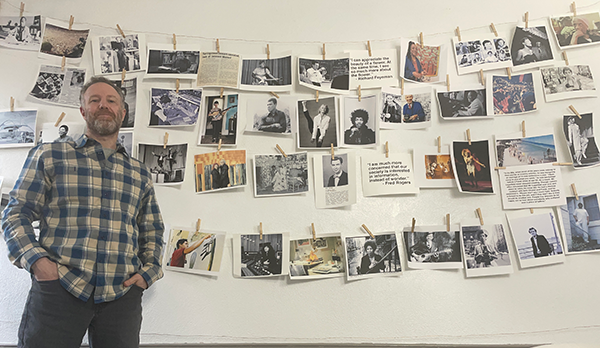
This is the wall of my studio filled with photos of creators who inspire me, I stare at this all day:
The path to success for each of these people was unique. As will your path be.
Each talent is unique.
Each success is unique.
Craft matters.
But so does luck.
So let’s discuss the path to success…
Embark on the Discovery Process
Success as a writers or artist is a process of discovery. What this means is that you are diligently doing strategic and smart work to move ahead, but constantly looking for signals for what direction to move in next, what works, and what doesn’t.
I want to share the key things I believe you need in order to embark on your own discovery process to find success. When I work with a writer to help them create an author platform, develop their audience, and launch their book, we embark on a discovery process with these elements:
Have a Clarity of Intention
Too many people fail to make progress because their goals are vague. They don’t have clarity on what they create, why, or how they hope it effects the world. Without clarity, I find many writers bounce back and forth between competing intentions:
“I just want to be a published author.”
“I want to grow my newsletter list.”
“I want to be a bestseller.”
“I want 10,000 followers.”
“I want to find my tribe.”
None of these milestones are bad. But they are just that, milestones in a much larger process as a writer. Some people I speak to have clear intentions. For those who don’t that is often the first step… to whittle down your intention to something specific and meaningful. Sometimes writers simply don’t know. For them, we can ask a simple question, “What are you curious about?” Start there.
Have a Methodology
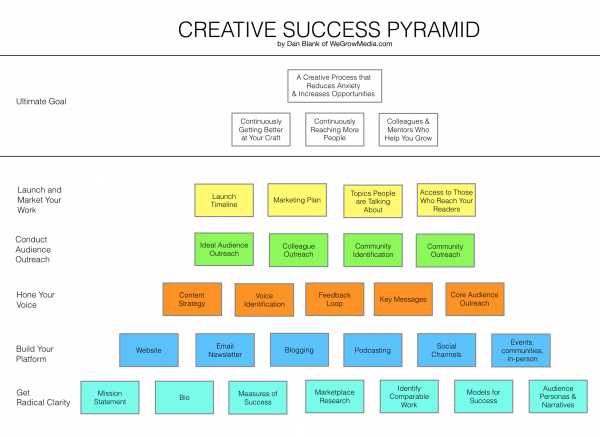
While I said earlier that “no one knows what will work,” that doesn’t mean that one can’t follow a methodology to find out. For the work I do, one of those methodologies is what I call The Creative Success Pyramid. This is it (click the image to download a full-sized PDF):
It’s comprised of five basic parts, you start at the bottom and work your way to the top:
Get radical clarity on what you create and why.
Build your platform.
Hone your voice.
Conduct audience research.
Launch and market your book.
All of these are in service of the ultimate goals: to continually create, to improve at your craft, to ensure your writing reaches more people, and to connect with others in fulfilling and meaningful ways. Within it are 30 smaller boxes. Here is a 15+ minute video of me taking you through it:
Where a methodology differs from a step-by-step template is that your path is always custom. Working through it is a process of discovery.
Have a Guide or Collaborators.
Too many people fail to success with their creative vision because they go it alone. They struggle for years by themselves. Yet all the stories I hear of success are filled with collaborators.
Sometimes these are formal guides, mentors, or coaches. Other times, they are collaborators such as other writers who help keep you accountable.
I suggest that the collaborators you work with be active, not passive. Joining a collective or being part of a “writing community” can feel active, but sometimes be passive. You can lurk in the shadows. You can follow along with their program.
This is different than having a guide or collaborator who listens, suggests, pushes, holds you accountable. Where they feel if you don’t make progress, that they are letting you down.
This is the work I do each day, and I think that is why every service I offer includes direct feedback from me. From my free programs to the highest levels of consulting, it’s not just that it gives me joy, it’s that if you aren’t getting personalized feedback, then you are always at risk of being adrift. Collaborating is critical to creative success.
Turn Discoveries Into Action, Not Endless Research
I call this a discovery process because the goal is to learn new things along the way. For instance:
Learn the types of books you really want to write.
Identify exactly who your ideal reader is.
Where they show up.
The best way to reach them.
How you can share your work in a manner that feels authentic to who you are.
Develop a process for it all that fits into your already busy life.
For many of these things, you won’t know the answer until you begin with a clear intention, follow a methodology, have a collaborator to help you along the way, and keep pausing to take into account what you are learning.
Persistence is a key factor here, but so are check-ins and analysis. To not just assume “Oh, I have a plan, I know what works.” But to regularly analyze and adjust your path.
Forgive Yourself
This is a human process. It can be emotional. So much of what it means to create is to discover who you are, what you are capable of creating, how others can know you, and how you can effect the lives of others.
Too many writers worry that they missed the boat, it’s too late for them. Or they feel a deep sense of impostor’s syndrome. Or they feel filled with comparisonitis as they observe the success of others.
All of this is normal. The key is to feel it, but not let it stop you. To not berate yourself for it. To forgive yourself and move on.
No one knows what will work. But the discovery what will work for you is a process I highly encourage you to embark on.
Writers have felt an intense pressure over the past decade to jump into social media. I’ve worked with thousands of writers on this, so I understand why many are for it, many are against it, and most are stuck somewhere between the two. They are interested, but apprehensive. They ask, “Will it actually lead to book sales?” The answer? Nope. But social media does so much more for writers. In today’s podcast I want to discuss the benefits of social media for writers. I also invite you to join me in a weeklong training I am doing in my Facebook Group called “The Reader Connection Project.” Each day January 20-24 I’ll be sharing a video with my advice, and I’ll be doing a Q&A at the end of the week to answer all of your questions.
You can listen to the podcast by clicking ‘play’ below, or in the following places:
Writers have felt an intense pressure over the past decade to jump into social media. I’ve worked with thousands of writers on this, so I understand why many are for it, many are against it, and most are stuck somewhere between the two. They are interested, but apprehensive of the time it will take, how to do it well, and they ask the question, “Um, what is the return on investment? Will it actually lead to book sales?”
The answer? Nope.
But social media does so much more for writers. Today I want to discuss the benefits of social media for writers. I am absolutely viewing this from the perspective of social media in 2020 — what works today. Also, I’m not blind to the potential downsides of social media.
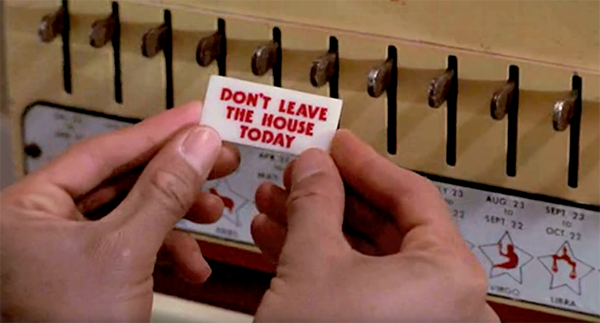
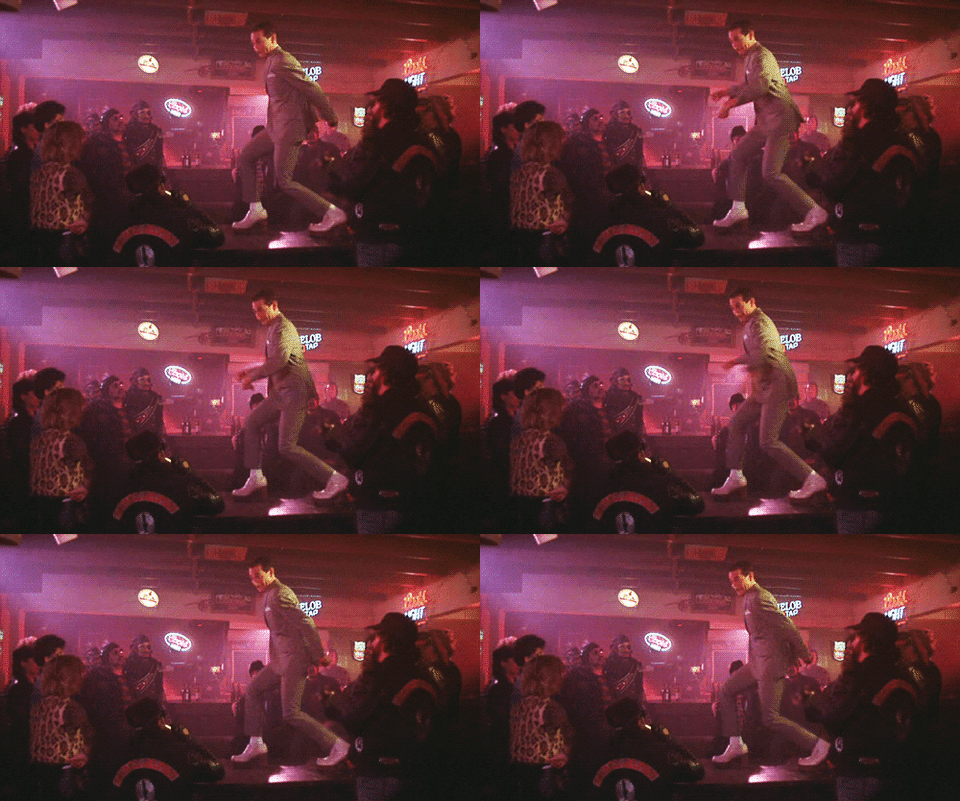
Much like leaving the house in the morning, engaging in social media brings with it everyday “risks.” Like Pee Wee Herman had to decide, do you listen to the card:
Or do you go on a big adventure?
Let’s dig in…
Social Media is Not a Transaction
Social media is not a magic wand to ‘go viral.’ It is not a transaction where you game whether or not you can convince an “influencer” to Tweet about your book.
Just as your daily life is not a transaction where you only engage with friends, family and colleagues trying to convince them to do you favor after favor. Social media is a communication channel just as in-person meetings, email, phone, and any other way you connect with other human beings.
Too often I see writers say they will join social media, but they won’t show up there as who they are. They just want to use it to promote their books and get the attention of influencers. But isn’t that like walking into a party, walking directly up to the spread of food, shoveling it all into your bag, and then leaving.
Social media is not a transaction. It is an opportunity to connect with real people, who like books similar to yours, and appreciate reading about the same themes you do. Either show up to that as a full person, or don’t bother at all. Just as a party doesn’t need yet one more who came only for the free food, social media doesn’t need yet another hollow attempt to game it.
Relationships Create Writing Careers
Without question, your writing is the primary thing that matters. The craft. Your ability to engage readers with a story, or to help them with your advice.
But… time and time again I hear how relationships sparked and fueled someone’s writing career. That it was who they knew that lead to an agent, a publisher, an opportunity, an audience.
Having a professional network is a critical part of finding success as a writer. Who you know, and how well you stay connected with them.
Can you do it without social media? Yes! I wrote about that just a couple weeks back: “Growing a Readership Without an “Online Author Platform.” But it’s so much more difficult to stay in touch when it only relies on phone and in-person channels. This is why I do encourage writers to develop an author platform and engage online. To avoid scenarios like this: someone Google’s your name and nothing comes up. Or, when they seek you out on Instagram, Twitter, or Facebook and find 100 other people with your name, but not you.
With several clients this month, I have been helping them map out the existing network of people they already know, and identify others in their field who have the same interests they do. The goal is to strengthen connections to people they already admire, and to slowly allow them to connect with more like-minded people.
Just as most of us did when we were younger. We would meet new friends year to year in school. We would engage in hobbies outside of school that brought like-minded people into our lives. These people inspired us, fueled us, and made up whatever our ideal version of what a literary salon may be.
Sure, the more you engage with these people, the more likely that luck happens in your writing career. But that isn’t really the point. The purpose is to feel fulfilled by having a life filled with a thriving network of people who inspire you and love the same kind of writing that you do.
No one can control whether your book is a bestseller or not. But you can control if your life is filled with readers who love the same kinds of writing that you do.
Having Friends Before, Between, and After Your Book Launches
So often writers talk about social media in terms of book launches — that brief period a few months around the day your book is released. But honestly, to me the main benefit of social media is having friends and colleagues before that happens, after it happens, and in the time between book launches.
Ideally, social media allows you to avoid the promotion you hate. The kind where you are silent for years. Then you promote promote promote your book for a few months. Then you disappear for a few more years until the next book comes out.
From a practical standpoint, it’s better strategically to develop your ability talk about your writing and forge connections with like-minded people well ahead of a book launch. And to keep those connections in the months and years before launch, so that your next launch doesn’t have you starting from scratch, with no audience.
From a human standpoint, doesn’t that just feel better? Is your favorite friend the one who doesn’t talk to you for years, then sends you 20 texts in a single month inviting you to a “party” at their house where they try to sell you candles and aromatherapy products?
Social media is about real relationships with real people. It is not a magical 1-step marketing funnel where a single Tweet will someone lead to a book sale.
This is how we connect to people we admire. It’s how we stay connected. How we share and infuse our days with topics, stories, and themes that inspire us.
Social media is also where we share, celebrate, and discuss writing and books. Why not show up for that?

 One of my favorite quotes is from Bono reflecting on the transition U2 made in their music from the 1980s to 1990s: “You have to reject one expression of the band first, before you get to the next expression. And in between you have nothing. You have to risk it all.” Today I share an extraordinarily honest interview with book coach Jennie Nash who is making a profound creative shift with her business. Her story applicable to every writer or artist who dares to create and release it to the world.