The most effective marketing is old-fashioned

I’ve been thinking a lot about the tools that writers have to connect with readers. On any given day, how are you able to connect with people who may love your books and writing?

This past weekend I picked up a vintage radio. It was made in 1931 and is powered by vacuum tubes. In today’s dollars, the radio originally cost nearly $1,200, a dizzying sum when you consider this was in the midst of the Great Depression.

The radio made me consider how the communication and marketing tools that an author has have changed dramatically. Yet, these old fashioned tools still remain very powerful.

Here I am in a pretty typical office setup from 1935, 1955, or even 1975:
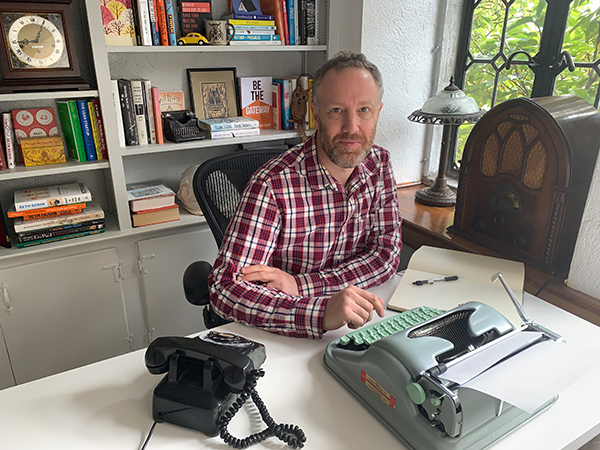
Dan Blank

(Yes, I collect vintage things!)

If I were a writer in that era hoping to have my manuscript published, hoping that my writing gets in front of readers, what actions could I take?

I could go to the library and look up the names of publishers and agents. Hopefully the books are not out of date. I could then call them, with long distance fees, to ask any questions about how to best query them. I could type up a letter. Then go to the copy store to pay for mimeograph of my manuscript, and send it in a package in the mail. In a few weeks or months, maybe I will hear back.

I can listen in to the radio or TV to get a sense of trends, of what authors are talking about on talk shows, to try to get a sense of how my work fits into the marketplace. I could read newspapers, magazines, books, and journals. But these are all one-way media.

I could attend events, readings, bookstores, libraries and social gatherings to try to meet authors, readers, and those in publishing. Each one requires me to live in an area where this is possible, and to hope I’m in the right room at the right moment to forge a connection with someone.

If the quality of my writing doesn’t grab someone’s attention, or if my social circle is not developed enough, then behind this desk I remain. Yes, I can join local writing groups. I can find a reading at cafes to read excerpts of my work. I can submit essays to publications.

But a distance remains between my writing and my readers without a publisher, without an agent, without a direct means of communication with my readers.

Last week I talked about key elements of author platform: communication and trust. These two things were as essential in 1935 to a writer as they are today.

Nowadays, of course, we have the internet for research, email for direct outreach, social media for connecting with both loose and tight connections, as well as video, websites, newsletters, and so much more.

Yet, “old fashioned” tools still work incredibly well. In fact, sometimes they are even more powerful than newer technology.

I received this letter in the mail this week:
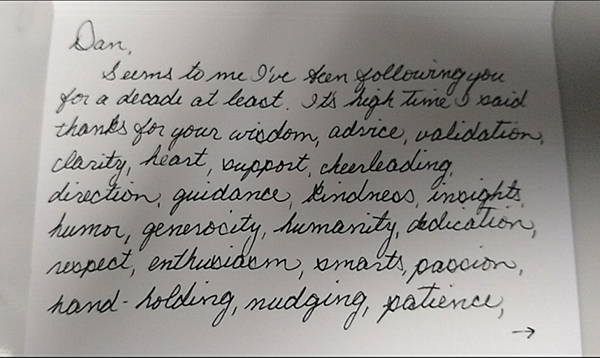
It was from writer Dawn Downey, thanking me for all I have shared for the decade she has followed my work. That’s amazing right? Because of email, the internet, social media, she has been able to connect with me in various ways through an entire decade.

What was even more lovely about this letter is that the card she sent it on featured the artwork of Lisa Sinicki, who Dawn met in my Creative Shift Mastermind! Here is the card:
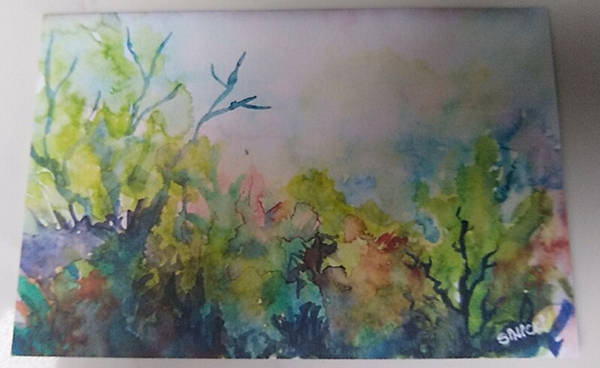
It was a great reminder that friendships and patrons are forged in these collaborations.

This week I also received an email from writer Faye Westfall who shared:

“You do amazing work with writers. I think it was [more than a decade ago] when I took a course or two from you through Writer’s Digest. I purchased your ebook on blogging and tried my hand at that. Your approach to helping others be successful has kept me reading your Friday emails all these years.”

She then told me about a friend of hers who is a writer, and said, “I think [your book] Be the Gateway will be in her stocking at Christmas.”

For what Dawn and Faye shared with me this week, both were akin to the photo above. Someone taking the time to write a letter to connect. To communicate and build trust.

Oftentimes I consider how the most effective marketing is old-fashioned. The things that connect human beings that are timeless.

I can’t share specific details yet, but for the past few months I have been working with author Leigh Stein on the marketing plan for her new novel which comes out next year.

Key aspects of the marketing campaign could be considered old-fashioned. Things that intentionally don’t scale. Where social media is a secondary component, not primary.

She shared this in her newsletter this week:


My fourth book, Self Care, comes out next summer. I started working on my marketing strategy in August.

That’s right: in August.

I’ve been devoting five to ten hours a week to marketing a book that won’t be anywhere near bookshelves for months. The book doesn’t even exist in a physical form yet. It’s way too early for my publisher to assign a marketing or publicity team to my novel (they have sooo many other books ahead of mine to work on.)

I learned a few hard lessons with my last book launch, for my memoir, in 2016, and I want to do better this time.


The marketing plan is comprehensive, but filled with completely outside the box ideas that Leigh is excited about. The goal is to connect her book with readers, but also to create meaningful experiences in the process.

Leigh is publishing a book, but also creating conversations, human connections, supporting others, and continuing to go all-in with her creative vision.

For you, the writer hoping to connect with readers, you have the opportunity to use tools both new and old. To choose a path that fits with your sensibilities, instead of squeezing yourself into someone else’s box, or having to follow “best practices” that don’t resonate with you.

Great marketing is more accessible today than ever before. And even newer marketing tools leverage the best what worked from on old-fashioned means, which is what connects us as human-beings. What draws us in to ideas, to stories, to each other.

Don’t let the tools, new or old, limit you. Connect your writing to readers in ways that are meaningful to you both.

It is so inspiring for me to connect everyday with writers such as Leigh, Dawn, Faye and so many others. Thank you all for your continued support.

Thanks!
-Dan
The Introvert’s Guide to Book Marketing and Author Platform

Today I reflect on marketing practices that I feel are not only highly effective, but well suited to introverts. With so much of the work I do with writers, I find that people are apprehensive to “put themselves out there.” Today I try to make the entire process more approachable, and dare I say, fulfilling.

You can listen to the podcast by clicking ‘play’ below, or in the following places:

Your Writing is a Gift

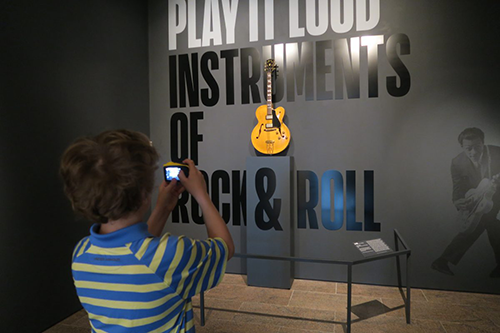
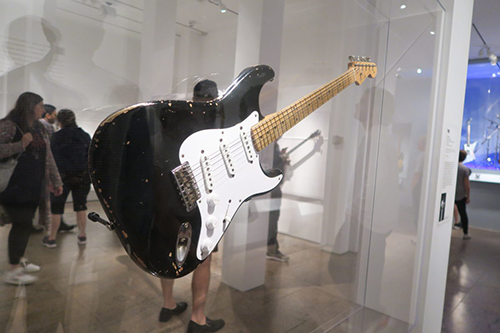
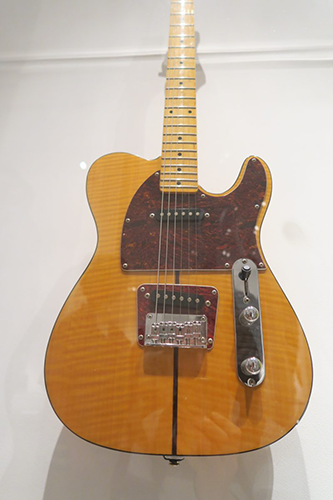
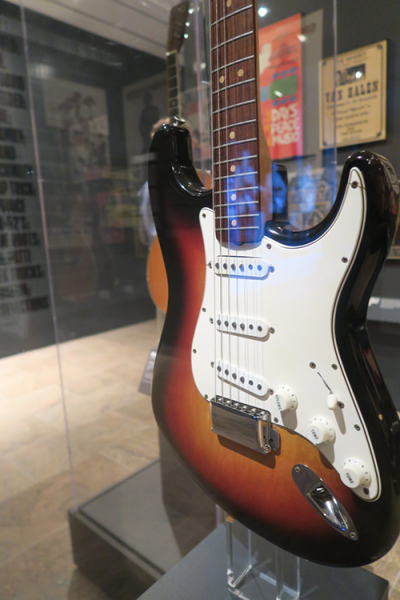
I recently traveled into New York City to the Metropolitan Museum of Art. They had an exhibit of famous rock guitars and instruments that I was excited to see.

Something about the experience was surprising to me. It was a great reminder that your writing and art is a gift to the world. Let me explain…

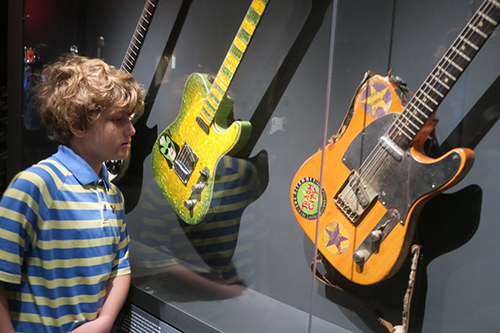
So, I brought my trusty companion with me, my 9 year old son:

It’s fun for me to see things through his eyes. Here he taking a photo of Chuck Berry’s guitar…

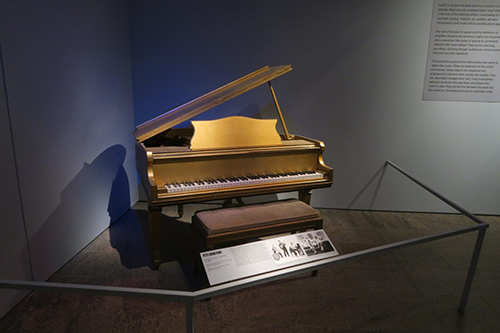
My son plays the piano, so the big highlight of the show for him was Jerry Lee Lewis’ piano:

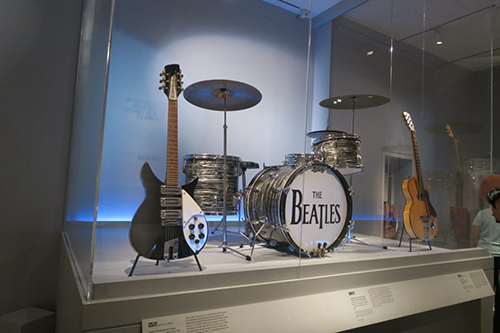
As he and I meandered through the exhibit, you couldn’t turn your head without being confronted by another legendary instrument. Here are The Beatles’ instruments:

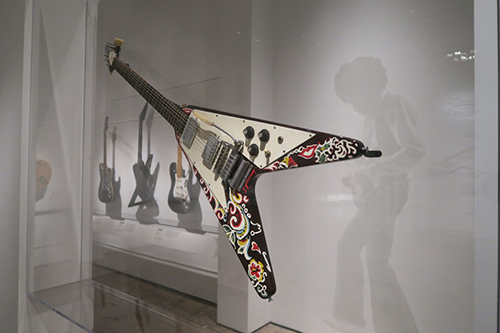
Jimi Hendrix’s guitar:

Eddie Van Halen’s guitar:

Eric Clapton’s guitar:

There were unexpected highlights, such as Prince’s guitar:

I tried to explain to my son some of the context behind these instruments. This is the guitar that Bob Dylan played when he went electric on stage for the first time, a huge moment in rock & roll history:

Here he is trying to understand The Clash through Joe Strummer’s guitar:

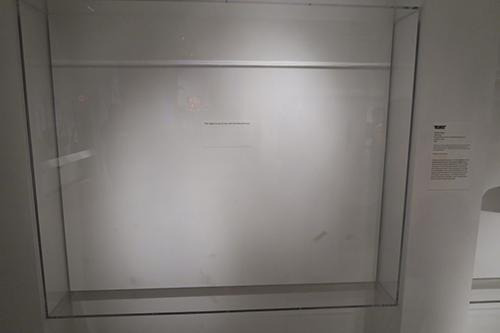
This was perhaps the best display of the whole exhibit. An empty display with a note:

This case was meant to house Keith Richards’s telecaster, one of the most famous instruments in all of rock history. Where was it? He took it on tour. Even though it it is a well-worn object worth millions, he drags it around with him and still plays it. I love that. These are tools that are meant to make music, not sit in museums.

As I gazed at these objects that I dream about, I felt an odd sensation of hollowness. I was looking at a hunk of wood and metal, trying to remind myself “This is the instrument that Jimmy Page used to write a song,” or “This was Stevie Ray Vaughn’s beloved stratocaster — right here in front of me.”

But without the person, without the music, these objects felt like… well… objects.

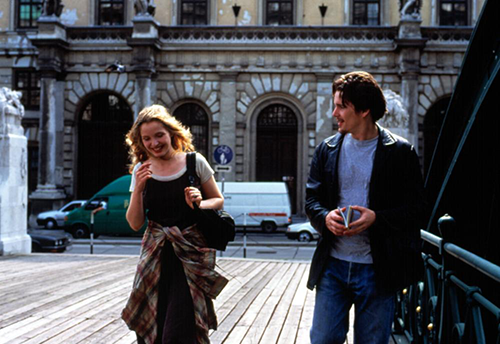
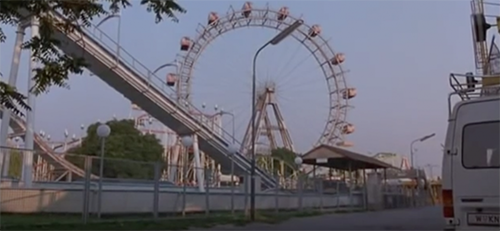
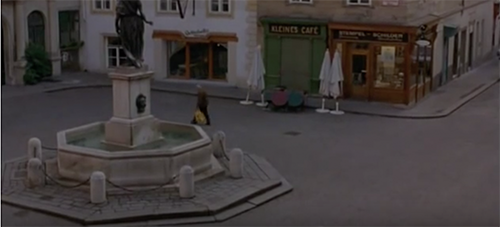
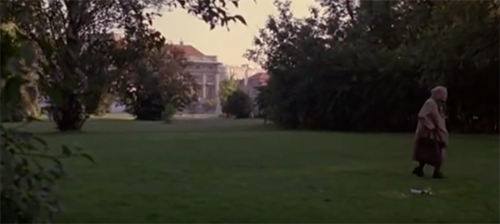
This reminded me of one of my favorite scenes of all time from a movie. In the 1995 movie Before Sunrise, we follow two young people as they get to know each other and meander through Vienna. There is an energy and magic in their conversation:

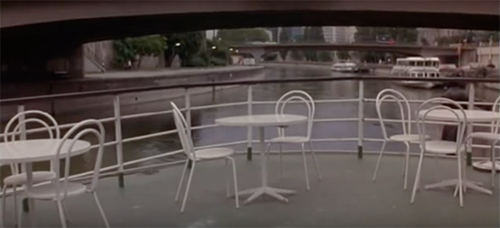
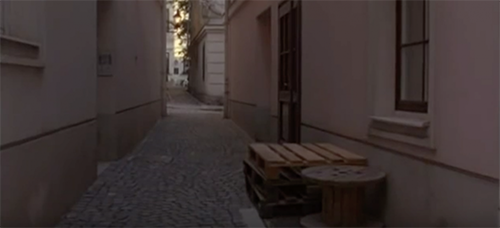
At the end of the movie, they depart, and the the film shows a montage revisiting the places that the couple had explored. But these places are now empty, the couple is not there.

And there is something missing. A hollowness to the places, because the special energy of this couple is gone. Their conversation, their ideas, the seeds of attraction and perhaps even love that might be forming. Instead, they are blank canvases without that magic of conversation and connection.

To my surprise, this is how the guitars felt to me at the museum exhibit.

But it was a lovely reminder that we are left with the music that these instruments have created. Through the recordings of songs and albums and live performances, we can experience the exact energy of the moment those performers and instruments created their art.

As writers and artists, we each have this same capacity. To not just write, but to publish. To create, but also to share. To capture our creativity in books, essays, illustrations, music, blogs, podcasts, and so much else.

Too often, we judge the effect of this work too quickly. We measure “likes” and “follows” and “subscribers” and “reviews” by the minute.

But our writing and art remains for longer than that. Months. Years. Decades. For generations even. What you create is a gift to the world.

For others to experience what you create has become easier than ever. The internet has made access to books and art nearly universal. A book costs a few bucks, maybe $30 at the most. A movie, a song, an illustration, are all in a similar price range.

One does not need to travel to a big city to see a limited-time museum exhibit, or attend an expensive concert to experience what you create.

You are a writer. You are a creator. As I reflect on all of this, I encourage you to create more, to publish more, to connect more.

Thanks.
– Dan

Why Human-Centered Marketing Works

I’ve used this phrase a lot in the past year: “human-centered marketing.” To me, this is the type of marketing that truly works. The kind that moves books. That creates a career for a writer. That develops a sense of fulfillment in the process.

Today I want to talk about what human-centered marketing is, and how it does (and doesn’t) relate to so many author platform and book marketing trends you may have heard about in the past decade.

Let’s dig in…

Marketing “Best Practices”

One of the more controversial things I wrote in my book, Be the Gateway: A Practical Guide to Sharing Your Creative Work and Engaging an Audience, is to avoid best practices. I understand why writers seek out best practices with marketing: they want tried and true strategies that won’t make them embarrass themselves.

The problem with best practices? Everyone is doing them. Usually they are copying a copy of a copy of a copy of a copy of a marketing strategy that used to work really well when it was unique and new. But now everyone is doing it, and oftentimes, they are half-baking it. They put in the minimum effort, hoping for the maximum result.

They end up with the concurrent feelings of “I’m doing everything I’m supposed to be doing to grow my author platform and market my book,” and “Gosh, nothing seems to be working.”

You have likely seen a lot of these best practices in the past few years, and have perhaps become overwhelmed by them.

Maybe you have been told you that you need a newsletter list, that you have to create a compelling “lead magnet”, that you have to use hashtags left and right, that you should run a webinar, do a blog tour, create a course, get on Medium, buy social media ads, or do 100 other tasks.

Can each of these tactics work? Absolutely.

But they each have a critical flaw: too much content, not enough actual engagement. For the person creating them, sometimes they hide behind this content. They can create a beautiful author website, setup an email list, create a lead magnet, send out newsletters, post them to social media with hashtags, link to them in Facebook groups, and so on.

They put all of this content out there, but oftentimes have very little engagement with another human being. They end up with a few social media “likes” to show for it.

On the flipside, it overwhelms people with content. When I started my company WeGrowMedia nearly a decade ago to work with writers and creators, most people didn’t have email newsletters, and online courses were this fresh new thing. People still needed to be convinced that social media, blogging, online video and so many other things were viable ways to market their work.

But today, I often hear from readers who are hesitant to sign up for yet another email newsletter, podcast, blog, or social media channel. There has been an open floodgate of content coming at them for years.

Psychological Marketing Triggers

How have people tried to make their online content more compelling? Two ways: exaggeration and ‘fear of missing out,’ otherwise known as FOMO. These are psychological triggers that encourage people to take action.

For example, a writer recently shared with me a course that she liked which taught the practical steps of how to self-publish a book. 90% of the course was about the specific ways to format a book, to upload it to a distributor, etc. Of the entire course, three minutes of it were focused on marketing. But to make the course seem more appealing, the instructor added the phrase “bestselling book” to the title.

Why? Because it makes the entire course feel more valuable. It’s an exaggeration.

Could the steps taught in the course apply to a book that happens to become a bestseller? Yes. Will these steps help make a book a bestseller? Um, maybe? Not any more than 3 minutes of diet advice will give you six-pack abs. Or 3 minutes of financial advice will make you a millionaire.

I suppose I could try to do both in a single sentence: “To get six-pack abs do lots of sit ups and to become a millionaire, save your money and hire a good investment broker.”

But that advice is simplistic, and exaggerates the likelihood of the potential outcome. You probably see promotions like these all over the internet. “10 Easy Steps to Launch a Bestselling Book in Just 10 Days!” Things like that. Otherwise useful advice is oversold with exaggeration.

The other psychological trigger that is often used is fear of missing out. Limited time deals or access. This one is remarkably effective, as indicated by sales we see at stores and online retailers. While it makes sense to pay less for an item you need, how often in our lives have we bought something we ended up not really needing, just because we didn’t want to miss out on a good deal? (Yes, I have a barely used pasta maker sitting on a shelf. I mean, did I really think I needed to make my own pasta?! But it was such a good deal!)

You see FOMO used all the time with authors and creators. And while there is nothing wrong with it, my concern is when it becomes the only way to market something. For example: a limited time book deal or bundle that go away at midnight. Even when these deals work and bring in an actual sale, the end result doesn’t usually lead to the books being read and enjoyed. Like my pasta maker, the books just sit there, unread.

Trust, Communication, and Relationships

What does work? Years ago when the phrase “author platform” first came out, I defined it as consisting of two things:

  1. Trust
  2. Communication

I’ve often heard that the only marketing that really works is word-of-mouth marketing. If you consider what that is, it is exactly as I described: good communication, between people who know and trust each other.

Not a website, not a newsletter, not a blog, not a limited-time bundle deal.

How does an author develop trust and communication with their potential readers? Knowing who your audience is, knowing who connects to them, knowing what resonates, and having conversations and connections.

In other words: actual engagement with real human beings.

Every success story relies on them. You will never hear an interview with a successful author or artist that doesn’t reference how communication, trust, and relationships were a key factor in their success.

That is what human-centered marketing is. Connecting with real people, in meaningful ways, and in the process establishing the skill of communicating what you create in a way that creates trust, engagement, and professional relationships.

This is baked into human beings. The desire to connect. To co-create. To share. To support. To communicate.

But this may sound scary to some writers because the other thing baked into human beings is fear of social rejection. So sometimes we tell ourselves it is better to post a blog on Medium or use a hashtag, than to reach out to an actual reader, author, librarian, or event organizer.

But time and time again, I’ve seen human-centered marketing work to help a writer not just establish their career, but ensure it is filled with a sense of meaning and fulfillment, not hollow social media numbers.

This process is geared towards introverts (as well as extroverts and people in-between.) So many writers I speak to describe themselves as introverts, and they fear it prevents them from reaching readers. But being an introvert is not a liability, it is a strength.

Human-centered marketing allows them to connect to their audience in a way that feels natural: one-to-one, on your terms, focused on listening, filled with empathy, and one person at a time.

What’s more is that this kind of marketing only becomes more powerful over time, unlike most marketing tactics which flame out quickly (such as those based on exaggeration or FOMO.)

This is the marketing I help writers do. The stuff that feels great and actually works. They are skills that grow over time.

Thanks!
-Dan

Quitting Your Day Job for Your Creative Work, with Brian Sherrill

Brian Sherrill was miserable in his day job, and one day, he sat down and listed out all of the things he enjoyed in life. On that list was his love of playing guitar and mandolin, and of social media and the internet. In this conversation, Brian and I talk about how he got from that moment to earning a full-time living by writing a musical composition each week and teaching people how to play it on guitar. If you ever consider if you can radically change your life to focus on your craft, listen in!

You can listen to the podcast by clicking ‘play’ below, or in the following places:

You can find Brian in the following places:
https://www.activemelody.com
YouTube
Instagram
Twitter
Facebook