
Good marketing starts with empathy

All good marketing starts with empathy. Empathy for the individual people you hope to reach, what they struggle with, what they hope for.

But I think there is also an internal empathy that is needed, which we talk about much less. An understanding of why you create. And what gets in the way.

Too many writers fail not because they don’t have a good enough idea, or they lack the skill, or they don’t have enough time. They fail simply because they stop. They stop creating. They stop sharing and connecting with their ideal audience in meaningful ways.

Why?

The reasons are often complex. It may be an internal narrative that says, “They world doesn’t need another book like mine.” Or “I don’t want to bug people.” Or “I just don’t have the time.”

Something I think a lot about is people who are seemingly self-motivated. Those who have the stamina to start a creative project, and keep going. To do so, even when there are bumps in the road. Even when it seems like nothing is working. Even when it’s boring.

But here is the key: those who seems to have this magical self-motivation, often have a hidden support system. That support system is built on empathy. Empathy to for themselves and others as they create. And then empathy as they give themselves permission to share and to connect with their ideal audience.

Today I want to talk about two of those people. Two people who astound me with what they create, and how a lot of it is driven from this unwavering creative vision and stamina. I also want to discuss their underlying support system and what that entails.

Writing a Book with Your Readers
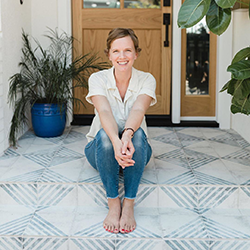
Elise Blaha CripeTwo years ago, I first interviewed Elise Blaha Cripe about how she developed her career as a creative professional. Someone who spends every day creating, shares her process with her tens of thousands of followers, and who has developed her own products.

She has a new book that will soon be published called, Big Dreams, Daily Joys, so I reached out to her to discuss the process of writing and launching her book.

I already knew that Elise had spent nearly 15 years sharing thousands of blog posts, hundreds of podcasts, and an endless stream of craft projects shared on Instagram. She didn’t just share her life and ideas, but in doing so, it became a sort of collaboration with her audience.

But it was interesting for me to talk to her about the book launch, how she got the book deal, and how she is promoting the book. She is focused deeply on her own goals, and focusing on what her readers need most.

In doing so, she turned down an agent who approached her about a different book to write. She turned down the inquiries from a major publisher. What did she do instead? She waited. She waited until she felt she had an idea within herself that was the book she wanted to write.

A year later she shared a series of posts on Instagram about goal setting and her audience really responded. Suddenly, she knew this is the book that her readers needed. The book that she had spent 15 years building towards.

Because she has been online for so long, she has been messaging with people one-on-one about their own struggles with creative process and creative goals. She described the book was her way of reaching out to all the people who messaged her over the years. I thought that was such a powerful way to frame the value of this book, and give oneself permission to write.

When I asked about marketing, the first thing that she said is that when she wrote the book, she shared her process of writing it with her audience. There are more than 100 slides on her Instagram of this — among them are literally videos of her standing there writing. She described it this way: “I like to work by sharing the entire thing as I go. Just sharing builds hype. Not telling but showing. Demonstrating how to get through a to-do list, or how I make decisions, sharing that process. I try to highlight the book – demonstrating why the content is valuable.”

She is showing up for her readers and simply sharing her own creative process. Her readers are infused in what she creates, even though it also singularly reflects who she is as a person.

What is amazing is that her support system is her audience. She is constantly messaging with them, sharing details of her creative process, and infusing what they tell her into her next project.

I’m so inspired by what Elise creates and shares. Below are links to her stuff. But first, let’s talk about someone else…

Sharing Who You Are

When Rick Beato was 54 years old, his intern said, “You should share these videos on YouTube.” Rick replied, “Nobody’s going to watch a white-haired guy on YouTube.”

What happened next is astounding.
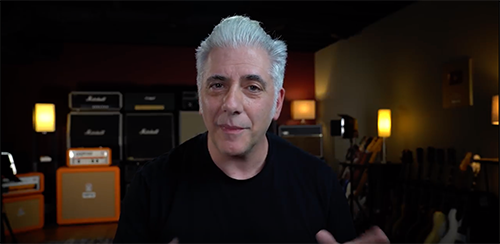
Rick Beato

You see, Rick spent his entire career studying music. He played in bands, he taught lessons, and then became a producer for other musicians. But he hit a rut. He describes it this way, “I was 54 years old, and really unhappy with what I was doing. [My work] was unbearable to me. I was trapped.”

He didn’t like the music he had to produce. He was tired of the grind of that kind of work. But he had a family to support, so he didn’t feel he had any other options.

Then Rick created his YouTube channel.

He started as we all do, he created one video. But then he did something that most people don’t do. “That first year, I made 340 more videos.”

Rick took everything he learned about music in his career, and simply shared it in videos. He read comments and replied to listener questions. He considered the mistakes that musicians always made, and sought to help others avoid those mistakes.

The result? He now has more than 1.1 million subscribers and makes YouTube videos full-time. He is well-known throughout the music industry, with a wide network of people who deeply respect what he has created.

He reflected on it this way: “It never occurred to me that this thing actually would be successful. This idea that in your mid-50s, you can change the course of your life, just by trying something out. It doesn’t always work. But if you don’t try, it is definitely not going to work.”

Here, Rick looked inside himself and shared who he was. He also carefully considered who is audience could be, and what they need most. That became not just what he created, but how he shared, and how his work connected with people.

Empathy and Marketing

Most writers know me for my advice on author platform, book marketing, and book launches. Yet in my blog, newsletter and podcast I talk a lot about creative clarity, building your creative support system, and developing rock-solid creative habits. Why?

Because marketing starts with empathy. It starts with knowing what you want to create and why. It requires you to know what will get in your way, and to challenge your own assumptions to move past impostor’s syndrome and other barriers. It means creating every day, and connecting with others as a human-being.

If any of this resonates with you, I want to remind you that tomorrow is the final day to register for my Creative Shift Mastermind, which begins Monday October 1. You will spend three months with me and a very small group of other writers and creators. I will give you direct feedback each day, and we will become your support system that fuels your creative growth.

Full details here.

Thanks!
-Dan

PS: Here is my most recent interview with Elise Blaha Cripe, and you can hear Rick Beato talk about his career here.

“Writing a book seems magical.” My Interview with Elise Blaha Cripe

Two years ago, I first interviewed Elise Blaha Cripe about how she developed her career as a creative professional. Someone who spends every day creating, shares her process with her tens of thousands of followers, and who has developed her own products.

Her new book is about to be published, Big Dreams, Daily Joys: A Step-by-Step Guide to Crushing Your Goals, so I reached out to her to discuss the process of writing and launching her book, and the advice she has for making creative goals a part of your every day life.

You can listen to the podcast by clicking ‘play’ below, or in the following places:

Here are highlights from our chat:

  • Elise said something that I often think about, but so few people admit: “Finding the inspiration feels good, but the work is boring. And uncomfortable sometimes. And you think you are terrible sometimes.” So many people stop creating because of that boredom. Because sitting in a quiet room by yourself, with a blank screen staring back at you can be more difficult to face than a distraction such as email, or the dishes, or nearly anything else.
  • When I asked about marketing, the first thing that she said is that when she wrote the book, she shared her process of writing it with her audience. There are more than 100 slides on her Instagram of this. She described it this way: “I like to work by sharing the entire thing as I go. Just sharing builds hype. Not telling but showing. Demonstrating how to get through a to-do list, or how I make decisions, sharing that process. Then at the end of those 8 slides, swipe up for the book. I try to highlight the book – demonstrating why the content is valuable.”
  • Specific book marketing and publicity actions include: recording a lot of podcasts appearances, doing some sponsored posts on Instagram and Facebook, encouraging her audience to pre-order the book, and providing enticements for them to do so. In general she said she is trying to make sure she shares about the book often, but without hitting people over the head about the book.
  • When I asked about what it is like to go from blogging and social media to writing a book, she said she struggled with impostor’s syndrome. For the content of the book, she did zero research on what works, instead she relied on her (very deep) experience of what works. Because she has been online for so long, she has been messaging with people for 15 years about their own struggles with creative process and creative goals. She described the book was her way of reaching out to all the people who messaged her over the years. I thought that was such a powerful way to frame the value of this book, and give oneself permission to write.
  • How does she feel a month before book launch? “Stress. I’m so used to creating something and sharing it immediately. For better or worse, the feedback is there. Also, because it is so immediately, there is always something coming next. If I share something on Monday and it doesn’t resonate, who cares, I’m sharing something Tuesday. The idea of a book that is permanent, which I wrote over a year ago, meaning I’m already a different person than when i wrote it, that’s hard. I’m anticipated it will be overwhelming with highs and lows int he first week.”
  • How Elise got a book deal: “Consistent sharing” is what she attributes to leading the agent and editor to her. An agent had reached out to her after being a fan of Elise’s podcast and has asked if Elise wanted to write a book. At the time, the topic they discussed didn’t feel right, so Elise passed on the offer, but kept the contact with the agent. Likewise, someone who worked at Chronicle Books had reached out to Elise about the planner business Elise has. She passed on that offer as well, but stayed connected to the publisher. A year later, Elise shared a series on Instagram about goal setting that got her “really fired up.” She realized this is what she wanted to write about, a guide to goal setting. So she emailed the agent, and then they pitched to the editor. So “sharing a lot,” is what lead to the book deal.
  • Elise said agents/publishers want books in categories that are already doing well. They don’t want a lone wolf outlier. This is challenging for writers, who often want to deliver something that feels brand new.
  • I loved this quote from Elise: “Getting a book deal seemed magical, and writing a book seemed magical.”
  • Her advice to people who struggle to create: “You have enough time. I heard this years ago, that when you say ‘I don’t have time for that,’ you could also say to yourself, ‘that isn’t important enough to me.'”

Here is my first interview with Elise from 2017.

Elise shared her process for writing her book, and saved the photos in this Instagram Story Highlight..

You can find Elise in the following places:
Her book: Big Dreams, Daily Joys: A Step-by-Step Guide to Crushing Your Goals
GetToWorkBook.com
elisejoy.com
Blog
Podcast
Instagram
Twitter

“This book launch, I’m going out there as my full self.” My interview with Kelly McGonigal

Kelly McGonigalToday, psychologist and author Kelly McGonigal is going to share with you a radically different vision of what it means for an author to connect with readers and prepare for a book launch.
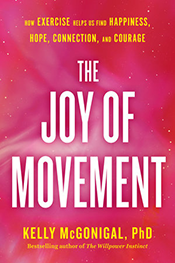
Her new book, The Joy of Movement, comes out in December, and she shares specifics on what she is doing and why. She also shares what having a viral TED talk with twenty million views, did (and didn’t) do for her career. Oh, she will also explain why she turned down an invitation from Richard Branson!

Highlights of our discussion are below, and you can listen to our entire conversation in my podcast by clicking ‘play’ below, or in the following places:

Here is some of the wisdom that Kelly shared in our conversation:

Turning Down an Invitation from Richard Branson

When I offhandedly mentioned that the result of a TED talk can be that you end up on a yacht with Sir Richard Branson, she said something astounding: “I did get an invitation from Richard Branson, but I turned it down.”

Who turns down Richard Branson?! Well, Kelly does. And her reasoning is inspiring:

“That wasn’t consistent with my goal. It wasn’t who I was or what I cared about. I wake up and my fantasy is that somebody will pick up one of my books or listen to an interview I do, and that single human being is going to have more hope as they go throughout their day, and deal with real-world challenges. That’s my dream. I feel like a lot of the trappings of creative success pulls you further away from that. Taking advantage of [an opportunity from Richard Branson] will not make me as happy as getting an email from somebody who says that my book, or something they heard in an interview help me feel more empowered to deal with something difficult.”

“I don’t want to scale”

So many authors feel pressure to increase the number of social media followers, or newsletter subscribers. In the process, they tend to ignore people right in front of them to reach for a bigger “audience.”

Kelly said every times she tried to do things that felt like “scaling up,” she found that as she got further away from being in a room with real people and directly helping, or producing something that only she can produce like her books, then the experience is not enjoyable.

“I don’t want to scale. You get further removed from the moment to moment experience that is actually meaningful.”

“Over the past few years, I have very consciously started turning down speaking opportunities that look amazing on their face. Instead of speaking to a thousand people I will never see again, I’d rather teach my dance class to people in my community, and construct a life where I do things that only I can do, and where I experience an immediate reward of connection.”

“Scaling up feels abstract, and I’m a concrete person. I want to feel what I did today had a visceral impact that I can sense on someone’s face or mood.”

Her Book Launch Strategy? Human Connection

Kelly has been a guest on the TODAY show multiple times, done those radio interview tours where you are interviewed by 100 stations in a 12 hour period, and so much more to promote her books.

But for her new book, she is taking a different path.

“Whatever it is people think you do for book promotion, I’ve probably done it. This time around, I am committed to doing events that are not solely about me and the book, and that give people opportunities to connect to people and resources in their community.”

“This book launch, I’m going out there as my full self, with everything that I love. I don’t think anyone has even seen that version of me yet. The version of me that is unabashedly enthusiastic about the content of my book.”

Kelly was very generous throughout the interview, telling me how my book, blog, and podcast helped give her permission to look at marketing differently. She put it this way: “Part of what your work gave to me was a sense of freedom of creating what I want — a dance party for the book event. I’m so excited for the book event.”

She explained how she is trying in an organic way to get her book to the people and communities who will make the most use of it: “A lot of what I’m trying to do is think, who can do something with this book? I know that is what makes my books successful in the long term, it is not the initial launch. I don’t do book launches that are about selling massive copies so that I can put ‘New York Times Bestseller’ on my tagline. I’m trying to create books that sell for years and years because they are helping people. My books will sell because people will find them useful, then give them to other people.”

Why Authors Can Be Their Own Best Publicist

A few weeks back, I shared my interview with Jessica Lahey, who described how she constantly sends out free copies of her own book to people. Kelly is approaching her upcoming book launch in the same manner. She and her publisher have already run out of pre-release copies to mail out, so she is planning to send her own once she can buy final copies of her book at publication:

“I feel like I’ve heard you say this before, and I find it to be true. Everyone thinks it’s better to have a formal publicity package sent out by your publisher, and I think the personal touch is much better. What I will probably do for this book is to write personal messages on a bookmark about what I hope the individual will enjoy or appreciate about the book, and a written card or note about what I appreciate about the work that they are doing. And just send it to them myself. That’s my plan. Get a discount from my publisher and buy a lot of books and mail them out.”

When I asked how she budgeted for this, her answer was incredible: “I don’t think of my writing as a business, even though it makes most of my income. Because it brings me so much meaning, I invest in it. I don’t have spreadsheets with budgets, I don’t want a marketing budget. What I want to do is make enough money as an author so that I can send people books. It’s totally backwards.”

The Best Tool Authors Have For Marketing: Gratitude

Kelly explains it this way: “Gratitude is an emotion that we think only makes us feel good but we know that gratitude is a social function to connect individuals and strengthen relationships. It is the easiest way to initiate a relationship or strengthen a relationship.”

She and I connected because she wrote me this amazing email thanking me for my book, blog, and podcast. When I asked about why she wrote me, she said that it was an assignment I had suggested in one of my blog posts! Funny how things come back around like that.

Kelly explains how she is thinking about marketing for this book: “I spent 2 days reading everything on your website. I was trying to re-engage with the idea of author branding. It seems like a good idea, but when you are actually in it, it can feel really gross. You had all of these amazing mindset shifts, like your article about the Radical Fake Homepage. I was talking about this to my husband: what would a website who actually represented who I am be like? You gave me a mindset reset that helped me engage in a way that has this sense of possibility.”

The Complexity of Collaboration With a Publisher

I always encourage authors to seek out collaboration in their work, and in our interview Kelly talked about how she has done that to make her books even better. But she also talked honestly about the complexity of collaboration.

For most of her books, she could not pick the cover or title. With her upcoming books, she described how she finally got the title and cover she wanted. What she has learned: “I’m more willing now to say ‘No, I know what this book is meant to make people feel, and I will fight for a cover and a title that communicates that.'”

In the interview, she describes the exact way that she worked with the publisher to create the cover and title of her new book.

What She Did (and Didn’t) Gain From Having a Viral TED Talk

When I asked about her experience having a viral TED talk with more than 20 million views, she said: “I am the great anti-spokesperson for the dream of giving a TED talk. My TED talk is one of the most viewed of all time, with over 20 million views. I had to be convinced to give it, for years TED emailed me asking if I wanted to do a talk.”

“I don’t know if it changed my life in any particular way. I was already publishing books, and had a book planned for the topic of my TED talk.”

The clearest direct outcome of the TED talk that she could point to? This: “When I was trying to get a mortgage, the broker had known about my TED talk.”

How She Became an Author

Kelly talks about how she became a writer by being so focused on teaching, and how that lead to book deals. “That is how my career as an author developed: I was just teaching people things I care about, and because I care so much about teaching and what I’m teaching and helping people, that it got attention.”

So much of what Kelly shared just inspired me. I encourage you to listen to the full interview via the links above.

You can find Kelly in the following places:
kellymcgonigal.com
Instagram: @kellymariemcgonigal
Facebook
Twitter: @kellymcgonigal

Her books:

Getting unstuck in your writing habits

Today I want to talk about what it really takes to get unstuck with your writing. I’ll dig into the reality of what you need to do in order to establish a writing habit that doesn’t only get words on the page, but provides a creative transformation in your life.

If that sounds big, that’s because it is.

Each day I work with writers in my Creative Shift Mastermind. Here, we do the real work of moving ahead with writing goals. The progress of the writers in the group is amazing. I want to share just three stories of what they have been doing in the past couple of months.

Kris Verdeck shared her experience this way:
“I’ve been writing this novel for about 10 years (taking long breaks when work overtook my life – 100 hour weeks that made my life about nothing but work.) Two years ago I left the corporate event planning world and those types of hours behind, yet I seemed to fill the hours with my new work and distractions. It hasn’t been until this past month, through the inspiration of the Creative Shift Mastermind, that I have have sat down for 2+ hours each day to commit to the revisions, to finishing this book, and to pitching it again to agents.

I’ve mentioned Jeannie Ewing recently about her writing progress once she joined the Mastermind. Here is an update on how she is getting words on the page:
“I’ve been a subscriber of Dan’s newsletter for years. I knew the Creative Shift Mastermind would be beneficial for me, but it never seemed to be the right timing. This past summer, I had the gut feeling that the timing was perfect. My identity as a writer has been shifting for a while, and instead of writing the books publishers wanted me to write, I yearned to write my book, the book of my heart – my memoir. I never would have started this project or taken this risk to step outside of my typical genre if it weren’t for the clarity and community in the Mastermind. I am over halfway finished with the first draft, and I started writing two months ago. It’s the first time in my life I feel a sense of freedom in what I write and in experimenting with my style, which might not have happened if I hadn’t joined the Mastermind when I did.

Tony Bonds shares his creative progress that doesn’t just extend to his writing, but to his entire career:
“The encouragement and support I’m getting from my experience in the Creative Shift Mastermind is immensely helpful, and is truly working to enact a creative shift in my life that has been a long time coming. When I joined this group in July, forming my own business was a pipe dream. Now here I am, setting hard goals, analyzing financials, my family is on board with my plans, and it’s like I’m finally unstuck and my life is finally moving forward. This is exciting!

Each of these people are incredibly busy with responsibilities: family, work, health, and so much else. How is all of this possible in just a couple of months?

Below are the ingredients of not just of establishing solid writing habits, but for a larger creative transformation as well. Yes, in my Creative Shift Mastermind I take you through each of these. But even if you never join, I encourage you to consider how you can make each of these items a part of your life:

#1 Radical Clarity
If you want more time and energy to be able to write and create, it begins with clarity. When you know exactly what you want to create and why, you are able to better leverage your very finite resources of time and energy. In the Mastermind, I not only take you through my Clarity Card process, I extend it’s power as a decision-making tool in your life. Without radical clarity, you are just managing to-do lists, which is a recipe for creative failure.

#2 A Support System
Most writers I speak to want their books and creative work to truly connect with others. When they worry about this not happening, they grow concerned over not understanding some kind of marketing or publishing trend. But those things don’t matter if you work in total isolation. Your creative work dies not because of trends, but in darkness. To shine light on it, develop a support system of collaborators. People who know you write, who you can get advice from, who hold you accountable, who believe in your abilities.

#3 Mentorship
Consider this difference between showing up to a 20,000 square foot gym by yourself… staring out at an ocean of equipment vs a personal trainer meeting you at the door with a smile, and guiding you through the best workout of your life. That is mentorship. Someone who is available to share expertise and guide you, answer every question you have, and personalize their advice for your specific goals and situation.

#4 A Clear Step-by-Step Plan
Too many writers collect information on how to move ahead with their writing, but they never create a plan that works. They collect notes and ideas gleaned from thousands of blogs, podcasts, webinars, courses, and events. While each piece is interesting, it never comes together as a clear and useful plan. I have found this myself in a wide range of creative endeavors. In my goal to learn to play the guitar, I can sample from thousands of individual tips via YouTube. But I have found nothing works better than having an instructor who takes me through a clear step-by-step process of what to do, and when.

These are the exact things I take you through in the Creative Shift Mastermind. If anything above resonated with you, please consider joining the next session that begins October 1.

This is where I work directly with you and a small group of 10-20 other writers. These are the creative collaborators you always dreamed of having.

If the Mastermind isn’t a good fit for you right now, I would strongly encourage you to take steps to infuse your life with the items I mentioned above. If you don’t know where to begin, try this:

  1. Radical Clarity: write down one small goal for your writing that you want to accomplish by January 1. Tape it to the mirror you look at in the morning.
  2. Support System: find one person who you trust and tell them your goal. Then tell them that if you don’t achieve your goal by January 1, that you will give them $100, or if they won’t accept it, you will donate $100 to their favorite charity.
  3. Mentorship: email me your goal and ask me one question where you think my advice would be most helpful: dan@wegrowmedia.com
  4. A Plan: Take out a calendar, it could be digital or paper. On each Monday between now and the end of the year, write one intention for the week that will help lead you to your goal. Check the calendar daily. You don’t need a perfect plan to begin — but you need to set an intention and stick to it. That habit alone will change how you create for the rest of your life.

Thanks!
-Dan

Choosing Your Own Path as a Writer, My Interview with Jennifer Louden

Bestselling author Jennifer Louden is about to upend your idea of what success as a writer looks like. She’s been a bestseller, she’s been on Oprah, and she’s been a successful author for more than 25 years.

But the wisdom she picked up along the way will surprise you. We dig into topics of book marketing, navigating your writing career, the creative process and so much more.

Some highlights of our conversation:

  • How she created word-of-mouth marketing for her first book, which sold 50,000 copies in the first year: “I planned my own book tour, I planned my own workshop tour, and I went on the road for 3-months in my parents’ Ford Taurus station wagon.”
  • One of her books landed her on Oprah’s show. But she says: “It wasn’t the experience I always hoped it would be. I hoped she would say “You are the best thing since sliced bread, you are amazing!” And when she didn’t say that to me, I really went through a long dark period. What was hard for me about the Oprah experience is that I thought that would finally make me feel legitimate. That I was going to be anointed in some way.”
  • How did she get on Oprah’s show? She says, “I had had friends who became household names from going on Oprah. I had people email Oprah, we pitched it.” But that’s not how she got on. She asked a staff member of the show said, who said, “Oh, I picked your book out of the slush pile.”
  • Her first book remains her biggest seller. She said “That has been really painful at times. To feel like you can never outdo that success.”
  • How she got a book deal? Publishers loved the title, but not the draft of the book. In Jen’s own summation, she called the draft “boring and pretentious. But two of the people wrote back and suggested how to write it differently. She went back and found her very first notes when the idea for the book came to her, and she developed it in that original voice. Something that can from within her, not trying to make the book sound like someone else. She described it this way: “There is an original spark that is ours, it’s easy to lose sight of that when you begin reading what experts tell you to do. What is the spark that lights you up.”
  • Before she found success as an author, she explains how she was a “failed screenwriter” first.
  • After 25+ years as a successful author, she said her most recent book took years to write, and went through several iterations that completely failed. Her conclusion: “This is the process of being creative.”
  • She was really open about discussing finding the inner strength to choose her own path, and turn away from everything she was told she “should be.”
  • I asked her what it was like when she first realized that her writing was actually helping people, she said, “In all the years of doing this, all the books, all the courses, all the retreats, I didn’t let myself feel that. That’s only happened in the last 7 or 8 years, where I really claimed the role of teacher and helper. I think I’ve had a fear that I’m a better teacher than writer, so embracing my teaching self was really scary to me. We have these complicated senses of our identity. Sometimes we have to let go of our identity, even a successful one.”
  • When I asked about when she started her business, she said it did’t come until much later: “For so long, I lived in the story of “Someone has to choose me.” Now she says she never ever wants to wait for someone to choose her again. “I’m going to be the most profitable that I’ve ever been this year.”
  • I love the story of what her dad said when she got her first job out of college. Her dad as a driven entrepreneur. Jen to her dad:”Dad, I got a job!” Her dad’s reply: “Why did you do that, I thought you wanted to be a writer.”
  • Even with all of her success, she feel she could have chosen a path for her books that was more authentic to who she was, “I made my living for 15 years, mainly from my writing, and some speaking. So that’s amazing. But I wish I would have looked at it differently with follow-up books.”
  • I love her advice for how to find success with your creative work: “We don’t know what works, but I do know what doesn’t work: staying alone in your office.”

You can listen to our entire conversation in my podcast by clicking ‘play’ below, or in the following places:

You can find Jennifer in the following places:
jenniferlouden.com
Twitter: @jenlouden
Facebook
Instagram @jenlouden