A Masterclass in Human-Centered Book Publicity. My interview with Seale Ballenger.

Today’s episode of The Creative Shift podcast is a masterclass in human-centered publicity. I speak with Seale Ballenger, who is the Publicity Director at Disney Publishing Worldwide. He has worked with legendary writers, and shares his experience of what publicity looks like within the publishing industry. He has worked within Random House, Simon and Schuster, HarperCollins and many other publishers. What Seale shares isn’t just useful, but truly inspiring. 

You can listen to the podcast by clicking ‘play’ below, or in the following places:

You can find Seale in the following places:
LinkedIn
Twitter

Common pitfalls authors should avoid

I spent this past week helping 700+ authors better understand author website essentials.

In the group there were lots of conversations and questions. It was a great reminder of how confusing it can be to be an author trying to be public with their work, and how easy it is to step into common pitfalls:

  • It’s easy to focus too much on technology, not enough on communicating with other human beings. While I absolutely understand that there is a learning curve when it comes to creating a website, I think the more important skill to master is to better communicate with your ideal readers, and develop a trusting relationship with them. What you say on your website and how you use it is critical to its effectiveness. For the technology: keep it simple, so that it doesn’t get in the way of communication and trust.
  • Many people are nervous about claiming their identity as writers. I hear this one a lot. For instance, I will speak to a writer who has had more than one book published by a respected publisher, and they will say, “But I’m not really an author.” To many writers, creating a website may feel that they are bragging. For so many reasons, I strongly encourage anyone who writes to claim their identity as a writer. A website is just one way to do that.
  • Too often, writers wait (and wait and wait) for the “perfect” moment to launch. I hear this a lot from writers who resist talking about their writing: “I don’t have a book out yet, what would a website even say.” In other words: they hide. They think there is some perfect time to “launch” their website or their platform as an author. That perfect time is always right now.
  • Many writers have a fear of success and/or suffer from impostor syndrome. A website highlights the “public” side of “publishing,” which can make someone really nervous. The result? Many writers avoid creating their website, and thus a primary way they will be found or connect w/ someone. It’s like LinkedIn: when is the last time you looked at or updated your profile? When is the last time you Googled yourself? A website can come to represent the fear that many writers have about being public with their writing.
  • It’s difficult to resist getting sucked into “best practices” and trends. In my book, Be the Gateway, I encourage writers to avoid best practices. Now, I’m not unaware that basic tutorials for skills you don’t yet know can be wildly helpful. But too often, I see people become overwhelmed by following trends. For instance: “I’m building a juicy lead magnet to grow my email list!” Or, “I was told I have to blog, ugh. But I’m going to do it anyway.” Or, “Websites are dead. Newsletters are dead. Blogging is dead. It’s all about Instagram Stories right now!” These types of things can make the idea of developing an author platform all feel like scary work. Instead, it should be a joy. One way to encourage that is to not become overwhelmed with marketing trends and “best practices.”

To the writers I worked with this week, my advice was always: keep it simple. Focus on how to best communicate what you write and why, and how to develop trust with readers.

But I know the advice I shared can only help someone so much. Oftentimes, the best way to move forward is to work with someone directly so that you can build the website together.

I created a new program to do exactly that. If you want to launch or improve your website, please considering joining me for this 4-week program where I will give you direct feedback and advice, and we will develop a customized plan for your website. I’m only opening this up to 15 people. I provide lots of personal attention, so I strictly limit enrollment. If this sounds interesting to you, you can find more information (and register!) here.

The writers I have been working with this past week have inspired me. Each of them showed up to invest in their creative vision, and connect it to the lives of other human beings. This is timeless work, and an opportunity each of us has each day.

Now, I know pretty much nothing about fashion, the fashion industry, or Karl Lagerfeld himself. But in reading his obituary this week (by writer Vanessa Friedman in the New York Times.), I was struck by the persistence of his creative vision. I printed this out and hung it on the wall of my studio:

“In his 80s, when most of his peers were retiring to their yachts or country estates, he was designing an average of 14 new collections a year. “Ideas come to you when you work,” he said backstage before a Fendi show at age 83. As a result, Mr. Lagerfeld never stopped creating. Though rumors often circulated that Mr. Lagerfeld was sick and about to retire, he never did. He had a lifetime contract with both Chanel and Fendi, and he exercised it. “Please don’t say I work hard. Nobody is forced to do this job, and if they don’t like it they should do another one. People buy dresses to be happy, not to hear about somebody who suffered over a piece of taffeta.”

To all of you showing up to your writing and sharing it with the world, I just want to end by saying: thank you.
-Dan

P.S.: My newest podcast is now live: “I was allowing people to talk instead of me.” Inside the Creative Shift of Comedian and Author Nina G

“I was allowing people to talk instead of me.” Inside the Creative Shift of Comedian and Author Nina G

In this week’s episode of The Creative Shift podcast, I talk to comedian, author, and speaker Nina G. She walks us through the moment when she made a profound creative shift in her life:

“I was allowing people to talk instead of me. I cleaned house and started a new life.”

She was working in academia for more than 15 years, teaching at colleges. But in her mid-30s she was reminded of her childhood dream:

“I wanted to be a stand-up comic since I was 11 years old. It was my dream. For other girls in middle and high school, they were into New Kids on the Block, and I was into stand up comics.”

“As a kid, this is the one thing I had over everybody else. I wasn’t very good in school, the teachers had very low expectations of me, but I had a sophisticated palette for comedy. So I was able to accelerate there and be into something that no one else was.”

In this interview, we talk about the details of how she made that shift, how she pursued comedy, wrote her upcoming memoir, and we dig into her creative process.

You can listen to the podcast by clicking ‘play’ below, or in the following places:

You can find Nina in the following places:

Is my writing good enough?

A writer emailed me a question the other day:

“The thing I struggle with most is the fear that my writing will stink. The fear comes from my tendency to compare my (theoretical) work with things I read, which tend to be classics — some of the best works ever created. I would enjoy any discussion related to this “tyranny of comparison” when it comes to writing.”

I hear versions of this a lot from writers and artists, including those who are very successful with their craft: “Is my writing good enough?” What I have found is that many (most?) people deal with this. Today let’s talk about how to move past the fear that your work isn’t good enough and how to better manage comparisonitis.

Dealing with Comparisonitis

Social media and the web can be wonderful tools to connect us. But they can also become an unending stream of “Wow, look at all of these amazing things that other people are doing! Hmmm. Maybe my work isn’t good enough compared to them.”

For a writer or artist, it is easy to scroll through social media and feel that there is so much great work out there, that perhaps there is no room left for what you create.

In truth, there is plenty of room for what you and your creative vision. The question you ask shouldn’t be “Is my work good enough?” But rather, “Is my work good enough for me to move forward and grow as a person and a writer?”

Because that journey happens one step at a time.

Meera Lee PatelI try to dig into this topic with successful creators I speak to in my podcast. When I interviewed illustrator and writer Meera Lee Patel, I asked her if she deals with comparisonitis. She replied: “It is an absolute daily struggle… you have to push it aside and make the work you want to make.”

It’s worth noting that Meera’s work is incredible and she is able to make a full-time living as a writer and illustrator. I highly recommend her books:
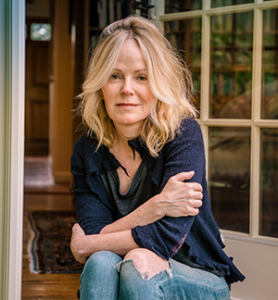
Dani ShapiroOne of my favorite quotes from a writer talking about the success and the creative process comes from Dani Shapiro:

“Not only does it not get any easier, it actually gets harder.”

What she means is that we hope that success makes creating easier. That the validation of being a bestselling author removes the doubt that we may feel in our work.

But that isn’t what happens. She continues:

“There isn’t one single piece of writing that I have done in the last 20 years, that did not begin with my thinking, “Here goes nothing, this time this is not going to work. Whether it’s a book review, an essay, a blog post, or a book. That feeling that I’ve bitten off more than I can chew here.”

You can listen to my interview with Dani here.

I highly recommend her book Still Writing: The Perils and Pleasures of a Creative Life, plus her newest book, Inheritance: A Memoir of Genealogy, Paternity, and Love, is another bestseller for her.

No One Knows What Will Work

I watch a lot of music documentaries. What astounds me is how often a song will be created, and everyone will say, “This just doesn’t work. No one is going to like it. You shouldn’t even release it.”

But then it does get released, and it goes on to be a massive hit.

Some examples of this I have heard recently from the music world:

  • Jack White tells the story of the moment he created the riff for his song “Seven Nation Army.” You may not know the song, but you will have heard this riff. This is the moment he created it: My friend Ben was with me at and I wrote the riff for Seven Nation Army. I said, “What do you think of this?” Ben said (in a disinterested dismissive voice), “Meh, it’s okay.”
  • In the middle of a 4-hour documentary I watched about Tom Petty, he talked about the moment his longtime drummer started to move away from the band. The drummer just wasn’t feeling good about the new songs, and chose not to play on the recording session for the next song they were doing. It turns out that song was “Free Falling,” which went on to become one of their biggest songs.
  • In the 1970s, Meatloaf and his band had recorded the album “Bat Out of Hell,” and it was rejected by every record label. No one wanted anything to do with it. It took more than a year, but they finally got a record deal, and it went on to sell more than 40 million copies.

This is why I study the career paths of successful writers and artists. Their journeys are filled with unbelievable stories. Did you know that after NBC had developed the show Seinfeld, they decided it didn’t work. They offered to simply give the show to the Fox network free of charge. Fox said no!

If you are looking down at the page of what you just wrote and thinking to yourself, “I love this, but I just don’t think anyone else will,” please remember that this feeling is a natural part of the creative process. They key to success is to keep going.

The Only Failure is if You Don’t Create

The most important thing is that you continue to create. You continue to improve your craft. You continue to share your work. Here is some advice on how to move through the fear that your creative work isn’t good enough:

  • Develop your creative practice. Don’t judge your work constantly, instead double-down on how much time and energy you can put into it. Create more. Create often.
  • Share your work. The more you hide your work from the world, the more likely you are to feel that your work isn’t ready, isn’t good enough, and that they only way to ensure it will succeed later on is to hide it right now. Share your work. Austin Kleon has a great book that digs into this: Show Your Work! Oh, I have a book on this topic too! Be the Gateway: A Practical Guide to Sharing Your Creative Work and Engaging an Audience.
  • You need colleagues. Don’t isolate yourself. Knowing other creators will keep your anxieties at bay because you have a support system. This is something that nearly every professional writer and artist I speak to has. It’s also the reason I have spent years developing my Creative Shift Mastermind program, to help writers develop meaningful connections to other creators, and me!

Yesterday I was watching a guitar instructional video with John Mayer. He was illustrating how he had done his own cover version of a famous song. He ended it by saying, “Being a guitar player, we all think we can pick up someone’s style and be just like them. But we can’t. We are our own little bad imitation of it. You are not good enough to sound like Jeff Beck. Instead, you are good enough to sound like you, but with a little of that Jeff Beck flavor in it.”

I’ll end with one of my favorite videos of all time, about the value of investing in your own unique creative vision. It’s a video that is less than 2 minutes, that I must have watched hundreds of times over the years.

Thank you.
-Dan

Why Marketing (Your Writing or Art) Matters. My Interview with Author and Professor Tim Calkins

In this episode of The Creative Shift with Dan Blank, I speak to Tim Calkins, Clinical Professor of Marketing at Northwestern University’s Kellogg School of Management. We discuss the cornerstones of marketing and his experience in launching his latest book: “How to Wash a Chicken – Mastering the Business Presentation.” We dig into his book launch strategy, what worked, what didn’t, and what he will do differently next time. 

You can listen to the podcast by clicking ‘play’ below, or in the following places:

You can find Tim in the following places:

Some highlights from our conversation:

  • Why he changed his title from “The Art of Business Presenting” to “How to Wash a Chicken.”
  • “To have any hope of standing out, you have to be different, unique, interesting.”
  • “Marketing is important because everything we do revolves around other people, and hoping other people respond in certain ways.”
  • He talks about whether you are marketing a new salad dressing or a book, there are similarities: you are concerned with asking how to get it out there, how to illustrate the benefit, and how to get people to pay attention.
  • “Marketing is about the response, and getting people to care.”
  • The difference between marketing years ago and modern marketing: In the past, the goal was a purchase. Now, it is very focused on word of mouth and sharing. “It’s one thing to get someone to pick up a copy of a book. It’s anther to get them to share it.”
  • He suggests you start marketing on a small scale, one person at a time. “If you think you will publish a book and thousands of people will find it, that isn’t going to happen for the average person. You have to go person to person, and hope it builds over time.”
  • He talked through how he planned his own book marketing strategy. “When putting together a marketing plan, you have to think about the big initiatives you are going after.”
  • He focused his initial efforts on those he had close connections to: his students, then his personal network, then Kellogg alumni, and then finally, reviewers. He asked himself, “Who do I know, and how do I get those folks engaged? Then I focus on the next circle out from there, and then the next.”
  • “The most effective [book marketing] thing I’ve done to date is to email 200-250 people that I had a personal connection with and talk to them about the book. The reality is, most of those people are happy to hear from you, and they would only be offended if you didn’t tell them about the book. It’s a reason to touch base with people.”
  • “Your book is worth talking about, and it’s okay to talk about it.”
  • He takes us through the specific ways he reached out to people throughout his book launch, and what he hopes to improve for next time.
  • The toughest part of his book launch.