Anxiety and sharing

Today I want to talk about the anxiety we feel when we share. So much of the work that I do is to help writers feel a sense of purpose and strategy in sharing their books, their writing, and their mission. But there are often hidden emotions and psychology which stops us from sharing, delays us from sharing, and makes us feel bad about sharing.

That’s not good.

I believe sharing helps your writing and art change people’s lives for the better. So I want to address the anxiety head on, because anxiety tends to thrive in silence. Let’s dig in…

All the Anxiety, All of the Time

What can anxiety around sharing look like? Well, here is a partial list:

  • Fear of saying the wrong thing.
  • Fear that you don’t have enough to say.
  • Fear you will start marketing too soon. Or too late.
  • Wanting your work to be seen, but also having a fear of it being seen.
  • Wanting to share your work, but not look like you are sharing your work.
  • Feeling impostor’s syndrome: that by sharing, you are exposing yourself as a fraud, because “real writers don’t worry about marketing” or some other narrative.
  • Fear of negative reaction from others.
  • Fear of overly positive reaction from others.
  • Fear of looking like you are showboating or gloating.
  • Fear of looking self-involved and egotistical.
  • Not wanting to come off as pretentious. But also not wanting to come off as shallow.
  • Dealing with your own inner critic.

I can go on. I have to imagine that some of these will feel familiar to you. They do to me. It is easy for this anxiety to get the best of us, preventing us from sharing our writing. But I want to remind you that anxiety is not always the reality.

The Narratives In Our Heads

I was chatting with a writer recently about the fear they had around sharing on Instagram. It was this: the fear of being seen as too self-involved. That if they shared about their life, their thoughts, their experiences, that it would look like they vying for attention. Inherently, we don’t want our friends, family, and colleagues to judge us in a negative way. And of course, we don’t want readers to either!

I posted a video this week where I explored why we don’t share what we create with those we know:
 

Sometimes that judgement comes in an overt manner, someone saying to you: “I think it is a waste of time for you to write a novel.” But more often, it comes as subtle judgement. Watch the video to hear me doing voices of the mildly disapproving family member.

How You Share is a Craft

I believe that how you share is a craft. It is something you learn and get better at, just like writing. I study this. This week I was watching a video that I would like to use an example of understanding how someone finds a way to share. Okay, so if I told you “there is this Gen Z influencer who has 10 million followers,” what do you think her videos would look like? Maybe you would say something like, “Oh, I bet they are TikTok dances, because all the kids love that. Her videos are definitely short because people have short attention spans nowadays. There’s probably quick cuts, and of course, the hottest song would be playing in it.”

All of those assessments are based in logic of what we hear is “popular nowadays.” Yet it is the exact opposite of what Emma Chamberlain shares, and the exact opposite of what her audience of Gen Z and millennials wants.

Who is Emma Chamberlain? She’s a 21 year old creator who owns a coffee company and has nearly 16 million followers on Instagram, a wildly popular podcast, 10 million followers on YouTube, etc. Why am I talking about her? Because what she does upends everything we are told we “need to do” to be successful online. Why? Well, let’s start with this:

Emma had 10 million followers on TikTok. Then, she found it to be distracting, so she deleted her account. Not just the app off her phone, but she deleted her entire TikTok account. The username she had is now gone, her followers are gone, her videos are gone. And she felt great about it.

I mean, imagine that? You run a coffee company, TikTok is the hottest social network for your core customer base, and you just… delete it. She has that choice. We all have that choice. Does that means she stopped sharing? Nope.

Instead, she is focusing on longer, slower content. The video of hers I watched this week was her 13 minute video titled “24 hours in the south of france.” Here are some reasons why it is the opposite of what you would think of for Gen Z content that gets millions of views:

  • A 25 second intro of location shots to set the scene.
  • Slow instrumental music from an orchestra.
  • One of the opening lines: “I need to be honest and tell you I have been wearing this outfit for three days.”
  • She has a camera person for this video. Who is it? Her dad.

The entire video just shows her exploring, shopping, and eating. There is an odd sense that you are spending the day with her as a friend. And perhaps that is why she has such a large fanbase of people who love what she shares. I mean, just look at the comments on the video… all 7,000 so far:

“I can’t even put into words the peace and comfort that Emma brings with her videos.”

“there’s no one like emma. the way she rediscovered her passion and the way she’s finding what makes her the most happy doing… I’m just so happy.

“Emma I know you won’t see this, but I love the way you literally just found yourself and stuck with your authenticity!! It’s amazing, you make me so happy and inspire me.

Then there is her podcast. What is her most recent episode about? The latest trend? Nope. It’s her reflecting on the nature of criticism, how she experiences it, and how she tries to benefit from it, instead of suffer from it. Her podcast episodes are incredibly honest, and often deal with issues around mental health. Again, her fans love her honesty.

Yet, the fears I listed at the start of this essay about why we don’t share can still apply to her. There are portions of the video where she is in the middle of the street, reflecting on how people perceive her. In the middle of that street, there are no millions of fans. There is just her dad pointing a camera at her, which she is talking to.

If you want your writing to have a positive impact on people’s lives, sharing is an essential part of that process of connection. Will it sometimes feel like a risk? Yes. Should that stop you? No.

I can’t promise you that sharing will be easy. But when you approach it like a craft, I think that we face our anxiety head on, and in doing so, learn more about ourselves and what it means to truly connect with others. In the process, we each become someone who lives a life filled with conversations around themes that matter to us, and connect with like-minded people in inspiring ways. And that’s not a bad goal.

Do you experience anxiety in sharing?

Thanks.

-Dan
“I have at least 1,000 rejections…”

Author Fleur Bradley shared this recently: “I would say I have at least 1,000 rejections, though I stopped counting long ago. My advice: surround yourself with fellow writers at the same stage as you. Successful writers have a clan, to keep their spirits up.”

Fleur’s advice came in response to Debbie Ridpath Ohi’s question on Twitter:

“Are you a traditionally published kidlit/YA creator who was rejected many times before getting your 1st book contract? To encourage others going thru rejections, pls reply with #rejections and/or one piece of helpful advice.”

Debbie created a wonderful post on her website that encapsulated the feedback she received on this question. There are so many replies that include a large number of rejections. But also many that challenge our own perception of what we hope success looks like, like this one from Jilanne Hoffmann:

“Was in the triple digits of rejections before getting my agent. My 1st book on submission went to auction very quickly BUT here’s the thing—everything since then has met with either outright rejection, lovely passes, or lost out at acquisitions. My advice? Don’t give up.”

I imagine we all like to think that if we can reach a big milestone like having our first book go to auction, that this means our 2nd and 3rd and 4th books will do equally well or even better. But in talking to so many writers and creators over the years, I know that everyone’s path is different.

There are so many amazing responses to Debbie’s original post. This one by Diana Urban sums up so much about the process:

“Here are my stats prior to getting my 1st book deal:
4 times on sub, 3 agents, 5 editor R&R requests, 120+ editor rejections, 130+ agent rejections. Don’t wait for the industry to accept you. Keep honing your craft. Always be reading, always be learning, ALWAYS be writing.”

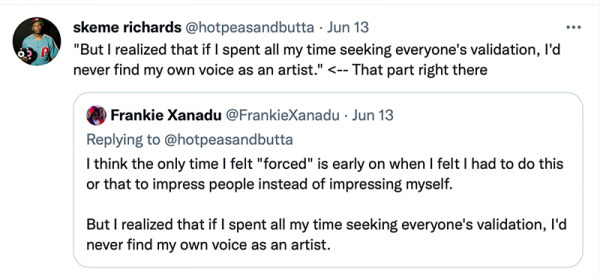
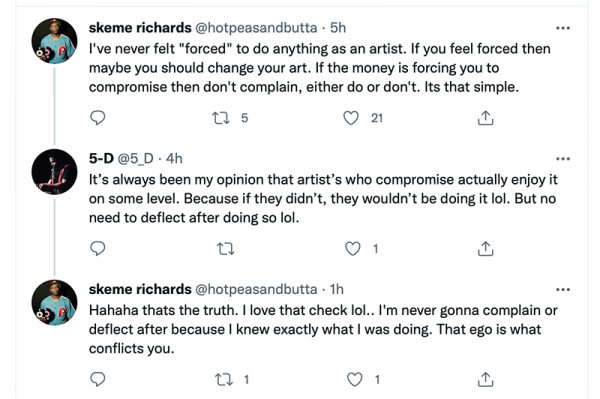
So much of this can complicate our own relationship with how we create, how we publish, how we share our work. Recently Skeme Richards was reflecting on the nature of compromise in how we create and share (you can hear my interview with Skeme here):


Here is another reply he received:


How we create, how we publish, how we share is often much more difficult to navigate that it may seem. For so many writers and creators I speak with, they invest in their creative work because they want to write a novel, or memoir, or help and inspire others in some way. They want their work to reach their ideal audience, but they worry they don’t know the best way to connect their art to someone’s heart. So they struggle with creative decisions, with choosing a publishing path, with deciding the best way to show up and share their work through marketing.

And each path may not seem obvious to them.

This is normal. Navigating this is the work of pursuing creative work professionally.

A few weeks ago I had mentioned I was doing a deep dive into Quentin Tarantino interviews. In the process I found this clip where he talks about the 8 years of failure he experienced in trying to break into filmmaking. He put it this way:

“Whatever success I’ve got, comes after 8 years of nothing working out. Up until 1991, any luck that I had was either no luck, or bad luck. Everything was just a big buildup to a horrible letdown.

There were years spent recording footage that wasn’t good enough. The screenplays he couldn’t sell. He would make a deal with a studio, but it wouldn’t work out. But then he says something huge:

“When you stop asking permission, and take destiny into your own hands, things start to fall into place.”

Quentin stopped compromising. He refused to change his scripts by even a word while negotiating with studios. The result are some very polarizing and controversial films. But that also afforded him to have one of the rarest careers in all of film: to determine what he will make and how he will make it. He has final cut, which almost no director has in Hollywood.

It’s worth noting that if you are a writer, you have final cut. You get to determine what you create and how. You get to determine how you publish and how you share your work. In the process, you get to determine where you will, and where you won’t, compromise.

This is why I am an advocate for all forms of publishing. I work with many authors whose books are being put out by big traditional publishers, by small presses, by hybrid publishers, and of course, those who are going indie. To me, this is magical, that you have the choice. Yes, that means there is more responsibility on your shoulders to pursue the path that feels right to you at the time. But also that you get to choose your path is so inspiring to me.

There are pros and cons either way, and you have to decide your values and the process you want to be a part of. You also have room to grow and change over time. Even the most successful creators of all time can choose a path, but then find a way to change course so they don’t have to compromise ownership or control of their work.

One of the most genius ways I’ve seen someone do this is from Taylor Swift. I do not know all the details, but from my understanding, her earlier albums were created as most musicians are: the artist sells their creative rights to a record label. Then, that label controls the music, and can sell those rights to others. This happened in Taylor’s case, and the person who bought her music rights was the absolute last person in the world that Taylor wanted to own them.

Then… she did the unthinkable.

She is in the process of re-recording and re-releasing all of her earlier music. The new versions are eerily similar to originals, and in many cases, recorded to an even higher quality. She is releasing each album, each song with these parenthesis next to them:

(Taylor’s version)

This is the note to her fans, that if they support her work, this is the version of her music that they should support. This is music she owns. She controls. She earns from. I’ll say it again: this is absolute genius. Here she is, taking back permission, taking back control.

The path you choose in how you create, how you publish, and how you share is your own. To me, all of it is a craft. And this is one of the many reasons I love working with writers: to be on the journey with someone as they create what matters most to them, and connect it to someone else who will care just as much.

Thanks.

-Dan

Can an introvert get good at marketing? (podcast)

Boundaries actually make better art, and help you get better at sharing what you create. We all have boundaries. We all have preferences that feel like they are rules set in stone. The one I run into most often is this: “I have a hard time sharing because I’m an introvert. Marketing just isn’t for me.” Today I want to discuss the value of embracing your creative boundaries.

You can listen to the podcast by clicking ‘play’ below, or in the following places:

You can watch the episode here:

Ever feel like the creative process is a total mess?

Sometimes the creative process can feel like a total mess. So can your efforts to share your writing with others. Today I want to share a case study about that, with the hopes that it gives you a sense of permission to keep going, even if you feel that how you create and share lacks the clarity and structure you hope for.

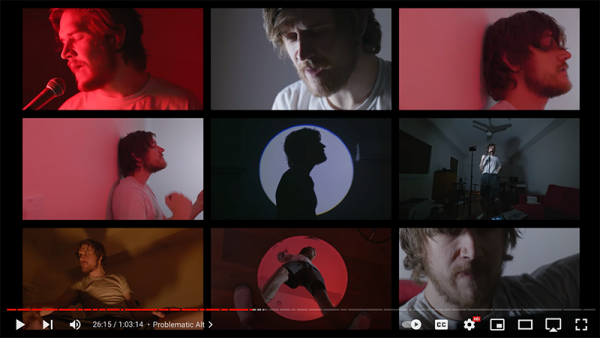
A few months ago, I wrote a post on 23 lessons to learn from The Beatles about the creative process. Today I want to do a similar case study, but with a creator who is not nearly as famous as The Beatles. I had written about this person a year ago when he released a comedy special on Netflix. It was an hour-long video filmed in one room by himself during the pandemic.

Well, he recently released another video that shows behind-the-scenes outtakes from creating his comedy special. I want to talk bout that today. Even though he focuses on songs, comedy skits, and video, I think this example is applicable to someone who is writing a novel, or trying to grow their author platform via a newsletter. Deep down, the creative process and our ability to market our work to others is less about the specific medium, and more about the human-centered process of creating art and having that impact the lives of others.

There are so many ways the creative process can be messy: how you land on the idea of a book you want to write, how you get the words down on the page, and how you get to a finished piece you are proud of. In the work I do with writers and creators, I help provide a system for how to share what you create with a sense of authenticity and strategy. We create a step-by-step plan that fits within their otherwise busy lives. We focus on clear goals, but also a fulfilling experience.

But, just like the creative process, sometimes the sharing process is messy. And that’s okay. Today I want to explore why that can be useful to you. If you feel like so often you feel like you have no idea what you are doing and your “strategy” is a disaster, maybe that’s good!

(Oh wait, one big caveat first: the video I’m talking about is by Bo Burnham, who is a comedian. He intentionally crosses lines in his comedy and presents skits as characters. Honestly, aspects of his comedy will likely offend you. So I’m not even going to link to it. I will write the piece below without you needing to watch his videos or like his comedy. If you do want to see the videos, you can search for “Bo Burnham Inside” or “Bo Burnham Inside Outtakes” in a search engine. I’m not here advocating for or against his content. I’m featuring it because it is an instructive look at the creative process.)

If you are wondering why I’m focusing on this guy and this video, its worth noting that his comedy special did pretty well:

  • It won him a Grammy award.
  • It has been the #1 selling comedy album on the Billboard charts for an entire year.
  • Songs from this special have tens of millions of views on YouTube.

In other words: this comedy special was ridiculously successful. Even though in every screenshot I share below, it likely won’t look that way. It will look like some random guy sitting in a room by himself. Which is exactly why I thought this was a great example for how we can all feel as we create and share our writing and art. Okay, let’s dig in…

“Trying to create while stuck in a room.”

“Trying to be funny while stuck in a room…” is the theme of one of the songs Bo sings in the special, ruminating on feeling isolation while creating. That’s what all writers and creators do. To create something magical from quiet solitude, and perhaps even, boredom.

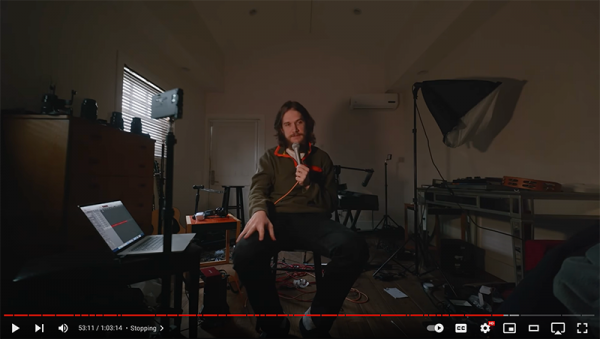
He recorded this in one room. From what I can tell, it a small building in his backyard, that consists of one big room, a small kitchen, and a bathroom.

As the video progresses in his hour-long comedy special, you see time moving as his hair getting longer
the mess growing around him. At the start, he has short hair and he has some beard stubble. By the end, his hair is down to his shoulders, with a long beard.

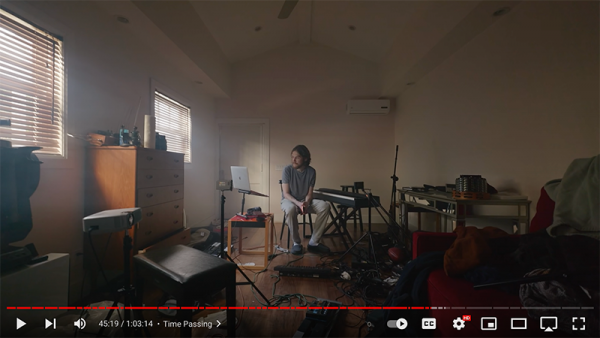
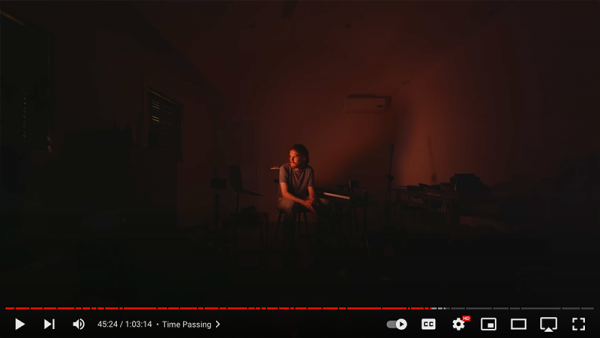
There are many shots from the outtakes where Bo seems to intentionally want to make himself look pathetic as he tries to create. Shot after shot of him in a messy room, looking bored, and then another shot that just holds on him doing something ridiculous. Or a shot of him checking his phone, because he forgot to stop filming. Here is an example, two back to back shots, one in the day, one in the night, with him doing the same thing: checking his computer as he prepares to film something:


What I see here is that, in trying to create something that we feel speaks to who we are, that we hope truly brings joy to others, can be a long process of us sitting alone in a room. Not knowing if our ideas will work. Where we may even feel unable to reach the level of craft that we dream of.

Yet, this is the work of what it means to create something meaningful.

Sharing Takes Effort To Present Your Ideas and Yourself

When we try to share our creative work, there is a similar challenge. We try to follow the “best practices” of sharing often, with authenticity, feeling like you have some great system, and that it all results in a sense of confidence and fulfillment.

But, it doesn’t often feel that way.

In Bo’s video, he shares the behind the scenes of how he is sharing. You will see him walking from the camera after clicking ‘record’ or walking to it in order to stop recording. This is the work of sharing. It isn’t just a charismatic person capturing a natural moment. It takes effort to present your ideas and yourself.

Bo’s original comedy special was filled with songs and skits. In the outtakes, I see so many entire lighting effects or shots or ideas that never made it into the final video. Ideas he clearly spent hours on, testing and performing. And it ended up on the cutting room floor.

To a creator who is trying to share effectively, this can be discouraging. So many times over the years I’ve heard a writer say, “I just wasted three hours on my newsletter, trying to fix something.Ugh!!!!!” That’s unfortunate, and it’s easy to think, “Oh, these other successful writers don’t waste their days on technical issues with a newsletter. I’m pathetic. I’m doing it wrong. This is a waste. Why do I even need a newsletter?”

But again, this is the work. Why I’m writing an entire piece about Bo is to illustrate that. Here is someone who is very successful creating a video that will be very successful. And the entire process — to him– is filled with uncertainty, dead ends, and frustration. Is that the only way to create? Nope! Is it common if you experience it. Yep. So don’t feel bad about that.

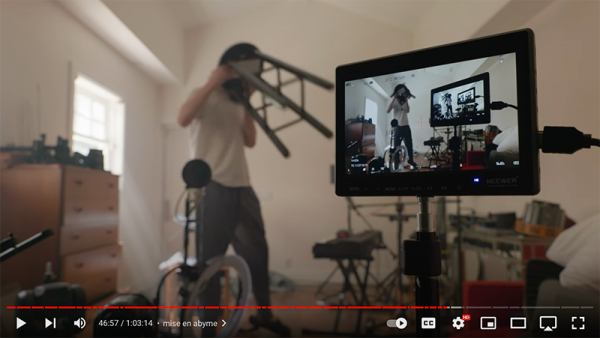
In the outtakes, Bo shares entire segments of him just moving furniture to setup a shot. Even the framing is something he thought about here. My interpretation: “This is me setting up a shot for how you will see me, for how I will share.” Which is why the camera shows him in the background, and a video monitor in the foreground:


Progress Always Feels Distant

In the outtakes, Bo shares a scene where he addresses the camera directly: “I’ve been filming for a month now, and don’t have anything that is even close to usable yet.” But little by little, he created songs and skits he was satisfied with. Progress sneaks up on you. There is rarely a one-to-one ratio of “I tried something and I’m instantly rewarded with a sense of progress!” Return on investment for our time in creating and sharing is slow. It can take weeks, months, or years. But it is there.

You see the passing of time with quick cuts of him with short hair, then long.

Near the end of the outtakes, Bo addresses the camera again: “I’ve decided I’m going to stop doing this. I’ve been trying to finish this special for many months now. I keep thinking that I’m done, I’ll write an ending and I’ll film an ending, then I’ll edit it and I’ll watch it, and I’ll feel like I’m not done, I have to do something else. I feel like I’m waiting for some big idea that will tie it all together and make sense of it and satisfy me. But I don’t think that’s going to happen. And the more I wait for it, the more [expletive] I feel, and look. I realized the only way this thing is going to stop is if I stop doing it. Goodbye.”


How You Create is a Craft. So Is How You Share

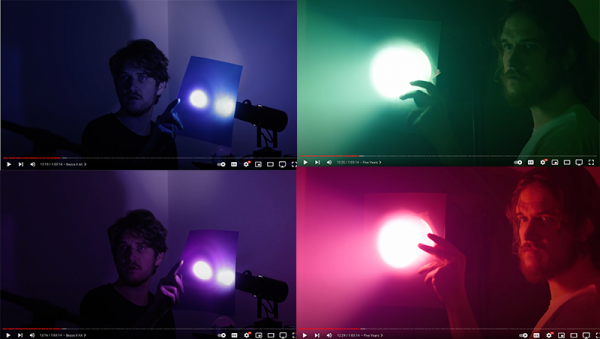
Throughout the outtakes, you see Bo testing the effects that will later appear in the final special. You see the ridiculous number of takes he has to do for each shot, but also setups: unique lighting, camera angles, etc.

Here is a montage that encapsulates so much about the craft of how we create and share. Here Bo is holding up colored lighting filters to see how they look in the room. In the first two, his hair is shorter. In the next two his hair is long. This is the boring work of craft. Here he is 10+ years into a successful career, at some odd hour of night still deciding: “purple or blue?” Then choice to show himself doing it with the longer hair illustrates: this work is never done. You always have to spend time on the details of craft. In your writing, you could be 12 books into your career and still struggle with basic dialogue, character development, book structure, or rewrite a sentence 100 times and still feel it isn’t right. In a newsletter, it could be draft after draft before you click “send.” This is the work.


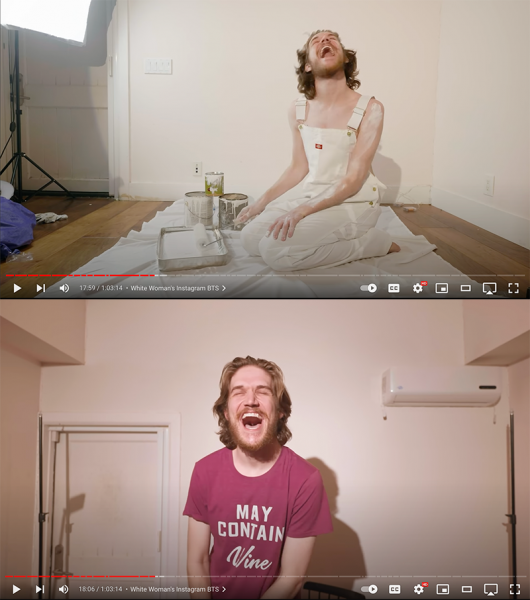
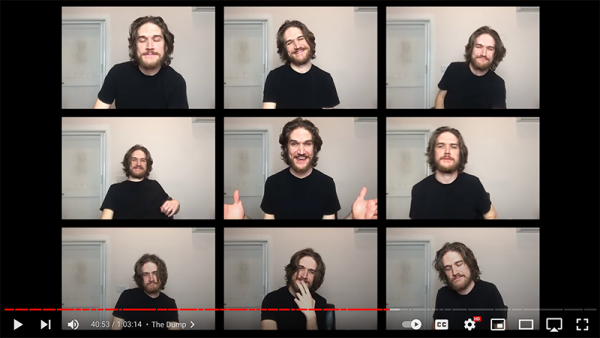
At one point, he shows behind the scenes of filming that don’t include the songs that these images are meant to be a part of. Watching someone performing like this (without the music) really shows the inner workings of the creative process, and how it can just look desperate when piecing it together. Just a guy fake laughing by himself in a messy room, take after take after take:


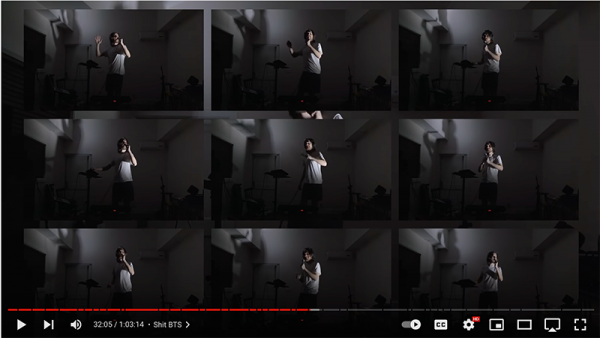
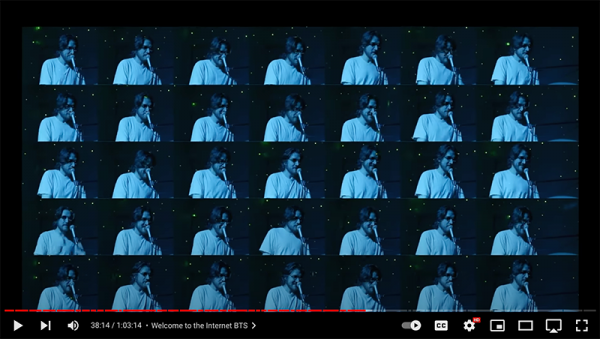
Later, he shares multiple takes of the exact same portion of a song. Of course, in the end, most nearly all of these shots weren’t used. For his art, this is both the creation of his work, but also the sharing of it. The songs are already recorded, so his performance is how he will share it. He could have just released an album with no video.

So if we consider a writer who wants to share a video on Instagram, they may do multiple takes too. But they may think, “Is this self-involved? Shouldn’t it just be natural? Shouldn’t I just be writing? Is this all for silly likes and gaming an algorithm?” Yet, much like Bo, it can be an essential part of the craft of how we share. These are all different takes for the same moment in each song. Doing the same thing again and again and again to get it good enough:


Finding Your Public Identity Is Difficult

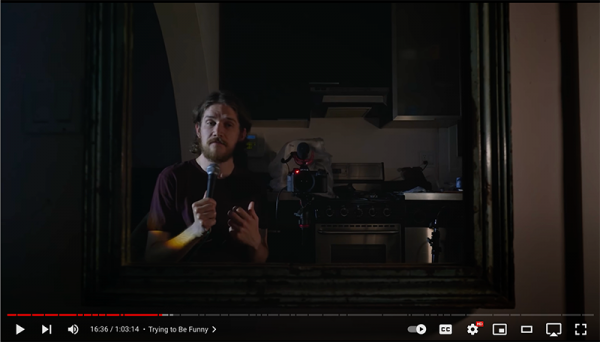
Much of Bo’s performance feels personal, where you see him obviously performing in some sketches, then supposedly seeing the “real” Bo behind the scenes. But in truth, it is never clear if the real Bo shows up in any of this. Is the behind the scenes a performance too? Is everything Bo shares in character? Or, characters? Is that the point he is making? He presents shots like this, which look more impromptu in his kitchen, looking directly at the camera, and making seemingly confessional personal reflections:


Yet, it is never clear if he is playing a character. I feel like he is. But it’s easy to conclude the opposite.

So many writers struggle with this to. How to present themselves online in a way that feels cohesive and approachable, but not in a fake and premeditated way. Bo started his career sharing videos from his bedroom as a 16 year old, back in 2006. I think more than most, he has evolved his sense of what needs to remain personal and what can be public.

Bo doesn’t do a lot of interviews or publicity anymore. I think he presents the work as the art, and his personal thoughts and experiences as private. Many of us would like to choose that same avenue. “Shouldn’t the work just speak for itself?” we may ask. But I don’t want to ignore the work he did to gain his initial audience. to sustain it. To give himself a platform and career. And how much of himself he put into creating these new videos.

Of course, to create and share your work, you take on many roles. In one skit, Bo takes on the role of a talkshow host, interviewing the entire creative team of the video he’s making. All of the roles are played by Bo because he created this award-winning comedy special by himself:

  • Director
  • Writer
  • Editor
  • Cinematographer
  • Composer
  • Producer
  • Hair and makeup artist
  • Star


And this is something that many writers and creators bemoan. That they are expected to do so much. The flipside of how to look at this is that we get to do so much. Years ago Bo would have had to wait years to produce this. It would have required a dramatically bigger budget. It would never have turned out the way it did. Is that better? Worse? Well, it’s art, so who can say.

But Bo found himself on lockdown in 2020, and made this. It won him a Grammy award. It is the bestselling comedy album. I don’t know how many times the entire video special was streamed or how much he was paid. But on YouTube, one song has 81 million views. Another, 33 million views. Another, 25 million views.

It’s easy to look at someone like this and just say, “Oh, Bo is just massively talented. He would be successful no matter what.” Yet what he shares here is the work involved. He showcased the mess and uncertainty that many of us feel as we create. And to me, that feels welcome.

Ever feel like a mess in how you create and share?

Thanks.

-Dan

Can an introvert get good at marketing?

Today I want to discuss the value of embracing your creative boundaries. And how boundaries actually make better art, and help you get better at sharing what you create. Let’s dig in…

Limits Help Art

I’m reading Keith Richards’ autobiography, and when he discusses making the Rolling Stones’ most successful albums, he talks about how limits make the process much better from an artistic standpoint. Keith embraces two different creative limits:

  1. He’s a guitarist and songwriter. A guitar has six strings. Keith removes one of them. So here is a guy writing music for a famous rock band, which would traditionally want the biggest sound possible, and he’s removing the low E string. Which string is this? Well, in my experience, this is the string that many rock musicians rely on most. It’s a deeper sound and packs a big punch. Keith literally removes it from his guitars.
  2. In recording albums, he prefers to use an 8 track recorder. What this means is that to record a full band, each sound would have it’s own track that would then get mixed down to the song. So maybe drums on one track, lead vocal on another, etc. Nowadays, you can really just have unlimited tracks during recording. He put his preference for the 8 track limit this way: “[Using] sixteen and twenty-four tracks.. made it much more difficult to make records. The canvas becomes enormous and it becomes much harder to focus.” For Keith, less is more.

I spend so much time researching how successful writers, artists, and creators have found their version of success. What do I find time and time again? Their art took a massive leap forward when they faced creative boundaries. When they didn’t have access to seemingly essential tools. When they lost what felt like an essential ingredient to their process. When they had a ridiculous time limit. Or some other barrier that easily could have caused them to stop.

But they didn’t. They thrived. That limit was what they needed for a massive leap forward.

We All Have Boundaries

This applies to how we share as well. We all have boundaries. We all have preferences that feel like they are rules set in stone. E.G.: “Oh, I would never talk about myself on social media, that’s so gauche.” Or, “Everyone I know hates email. Sending a newsletter would only annoy people. I won’t do it.”

The one I run into most often is this: “I have a hard time sharing because I’m an introvert. Marketing just isn’t for me.”

Now, I will say this up front: every one of us is unique. Only you can determine what you are comfortable doing. I’m encouraging you to be open minded, but in the end, I respect that you have to do what feels right to you. That said, I would encourage you to embrace your boundaries. And in doing so, find a way to move towards your creative goals even with those boundaries.

I am a massive introvert. Much of my day is spent either:

  • Locked in a room by myself.
  • Locked in a house with three other people who I love dearly.

And I thrive like this. I’ve heard the introvert thing summarized like this: “introverts are depleted by social interactions, extroverts are filled up by them.” For myself, I do find that after I give a big online presentation or have a series of back to back phone calls, I need to take a nap. Yes, I’m a napper. Every day, for well more than a decade. I love naps.

But of course, that doesn’t mean I don’t like people. I love people! And I actually love connecting and having deep conversations. I mean, if you have ever met me, seen one of my workshops, or listened to my podcast, you hopefully get a sense that I love talking with people and am incredibly passionate about the connecting with writers, artists, and those who create.

It would be easy for me to say: “I’m an introvert, therefore I can’t put myself out there on Instagram.” But three thousand posts later, clearly I can. Or to say, “Do not ask me to be on video, I’m more comfortable in real-life conversations.” Yet I have recorded and shared thousands of videos over the years. And, I really like it, here’s one. I’ve made my own version of introversion work for me. I have embraced my boundaries, and in doing so, use them to ensure I can still create and share.

My boundaries are not meant to limit my life, but allow me to show up more fully to what matters most.

These limits have allowed me to show up with total presence and authenticity. You have your own version of all of this. I’m sharing my experience simply to illustrate that one can have serious preferences and still thrive in how they share and connect. My entire week is spent chatting with writers! I meet new people all the time! And I’ve developed ways to do it that feel comfortable for me.

Embracing Your Boundaries Helps You Share With Authenticity

To share with a sense of authenticity, I would encourage you to impose limits. This helps stave off a sense of feeling overwhelmed. I have this conversation with writers all the time, that in embracing how to share their writing, they are trying to master so many skills at once. It’s a lot. Take it one step at a time. Sometimes I think of it as a literacy… learning how to communicate what you create and why, learning how to write a newsletter (and how to send it), how to share on Instagram, how to send an email to a podcaster, how to ask for a book blurb, etc. The potential list of tasks for developing your platform as an author can be long.

The solution? Do less. Consider how you share as a craft that you develop. So perhaps instead of being active on Twitter, Facebook, Instagram, and a newsletter, you pick just one of those to focus on for awhile. But then, you show up all the way. You view it as a craft, not a tasks you do begrudgingly.

Or perhaps you flip how you think about social media, Instead of thinking of it as a way to gain attention for your writing, you view it as a tool to celebrate the creative work of others. So you promote other writers, you reply back to them in supportive ways, and you wake up each day considering how you can truly make a writer or reader feel seen today.

Recently I wrote about this topic in a post titled: Want to grow your platform? Do less. It’s applicable here. I also recorded a podcast version of that, so you can hear me talk about it. Then I recorded a video of that:


Yep, that’s me the introvert sharing via text, audio, and video. And loving it. I respect my boundaries and preferences. But when I consider how I want to spend my days — supporting writers and creators — I find ways to still create and share even with those boundaries.

As you consider your own goals in how you share what you create, I would simply encourage you to explore this for yourself.

Thanks.

-Dan