“The support of my work often stopped at a Facebook Like.” My interview with author Leigh Stein

Leigh Stein did something that few writers do: she talked publicly about how many copies her books have sold. Her novel sold 8,000 copies. Her memoir that followed it sold 1,345 copies, which was hugely disappointing to her. In particular because it came out at a time when she was running an organization of 40,000 people. We dig into the highs and lows of the writing life, and what she learned in publishing fiction, memoir, and poetry. Plus we celebrate the sale of her new book to Penguin!

You can listen to the podcast by clicking ‘play’ below, or in the following places:

You can find Leigh in the following places:
leighstein.com
https://www.instagram.com/leighstein/
https://twitter.com/rhymeswithbee
Her books on Amazon

The joy and the risk of clicking publish

As a writer, there is this moment you dream of: the moment of publication.

It used to be that the moment of publication was a rare event. The publication of your book, after years of crafting it. The publication of an article after months of writing and trying to getting it placed.

But now, the opportunity to publish surrounds us. The little screen in your pocket begs you to publish something, right now.

Yet the act of clicking publish is still a highly charged one. It can fill us with extraordinary joy, or incredible anxiety and apprehension.

This morning, I’ve been considering things that have published recently that I’ve been a part of, and what I’ve learned in the process:

I Have Published More Than 1,500 Videos

The other day I realized that I’ve clicked publish on more than 1,500 videos. Here is a tiny sampling of them:
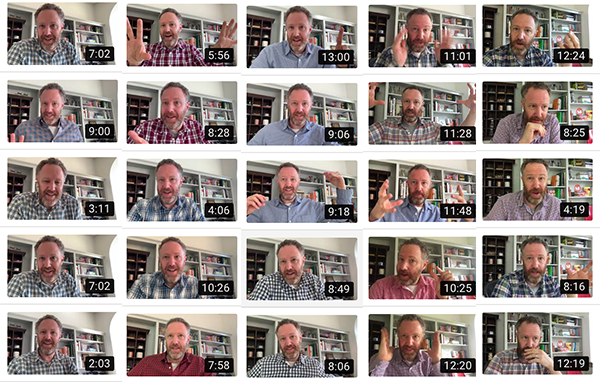
They are all videos I have shared with the writers in my Mastermind and other online programs. Through these videos, I provide direct feedback on a daily basis.

In the early days, I would be nervous when doing a video. I would spend an hour setting up my chair, the background, the lightning. I would do different takes.

But now, I tend to record at least two videos a day. Of course, I have honed my process, the tools, the lighting, the background, and my preferred tone and structure for the videos.

More than that: the act of clicking publish on these videos is about me communicating with another human being.

With all the hype of digital media, the most profound impact that I have found is not the gadgets, tools, channels, and services, but simply the way that clicking publish allows me to better communicate with another actual person.

Bringing Together 14 Agents and 700 Writers

This week I helped an author client click publish on a Literary Agent Summit — an online event featuring 14 agents and editors.

You can get free access simply by registering here before Monday. It’s a pretty amazing resource.

The author is Alison Taylor-Brown, who I shared a case study from on another Summit we did a few months back, as well as this inspiring post: Choosing the Writer’s Life. The Literary Agent Summit is her third online event, and it’s incredible for me to assist in helping her click publish on it.

That act has allowed her to meet and spend time with 14 agents, to help 700 writers on their own publishing journeys, and there will be loads of emails and feedback with her and those people over the next week or two.

For Alison, clicking publish will not just share information, but help books be born, and assist in people connecting with each other around them.

An Actual Book! (From a Friend)

My friend Teri Case just published her most recent novel: In the Doghouse.
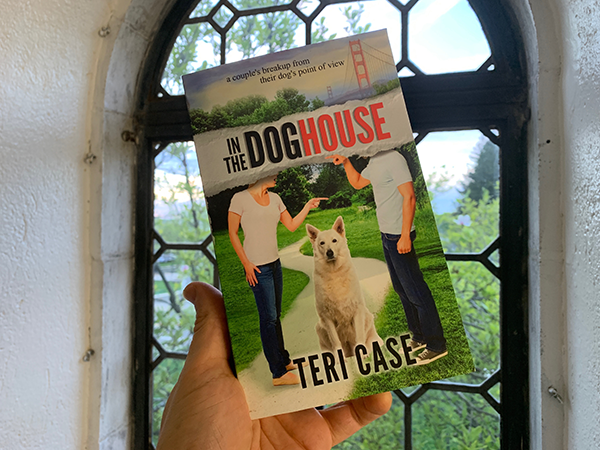
What hand did I have in publishing this? Zero! It is all Teri. But… again and again I noticed people supporting her who I know she met in my mastermind or other programs.

Teri clicked publish a thousands times in the lead up to this book. On blog posts, newsletters, emails, social media updates and so much else.

I’ve featured Teri in a couple other case studies on my blog:

To me, her book is a reminder that clicking publish is about showing up to be there for other people. The writers she has met have showed up for her, and she has shown up for them. This week, we are celebrating the publication of her book, but it is also a symbol of that human connection.

Even though there is a single author’s name on the cover, and that author deserves all the credit, they are often surrounded by an incredible support system that becomes a part of that book’s story.

Sometimes Clicking Publish Means Taking a Risk

This week I clicked publish on a new episode for my Creative Shift podcast. I was kinda nervous about this one.

You see, it was a weird diversion in terms of topic. I interviewed author Brian Heiler who runs the PlaidStallions.com website.

Our discussion? About his lifetime dedicated to collecting and writing about 1970s toys.

Yep. I told you it was different.

I was so excited to talk to Brian, but I felt I was taking a risk. My audience is comprised of writers and artists, where does this podcast fit for them? When I reached out to Brian, that is exactly the first thing he said to me: “How do I fit into this?”

I didn’t have a clear answer. I told him I was a fan of his work and I outlined what I hoped to speak with him about. He was game, and his reasoning was fascinating: he wanted to push himself outside his comfort zone.

I had to click ‘publish’ on this with two feelings:

  1. Incredible joy because I loved the conversation.
  2. A bit of apprehension knowing that most of my audience would find this a strange topic.

Some highlights of the interview: He blew me away when he told me that in order to do the layout and design for the book he wrote, he went to night school! In our conversation we discuss how he developed an online community after years of engaging offline with fellow 1970s toy collectors and fans. We dig into how he sustains blogging for so many years.

Oh, and we talk about the time his dad came home with 5,000 General Urko dolls from Planet of the Apes. I mean, this is not an episode that you want to miss! You can listen to it here.

Clicking publish on this podcast reminds me that this is not always a strategic act. It is one that allows us to explore our curiosity and make connections with other people that may not always fit into some perfect little box.

I have found that clicking publish becomes a part of the creative process. One that doesn’t just create a piece of media (a book, a blog, a podcast, a summit), but that creates powerful moments of connection between real people.

Over time, that provides a deep sense of fulfillment and adds a richness to our days.

Thanks.
-Dan

A Love Letter to the 1970s, My Interview With Author Brian Heiler

In this episode of The Creative Shift podcast, I share something completely different. I interview author Brian Heiler about how he developed a thriving online community around his love for 1970s toys and pop culture. He runs PlaidStallions.com and is the author of the book: Rack Toys: Cheap Crazed Playthings. I can’t even express to you how excited I was to chat with Brian. He blew me away when he told me that in order to do the layout and design for the book he wrote, he went to night school! In our conversation we discuss how he developed an online community after years of engaging offline with fellow collectors and fans. How he sustains blogging for so many years. His rules for collecting that without hoarding or going broke. Oh, and we talk about the time his dad came home with 5,000 General Urko dolls from Planet of the Apes. I mean, this is not an episode that you want to miss!

You can listen to the podcast by clicking ‘play’ below, or in the following places:

You can find Brian in the following places:
plaidstallions.com
https://plaidstallions.blogspot.com
His book: Rack Toys: Cheap Crazed Playthings
Instagram: @plaidstallions
YouTube
Facebook
megomuseum.com

An Incredible Marketing Case Study, with Author-Illustrator Lori Richmond

“The most interesting marketing opportunities are those that are unconventional.” That is how author-illustrator Lori Richmond sums up the case study we are about to present here. In today’s episode of The Creative Shift podcast, we take you step by step as to how Lori discovered a way to get her work seen by more than a million people in the middle of New York City.

You can listen to the podcast by clicking ‘play’ below, or in the following places:

You can find Lori at the following places:
http://www.loridraws.com
https://www.instagram.com/loririchmonddraws/

Here are some highlights of our talk:


“The most interesting marketing opportunities are those that are unconventional.”

That is how author-illustrator Lori Richmond sums up the case study I’m about to present here. Lori and I sat down to discuss how she discovered a way to get her work seen by more than a million people in the middle of New York City.

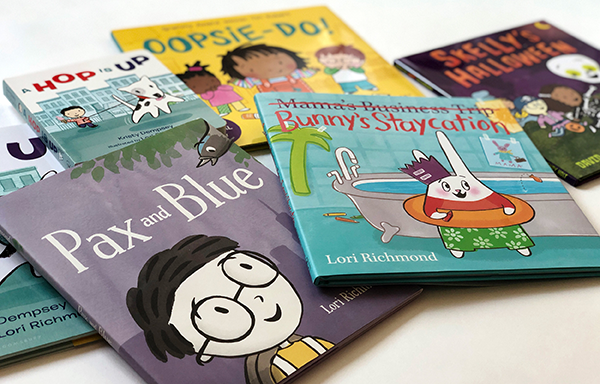
You see, Lori is an author and illustrator. She’s had a whole bunch of kids books published in the past few years:
Lori Richmond Books

Plus she does illustration and design work for clients and private commissions. Recently, she started this little side-project that she calls View From My Run. She describes it like this:

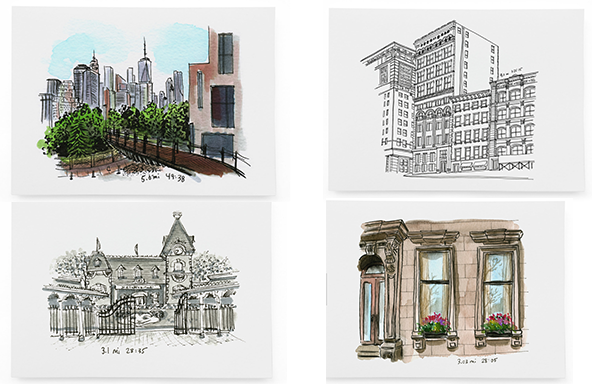
“I combine my athletic and artistic practices by drawing something I see on each run, in the same amount of time as the run. This ongoing art series is a visual journal of my training—and my love letter to New York City.”

Here are some of those illustrations:
Lori Richmond Illustrations

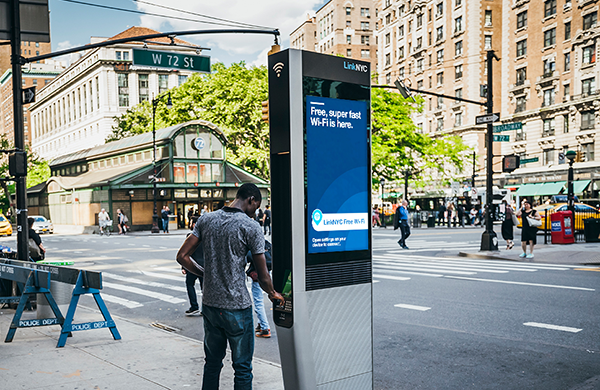
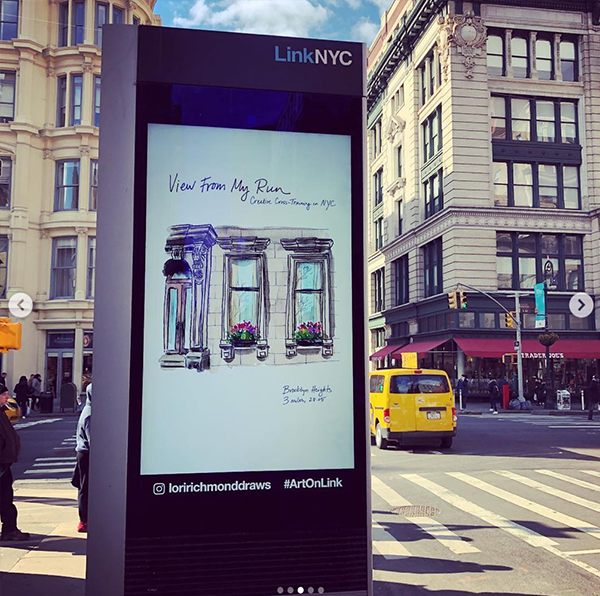
So, a couple months back, she’s walking on the street in New York City, and she sees this:

It’s basically a kiosk that has replaced all of the old public pay phones that used to line the streets. It gives out free wi-fi, acts as a charging station for your phone, and gives you information about New York City.

Now, you and I see this and we think, “Meh, my phone is charged already.” Lori saw this and said:

“Why isn’t my stuff on there?”

Meaning, why isn’t her New York City-centered artwork being displayed on these kiosks? I asked her how she made that connection, and she said that in publishing so much work recently that, “I’ve developed a bit of fearlessness.”

There wasn’t a phone number on the side of the kiosk that said, “Artists! Display your work here! Call this number….” So she started working her network, reaching out to friends and colleagues to see if they knew anything about these kiosks, she searched online, and eventually she found some contact information.

Now two points I want to make here that you can use for your own marketing efforts whether you are an author, an illustrator, or do some other creative work:

  • Be an observer of the world around you. Look for interesting connections. In the photo of the kiosk above, do you know what I see? A thriving New York City intersection with lots of interesting people, stores, architecture, transportation, and food. Somehow, amidst this, Lori didn’t just see the kiosk (which I would have overlooked), but she connected it to her artwork. She saw the possibilities that thousands of other illustrators missed.
  • Be prepared. Lori was ready for this opportunity, having spent hundreds of hours creating the View From My Run idea. There are many version of the quote: “Luck favors those who are prepared,” and this is a good example. She had art ready to go that very minute. She didn’t see this kiosk and think, “Maybe I can pitch them on the idea of a series of illustrations I can create from scratch.” She had dozens of display-ready files ready to send them.

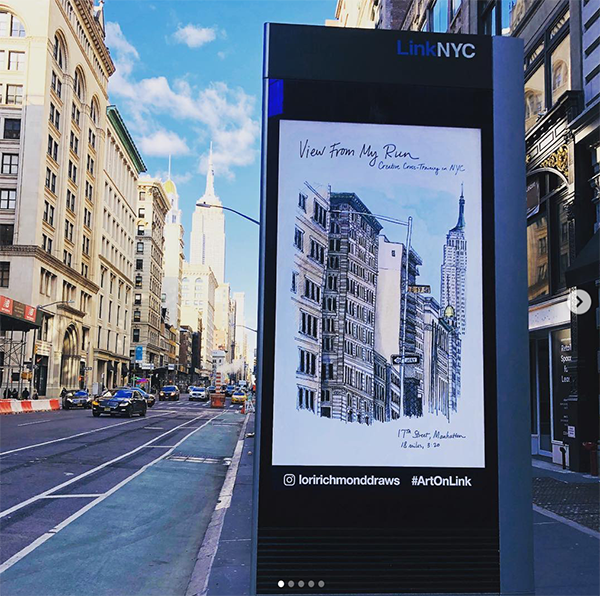
Lori did reach out to the people who manage the Kiosks, which are called LinkNYC, and pitched her idea, “Can you display my illustrations on your kiosks.”

They said yes!

Take a look:

And here is another:

Let’s talk about the results of this effort. I am sharing this as a marketing case study, so let’s talk about ROI — return on investment.

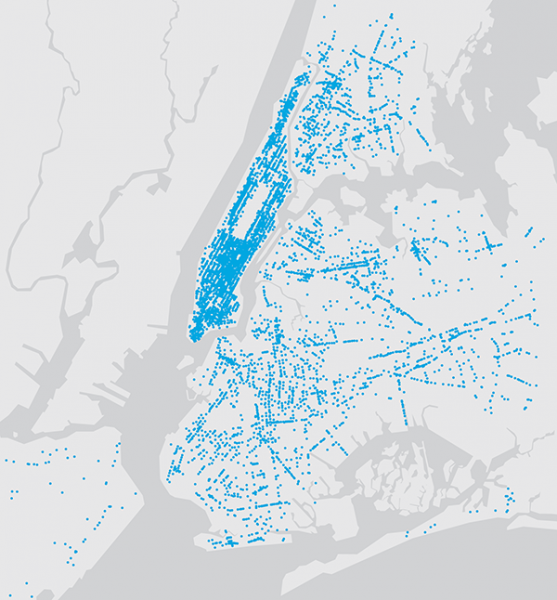
They agreed to display 8 of her illustrations on the 1,700 kiosks that are placed throughout the 5 boroughs of New York City. We did some back of napkin math:

  1. 8 pieces of art.
  2. Images on the kiosks rotate every 15 seconds or so with ads, messages, and artwork.
  3. Let’s say that 1 kiosk displays Lori’s work every minute.
  4. Her artwork was up on the kiosks for two weeks.
  5. New York City’s population is estimated to be 8,398,748, and in Manhattan alone, it is estimated that there is a weekday daytime population of 3.94 million people.

I feel like it’s possible to say that over two weeks, hundreds of thousands of people likely saw Lori’s artwork, perhaps more than a million. Lori’s illustrations appeared on every one of these 1,700 kiosks (each blue dot is a kiosk):

I mean, imagine this kind of exposure. Lori has a friend who put it best: “New York City is your museum.”

Another result is that Lori was able to take the photos I shared above (plus many others) of her illustrations being displayed on the streets of New York City. She can use that in all kinds of ways for marketing and branding purposes.

She had friends seeing her artwork on the kiosks and sharing it on social media.

More direct results from a business standpoint: a few people reached out to her about potential collaborations and commissions. She shares some details of that in the podcast of our chat.

I asked her why she didn’t consider asking for money from LinkNYC for this? I can easily see someone say, “they are displaying your artwork, you should get paid.” Lori’s reply: “If you don’t give your stuff away, who will see it?” Does that apply to everyone’s work all the time? Nope. You as a creator get to choose when and how you are okay with that. In this case, Lori’s motivation was different.

Perhaps this is the biggest “result.” When I asked why she wanted to have her art on the kiosks, she said that she wanted her kids to see her artwork featured in the streets of New York City.

Once it was, she said this: “I felt a lot of gratitude.”

I mean, isn’t that the best result?

Oh, okay, one more….

A week ago, Lori reached out to me and said, “I was just recognized in the bathroom at Whole Foods.” Meaning, someone noticed her like she was a celebrity.

She continued, “I saw this woman looking at me, and a minute later we wound up at the sinks at the same time. She looked again, and finally says, “Are you on Instagram?”

It turns out, the woman recognized Lori from a NYC Marathon group they are both a part of online, and this woman had previously bought a piece of Lori’s art!

Now, this is not a direct result of the Kiosks, but it is a great reminder that:

  • Marketing happens fluidly online and offline. There is no such thing as just a “Facebook strategy” for marketing.
  • The kiosks are just one part of the larger View From My Run project/brand that Lori has been developing. She has run workshops on it, done collaborations and so much else to support it. The results are often not seen at the micro level, “Did the kiosks give me ROI?”, but rather on the macro level. Over the course of a year or two, there is a cumulative result of all of her efforts. And one of those results is getting recognized by a stranger in a Whole Foods bathroom!

You can listen to Lori and I chat through all of this here.

Thanks!
-Dan

Craft and Connection (and David Bowie)

Reminder: Today is the deadline to register for my new program: Blogging & Email Newsletters for Writers. Get direct feedback from me each week to develop or improve your blog/newsletter strategy. Register here.


I’ve been hearing a lot of advice from successful creators recently that I think may be chilling for you to hear. Like this from musician G.E. Smith:

“It doesn’t matter if you are talented. The most talented people probably don’t make it. [Success is based on] an endless series of coincidences and luck. And having the natural ability to be able to get along with people.”

That’s terrifying to hear, right? Well, today I want to dig into this topic:

  1. Craft comes first.
  2. But… who you are connected to matters if you want to find success.
  3. Then I share specific ways to connect with like-minded people that feels genuine to who you are.

Okay, let’s dig in:

Craft First

There is no question, that your craft comes first. Your ability to write what matters to you, and to do that well.

Your craft is your ability to create.

Your craft helps you develop your voice.

Your craft becomes a body of work.

Your craft provides a sense of personal fulfillment in the creative process.

Your craft helps others see and experience the world (and themselves) in new ways.

This always comes first.

But Having a Professional Network Matters Too

I read about this study that was conducted of early abstract artists, and the finding was interesting:

“While past studies have suggested that there is a link between creativity and fame, Ingram and Banerjee found, in contrast, that there was no such correlation for these artists. Rather, artists with a large and diverse network of contacts were most likely to be famous, regardless of how creative their art was.”

They created this visual to show how the artists in this time period were connected to each other:

Wow! For many writers, you may feel distant from anyone else who creates work like you do, and it may feel like yet another impossible step to find these people and then somehow tend to those relationships.

But this study from the art world is aligning with advice that some young musicians are sharing online about how to become successful:

Musician Rhett Shull (48,000 YouTube subscribers) says this:

“You gotta be around, you have to be in the scene. No one is going to hire you if nobody knows you exist… strike up conversations. Don’t be overeager. Just be around in the scene and develop relationships. Develop friendships.”

“You want to be the kind of person that someone wants to hang out with, that someone wants to have a relationship with. That is more important than your musicianship, your chops, your knowledge of theory, what kind of gear you have, your tone.”

Here Rabea Massaad (220,000 YouTube subscribers) gave this advice on finding success as a musician:

“Most importantly be a great live band and really nice people. You just gotta be just got to be a good person. You just gotta be cool.

“It’s the thing with the music business or any business or industry, it’s about people. If you’re a people person and you can just get along with somebody, find common ground, have a good old chat, then it’s more likely to turn into something else.”

I mentioned musician G.E Smith above. Over the years, he has played with Bob Dylan, Roger Waters and countless other famous people. He tells the story of how he first came to work with David Bowie:

“I met David at a party. The next day he was filming the video for the song “Fashion,” and he needed some weird looking people for the video. He saw me at a party, I had a crew cut, everybody else had long hair then. David saw me and he thought, “Now there is a weird looking guy.” He said to me, “What are you doing tomorrow? Come down, we are filming this video.” Later that night, someone told him I played guitar, so he said, “Bring your guitar!”

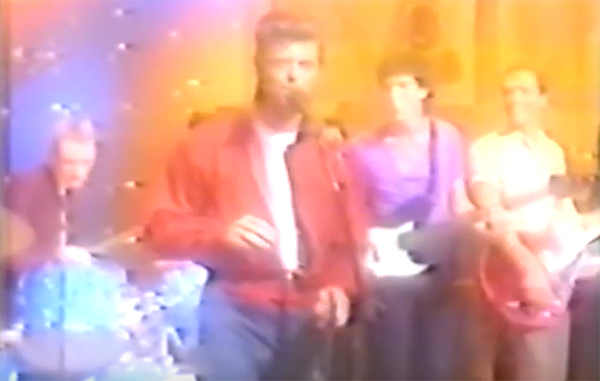
He later played with Bowie on the Tonight Show (here’s the clip, G.E. is on the far right.)

Imagine that, getting to play with David Bowie and the initial connection happened without him even knowing you played guitar. You just happened to be someone who looked interesting at a party.

Blending Craft and Human-Connection

Last week I mentioned that I define a writer’s platform based on two things:

  • Communication
  • Trust

This is your ability to effectively communicate with your ideal readers, and in the process, establish a trusting relationship.

What are practical ways to do this that feel authentic to who you are? Some ideas:

  • Develop a practice of creating and sharing. Honestly, this is the heart of my Blogging and Newsletters for Writers program that begins Monday — consistently sharing what lights you up as a writer and using that to connect with potential readers. I say this from experience of having my own newsletter and blog for around 14 years, sending out one post per week that entire time. But also from working with hundreds and hundreds of writers in this process. If you aren’t sharing with authenticity, then how are people going to know what you write and why? I encourage you to develop that practice.
  • Be nice and support others. Flip how you think about social media. Don’t think of it as a way for people to follow you. Instead, consider how you can use it exclusively to support other writers and celebrate their success. To support booksellers and libraries. To show up where your readers do with the same enthusiasm. To not try to be selling, but instead harken back to why you began to write in the first place: a deep love of certain kinds of stories. Don’t make it about you, make it about support those who share this passion too.
  • Just show up. Show up where readers show up. Where writers who write similar work as you show up. G.E. Smith didn’t go to that party courting David Bowie’s attention. G.E. just showed up, and that opened the door for a powerful connection to happen. Just show up and have conversations. That will teach you more about the marketplace you want to publish into, the authors your ideal readers love, and what engages those readers.
  • Ask for help. Don’t pretend that you can figure all of this out on your own if you just read enough how-to articles. Seek out others who can help you, not just by giving you information, but by truly collaborating with you. I’ve talked about this a lot in my blog and podcast recently for my mission to learn how to play the guitar. Everything changed when I hired a guitar coach. (Here and here.) I would also recommend this powerful book by Amanda Palmer: The Art of Asking: How I Learned to Stop Worrying and Let People Help.

I’m always curious to hear about the challenges you feel in this process. Please feel free to reach out to me and let me know.

Thanks!
-Dan