Less Information, More Action

Today I want to share with you the end-to-end process I take writers through to develop their author platforms and ensure their books connect with readers.

I’ve been honing it for years, it’s called the Creative Success Pyramid. This is it (click the image to download a full-sized PDF):
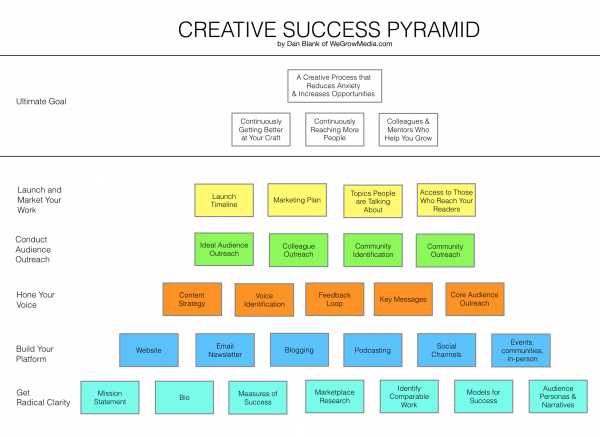
It’s comprised of five basic parts, you start at the bottom and work your way to the top:

  1. Get radical clarity on what you create and why.
  2. Build your platform.
  3. Hone your voice.
  4. Conduct audience research.
  5. Launch and market your book.

All of these are in service of the ultimate goals: to continually create, to improve at your craft, to ensure your writing reaches more people, and to connect with others in fulfilling and meaningful ways.

Within it are 30 smaller boxes. Here is a 15+ minute video of me taking you through it:

I have this quote hanging in my studio from Fred Rogers (of Mister Rogers fame):

“I am much more concerned that our society is interested in information, instead of wonder.”

For the work I do, I often worry that writers have too much information, but don’t take enough action.

All I do is help writers take their writing from idea to actually reaching readers. To have their voice is heard. To have a meaningful impact on the lives of others.

I’m not talking about a hollow Facebook Like, I mean true connections that matter.

What I find is that many writers get stuck in this journey.

They get mired in too much information, taking course after course, reading blog post after blog post, endless podcasts, forums, and so much else. They are on the constant hunt for the latest tip and trick that will ensure greater success, with less time and potential for failure.

Amidst all of this information, they fail to take action.

A friend shared this image on social media the other day, the books she just purchased:
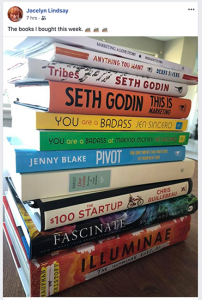
I asked her about them, and she thoughtfully shared her process of how she will read them all, integrate their knowledge into her creative practice, and so forth. I was impressed with how clear she was about it.

But I find many writers aren’t nearly this clear. They sample knowledge here and there, they accumulate this stockpile of information that they don’t take action on.

What if they just read one of these books, but really followed through on it. They took each action it recommended. What if they approached it carefully and consistently?

The idea of the Creative Success Pyramid is to move through it. To get the foundational elements in place at the bottom, and to work your way up it.

In the process, the writer learns how to better communicate with and earn the trust of their ideal readers. This process takes time. The sooner you begin, the more you focus on the people you connect with in the process, the more successful you will be.

Having the information of the Creative Success Pyramid is not enough. To move through it, you need feedback and collaboration:

  1. Clear simple actions to take.
  2. Brainstorming and feedback.
  3. Connecting 1-on-1 with real people who love the kinds of books you write.
One of my clients just wrapped up the first season of her podcast that I helped her launch. She’s a psychologist who tends to specialize in helping people through trauma, and she is writing a book about how to overcome whatever holds you back. Her work is inspiring.

The first season of her podcast, called Fix Yourself, has more than 30 episodes.

This week she published an episode where she reflected on the lessons she learned learned in the podcasting process, including:

  1. “If you do something new, you will be forced to face your fears. You will need to surrender your fear that people will judge you. They will. Focus on your goals instead and you will be able to take the next step forward.”
  2. “New endeavors mean new skills and learning. I learned how to use a microphone, record interviews, use new software, ask people if I could interview them, and lots of other new things I didn’t know a thing about!”
  3. “I was able to tap into creativity that I never thought I had. Learning I can be creative was an amazing gift. These days when I’m out running, I’m thinking of topics for podcasts or things I can share.”

Over the past year, she has reached out to person after person to interview them and to connect with. The result is not just the podcast, but the relationships that she forged in the process, clarity and confidence in her voice, and her own ability to connect with her ideal audience.

This is the power of taking action. She also shared a powerful story from a podcast episode where she talked about the power of forgiveness. She heard from one listener who told her that for decades, he couldn’t let go of the anger he felt towards his ex-wife. Evidently, their daughter was killed in a car accident, and his ex-wife was driving at the time.

After listening to Shannon’s episode, he said he finally let go of that anger and filled himself with forgiveness. Everything changed in that moment.

Her conclusion: “If I did 30 podcasts this year to help one individual, it was totally worth my time.”

All of this work is aligned to the platform development and launch of her upcoming book. What I see each week is Shannon getting out there and connecting with the people who will not only buy her book, but also become the foundation for word-of-mouth marketing. The people who will leave early reviews, connect her with speaking events, recommend her for interviews, and tell friend after friend that this is a “must buy.”

The Creative Success Pyramid is something Shannon and I have been working through, and the results are not boxes checked off a to-do list, but the dozens and dozens of messages she has received like the one above. The foundation for her book launch is built in one meaningful experience at a time.

I want to end with advice I heard yesterday while watching an interview with former MTV VJ Martha Quinn. She said the best advice she ever received was this:

“Martha, you have got to get in the life. Go where the life is happening that you want to be in.”

Martha wanted to get into radio or journalism, and the result of that advice was that she moved to New York, where she got the gig to launch MTV.

The other piece of advice that Martha shared was, “Get off the bus.” She didn’t explain it, but I interpreted it as “don’t be a tourist, stuck on the bus. Get off. Explore. Get involved.”

When I think of the advice I would give writers, it is similar: be present in the lives of your ideal readers.

I’ll be sharing more specifics of how to move through the Creative Success Pyramid in coming weeks. In the meantime, one way to get my direct assistance to do it for yourself, is to join my Human-Centered Marketing program which begins Monday!

Thanks.
-Dan
This Marketing Strategy Works

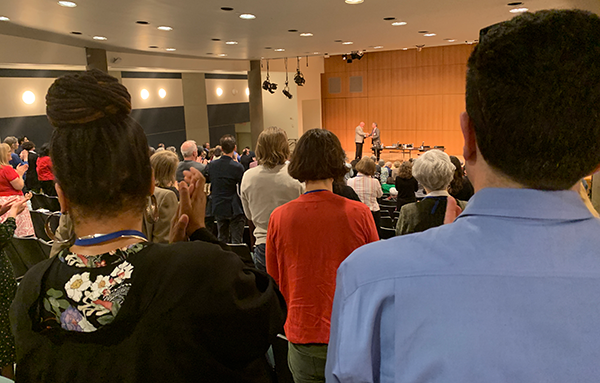
Last weekend, I was part of a panel discussion at the Biographers International Conference in New York City. This was the presentation just before I went on stage:

I was there to discuss how to promote your book. In our panel, one marketing strategy kept coming up again and again:

Show up in the lives of those who will love your book.

As did a second one:

Find the stories that resonate with your ideal readers.

Both of these marketing strategies hit upon the value of knowing how to communicate effectively with readers about what you create and why. That is what truly works to connect your writing to those who will love it.

This, as opposed to what frustrates most writers: spinning your wheels trying to figure out elusive trendy social media secrets (that don’t really exist.)

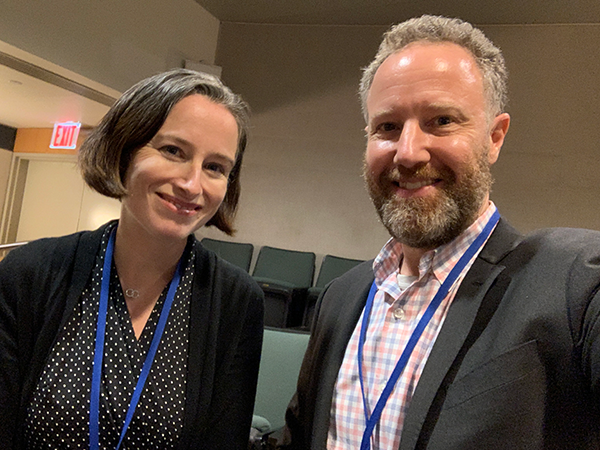
The other two panelists with me were author Melinda Ponder and Declan Taintor, publicity manager at Henry Holt and Company. Our moderator was author Ruth Franklin, who I had met when she joined my Creative Shift Mastermind group last year. This is Ruth and me:

What does it mean to show up in the lives of your readers? It is a specific strategy of consistently reaching out to people who may appreciate what you write.

What Declan, Melinda, and I shared from the stage were practical examples of:

  • Identifying how what you write can turn into dozens of different stories that may engage your readers directly (through blogs, essays, articles, podcasts, social media, speeches, etc), or through the media (interviews, articles, etc.)
  • The importance of forging relationships with those who connect with readers, such as booksellers, librarians, authors, literary festival organizers and others.
  • Not pretending your audience is a vague set of demographics. Authors who truly understand and connect with real readers online or in person are the authors who understand how to effectively market their book.

In many ways, direct outreach is the secret sauce of book marketing strategy. But it is also the most fulfilling, because inherently it is about forging meaningful connections to people who love the same writing that you do.

Melinda shared one story of outreach that blew me away. It illustrated that writers who succeed need to be inventive and passionate about how they connect with those who will appreciate their writing.

She found out that a friend of hers occasionally bartends for a well-known author who had a strong connection to the topic of Melinda’s book. Melinda dreamed of having this author write a blurb for her book. (A blurb is the short testimonial that appears on the cover of a book.) So, Melinda asked her friend to approach this author and give her a copy of Melinda’s manuscript.

Reading this may make you uncomfortable, because it requires social risk. I can see any reasonable person discouraging this because:

  • “Well, you don’t want to use your friend to get access to someone.”
  • “That’s not professional to hand that well-known author your manuscript in a social setting like that. Just send it to her agent.”
  • “That isn’t how publishing works.”

The result? The author loved Melinda’s manuscript. She ended up writing a heartfelt blurb encouraging people to read Melinda’s book. Getting this blurb from such a prominent author was a real catalyst to get Melinda’s book in front of a lot of readers.

All day, I talk to writers. What I find again and again is that huge opportunities for their writing came about because of simple direct outreach. I mean, if you listen to the interviews I do in my Creative Shift podcast, you hear this again and again. Just last week, I shared my interview with bestselling author Chuck Wendig, and he shared an amazing story. A single Tweet directly lead him to getting a three-book deal which landed him on the bestseller list.

Again and again what I experience in working with thousands of writers are the magical moments that happen when an author takes the initiative to reach out to someone.

I try to share a lot of resources in my blog, podcast, and social media to help you get better at marketing your writing in order to connect with your ideal readers in an authentic manner.

But I also want to offer a way to get direct feedback from me as to how you can do this yourself: creating a personalized outreach plan for your writing.

Earlier this year, I released my new program: Human-Centered Marketing for Introverted Writers. It sold out really quickly, and the feedback from the program was off the charts amazing.

I’m opening the doors again, and want to invite you to join me to:

  • Personalize your own Reader Connection Plan, working from a template I provide, plus videos to guide you through it.
  • Each week for 4 weeks, you get direct feedback from me. I answer your questions and provide feedback and ideas just to you.
  • I share outreach scripts to show you exactly how it’s done.
  • Each week, I encourage simple micro-actions so that you can immediately get started amidst your otherwise busy life.

You can find more details and register here.

Something special happened as my panel ended at the Bio conference, a woman rushed down to the stage and asked to chat.

She said, “Hi, I’m Etta Madden.”

I had to take a step back in total shock. Then we hugged. Etta is a writer who had been in my Creative Shift Mastermind group twice. She and I had collaborated on her goals as a writer, and on doing the real in-the-trenches work of what it means for her to connect to readers.

While we had engaged a lot virtually, we had never met in-person. She got on a plane in Missouri to come to New York City for this event.

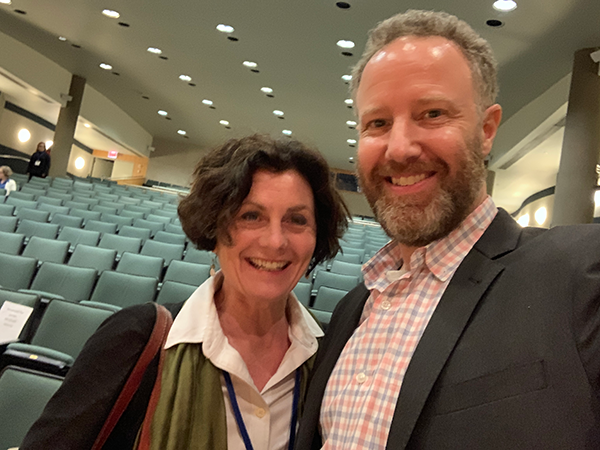
It was just incredible to meet her in person. To connect on that human level of smiling, laughing, and talking. Here we are together:

Too often, when we approach “marketing” for our writing, we overcomplicate it with social media trends. I want to encourage you to show up in the lives of those who will connect with your writing. It may just make all the difference.

Thank you.
-Dan

What I’m learning about the creative process

This week, I simply want to take you behind the scenes into my creative practices, and what I’ve been working on. Every day, I sit here in this private studio, and what I share below is what I am earning about the creative process. But first, here is a studio tour video:

Okay, here is what I’ve been working on:

Writing My Next Book

I’ve been working on my next book for a couple years now. Last year, I took a break from writing it, and a few months back, I started again. To do so, I put two simple parameters in place to ensure I got started and kept going:

  1. I set a simple goal for each day. In the programs and mastermind I run, I call these “micro-actions.” They are the smallest step to just get started and keep going. For writing the book, I do it in 15 minute increments each day. I have found that is a small enough period of time to squeeze it in to even super busy days. And long enough to push the book forward each day.
  2. I have an accountability partner who is also working on her next book. Each day, we check in via simple messages to each other of how many minutes we wrote. So a typical day looks like this: “Wrote 16 minutes.” That’s it. No explanation, no excuses.

These two simple tactics have helped me take the book from totally stuck to momentum. I can’t even tell you how good that feels.

What is the book about? I’m viewing it as the prequel to Be the Gateway. This is a book about how to take your creative vision from just barely dabbling with it, to getting it done.

I’ve had drafts of this book written for years. I have started again from scratch, I think, three times. This most recent version includes dozens of ideas that I have been stress testing with writers every day in my mastermind group. I could not be more excited about how it is coming together.

I Moved My Podcast From Monthly to Weekly

I launched my podcast, The Creative Shift, in January 2015 as a way to share the research I was doing for a book I was writing. Wow, I’m just realizing it is the book I talked about above. So that book has been in the works for more than four years.

In each episode, I share an interview with a writer, artist, or creator who inspires me. We talk about the risks they have taken as they pursued their creative vision.

I had always looked at the podcast as something I do just for myself — it is an opportunity to reach out to someone and have a long and deep conversation about the creative process.

Last December I realized that I love doing it so much, that I need to double down. So I took it from monthly to weekly. That has brought so much joy to my life, because it means I have 4x the number of inspiring conversations each month. In the process I have met some a-maz-ing people.

I just shared my hourlong conversation with bestselling author Chuck Wendig this week: “Chuck Wendig on Owning Your Voice and Choosing the Path of Your Career as a Writer.”

I Launched a New Series of Programs

For a couple of years, I had completely stopped offering online courses about how to develop your author platform, engage with readers, and launch your books.

Why?

Because I found that it is difficult for people to make progress with information alone. Many online courses pummel writers with dozens of videos, lessons, and downloads. The result? The writer struggles alone, overwhelmed, unable to take a single step forward.

This year, I tried something new, and the results have just been astounding. The new 4-6 week programs I have been launching are setup so that each week, I give direct feedback to each and every writer.

I show up. I see them. I give personalized feedback. Together, they make progress.

With online courses, I found that people would sign up, do some work, get overwhelmed, and never finish. I’ve seen people share different stats that indicated the same thing: 10% of people finished the course. Or 30%. Or 50%.

But with these new programs I have been launching, the success rate is somewhere close to 100%. People show up. They take actions. They make progress.

More than that though, I get to become immersed in their creative journey. Nothing gives me more joy than that. Okay, my family gives me more joy than that. But this is second place.

For 1,320 Days in a Row, I Showed Up in the Mastermind I Run

Back in 2012, I launched my first mastermind group for writers. It was a fun experiment to bring a small group of writers together to provide accountability, feedback, and a support system to push their creative work ahead.

Then in 2015 I launched quarterly mastermind groups that I call the Creative Shift Mastermind.

Every single day, I show up in that group. On weekdays, I share a brand new video that answers questions and helps each person in the group establish their creative process and reach their goals. On weekends and holidays, I show up there as well.

The Mastermind has defined so much of my life in the past few years. It’s like showing up to a virtual co-working space each day with a small group of inspiring writers and creators, and then — together — getting the work done.

It’s weird to think of it in terms of numbers — 1,320 days in a row — because I mostly think of faces when I consider the Mastermind. The people who have allowed me into their lives and their creative process each day.

I can only say: thank you.

Being in the Trenches with Private Clients

I work with private clients to truly immerse myself in their goals and challenges to establish their author platform, launch their books, and reach related goals to their writing.

Sometimes I am able to share a glimpse of that work via case studies like I did last week.

When I work with a writer like this, I consider myself a co-pilot in their career. It is my job to understand their goals and their challenges and not just give advice, but help them through. Of course, there are no guarantees, but I have found that having a partner in the process can really change everything. For me, it is a total joy to not just give advice, but to be in the trenches doing the work with writers in this manner.

14 Years of Weekly Blogging & Email Newsletters

Every week, I have clicked “publish” on my blog and email newsletter. It’s so much a part of my life, I can’t imagine not doing it.

Honestly, I love the deadline. The opportunity — and pressure — to create something new each week, and click “publish.”

This very post is being written on Friday morning, just before I send it out to thousands of people. I woke up just after 4am, stared at a blank page, and by 8am, I will be sending it out. I feel alive writing this, and that is the joy of creating.

I love stretching the creative muscle in this manner. To see the newsletter and blog not as a way to create, to publish, and to connect.

I take this so seriously. I know that it is a privilege to be allowed into people’s inboxes. I don’t take that responsibility lightly.

Showing Up in Writing Communities

This week I did an hourlong live video presentation for Romance Writers of America. I talked about (surprise, surprise) how to connect with readers with — and without — social media. The writers asked such amazing questions in the Q&A at the end. It was a wonderful experience.

This weekend, I’m giving a presentation at a large conference for writers in Manhattan. And in the past couple of months, I’ve been able to present to the Women’s Fiction Writers Association, the University of Wisconsin-Madison Writers’ Institute, I’ve done monthly podcasts for The Alliance of Independent Authors, and shown up on podcasts such as Mark Dawson’s Self Publishing Formula.

It always astounds me at the hard work it is for each of these groups to bring together a community of writers. This too is an an incredible privilege to show up with these writers.

Deep Dives into Creative Growth with Collaborators

I have two standing calls on my calendar each week. Each call is essentially a 1-on-1 mastermind, where we keep each other accountable to our creative goals, we brainstorm ideas, get feedback, and work through business challenges.

One of those calls is with Jennie Nash. She and I have had these weekly calls for years now, I can’t even remember how long. Every week, we hop on the phone for an hour to an hour and a half. We split the call down the middle, and when it begins, there isn’t really any chit chat. It is “Do you want to go first or should I?” We come prepared to discuss specific issues and ideas that we are working on.

The other call is with Lori Richmond. We cover a similar similar range of themes, and the call is run the same way: we are here to work.

What’s amazing about my collaboration with Lori is that it came out of a failure. I had previously interviewed her for my podcast and we stayed in touch. Last year I had this idea to run an in-person workshop in New York City. I invited her to be a part of it, and we spent months developing this ambitious program. Honestly, it was amazing.

Except, it totally flopped.

I think we needed at least 6 people to sign up in order for it to be viable, and we didn’t get that. So the event was canceled. I wrote about what I learned from that process of failing here.

While planning the event, Lori and I met weekly via Skype. When the event didn’t work out, we said, “Why don’t we keep meeting to discuss our other creative goals and challenges?”

This has been a huuuuuuge success. It’s amazing what can come out of a failure.

My Other Daily Creative Practices

Beyond everything above, I have been continuing with my total obsession to finally learn how to play the guitar. My daily guitar practice routine is now up to an hour a day. I track this in a spreadsheet, last month I practiced for 1,975 minutes.

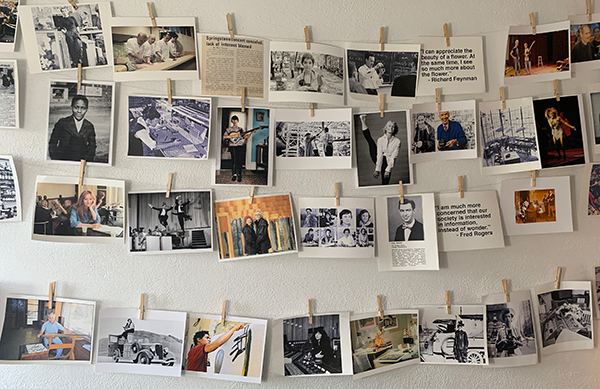
I also continue to study the lives of inspiring creators. This is the wall I stare at in front of my desk:

All day, I meditate on the creative process.

What you see above is really one thing: simple creative practices. Each day, each week, each month, simply showing up.

It’s amazing to see what it all adds up to.

What have you learned in establishing simple creative practices for your goals?
Thanks.
-Dan

Chuck Wendig on Owning Your Voice and Choosing the Path of Your Career as a Writer

I’m excited to share my interview with bestselling author Chuck Wendig. He gets really honest about:

  • How he got a 3 book deal to write Star Wars book via a Tweet.
  • Why he says Twitter won’t help u sell books, but that it is filled with a lot of professional opportunities, giving you access to amazing people.
  • When Marvel approached him to write for a comic book series, they gave him a choice: a super popular one or a much less known series. He chose the lesser known book, because it would give him more creative freedom that would really leave a mark.
  • The not awesome jobs he took while trying to become a professional writer.
  • The reality of what it is like to make it as a freelance writer.
  • How he wrote four novels that no publisher wanted, were never published, and why he is thankful for that.
  • How he approached his last ditch effort as writing a successful novel differently, and why it worked.
  • How he changed his writing practice from taking 4-5 years to write a book, to writing the next one in 30 days.
  • The reality of what it is like to have your book optioned for a deal in Hollywood, to assemble a team, to get offices… and then have it fall apart.
  • Why he describes book series as having diminishing returns in terms of sales and audience, with each additional book.
  • How he got death threats because of his books, and how he dealt with it.
  • How when one opportunity closes, many new other opportunities open up.
  • The reason his new book, Wanderers is 280,000 words long, and how his publisher encouraged him to go where he needed to with it.

You can listen to the podcast by clicking ‘play’ below, or in the following places:

You can find Chuck in the following places:

How I Helped This Author Grow Her Platform From Scratch

Today I want to share the specific steps I took to help a first-time author establish her platform and release her book. The topline results of our work together so far:

  • Her book was released this week. It hit #1 New Release in the Divorce category on Amazon.
  • She now manages a thriving private community of 1,350+ people. Imagine what it must feel like to see your readers share photos of themselves with your book two days after it is released. To not just hope your book is reaching people, but to see it. That is what this author has experienced this week.
  • She has 2,500+ people who like her Facebook Page, with lots of engagement. This is not about just gaining likes. The other day she shared an 800 word post that 31 people shared to their own friends and family. She has been focused on truly connecting her writing with people in a meaningful way.

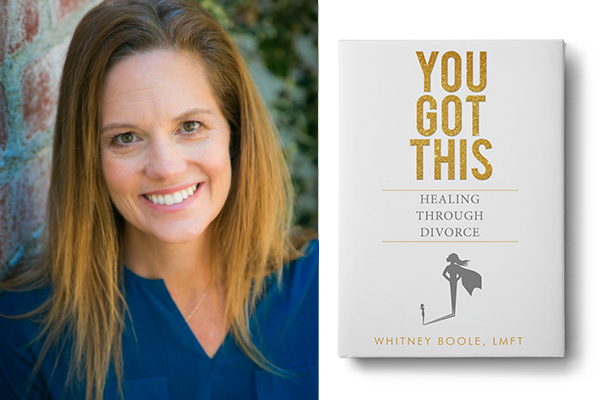
But there is so much more that she has accomplished too, which I will get into below. Okay, meet Whitney Boole. She’s a therapist who helps clients who struggle with issues including depression, anxiety, relationship struggles, codependency, infidelity, parenting, trauma, addiction, and grief and loss. This is Whitney and her book, You Got This: Healing Through Divorce.

Whitney Boole

When she came to me, she had written a first draft of the book, but had no online platform as an author. Like most writers I speak with, she was incredibly busy. Quite frankly, I am astounded by all that she does in life, it is truly inspiring.

For the work that she and I did together to establish her author platform and launch her book, I want to highlight two particular things that we did. I often recommend that an author should pick one or two specific things to focus most of their attention on in order to not spread themselves too thin, and to ensure that they are creating a meaningful connection with readers.

Too many writers try to do it all. They read a list of 100 marketing tactics, and they end up trying all 100 of them with the minimum amount of effort. The results are always the same… an overwhelmed author whose work was a mile wide, but only an inch deep. Vast, but with disappointing results overall.

The two specific things that I want to highlight which made all of the difference:

  1. The creation of a private Facebook group called You Got This: Healing Through Divorce. Early on in our work together, Whitney and I analyzed which social networks would be best suited to reach her ideal audience. It’s easy to justify any of them, but we finally concluded that Facebook had the right balance. So she doubled down on Facebook.

    The private group was created so that Whitney can provide people a place to come together and get support around a complicated topic: divorce.

    The result is that 1,350 people have come together to get advice, to cheer each other on, to go deep when needed, and give each other a good laugh when needed.

    It’s Whitney’s group, she sets the ground rules, she encourages certain conversations and shares her own advice when appropriate.
    To see this community come together from 0 to 1,350 is astounding.

    In the process, Whitney has heard from her readers again and again about what they need most. This has allowed her to not just tailor her messaging to meet their needs, but she actually wrote an additional chapter for the book at the last minute based on topic that she saw come up again and again in the group.

    This group has created meaningful human connections around Whitney and her writing. I don’t have the words to express how powerful that is.

  2. The second thing that Whitney did that made all the difference is to break the rules in order to go deep with her audience.

    I have helped thousands of writers get started on social media, and in that process, I have seen an endless stream of articles about “best practices” for using social media. You know, articles with headlines like “If you are doing this on Facebook, you are doing it wrong!” Or “241 tips to go viral on Facebook.” Or “The data is in, this is what science says works best (and what works worst) to succeed on social media.”

    Bleh.

    Instead, Whitney has been experimenting with a wide range of different ways to engage her ideal audience on her Facebook page. Links, photos, quotes, etc.

    Because her work is about truly helping people, she also breaks the rules in order to go deep.

    This Facebook post is 800 words, and even includes a photo that has words in it, which I have read Facebook doesn’t like. The result? 31 people shared it.

    When she shared a post just before her book came out about how terrified that made her feel, she had 70 people share it with their friends. This wasn’t a promotional piece, there was no link to the book or even a mention of the title.

    The ‘share’ is a powerful thing. It’s not just a ‘like’ where you click and move on. When someone shares your post, they are advocating for your work to the people closest to them: their friends and family.

    Again and again, Whitney goes deep and tries to connect with her readers in meaningful ways.

Beyond these two specific tactics, she and I worked through the processes I share again and again in my blog, podcast, and programs:

  • We got radically clear on her messaging.
  • We refined her public presence to include her work as an author, not just therapist who is in private practice.
  • We did deep research in identifying her ideal audience.
  • We studied the marketplace to understand who reached that audience, who were her colleagues.
  • We setup social media channels and created a content strategy of what to share.
  • She did direct outreach to total strangers who share the same mission she does.
  • We took a close look at her existing network and how to best encourage them to be a part of all of this.
  • She wrote blogs.
  • She learned how to be on camera and record videos.
  • She did her first Facebook Live event.
  • We strategized how every part of her platform connects to potential business goals down the road.
  • We went through the decisions in book production from cover design to book description and so much else.
  • She clicked “publish” and “send” on dozens and dozens of items to connect her mission to the people who would appreciate it most.

The platform you create for your writing and the ways that you connect with your ideal readers will be unique to you. That is why I am such a big advocate for not doing all of this work alone, of finding a collaborator or community to help you through it. That’s why in everything I offer, I truly show up to work with you. To ensure you feel heard. Where you get feedback consistently. Where you can brainstorm ideas based on your goals. Where you have a safe space to ensure that the ways you engage with your ideal audience are based on a meaningful human connections.

Whitney’s work has inspired me, and I hope she has inspired you as well. You can listen to me talk through all of this on my podcast by clicking ‘play’ below, or in the following places:

Thank you.
-Dan